

Sudan: When the Pavement Is Torn Up… and Institutions Are Dismantled
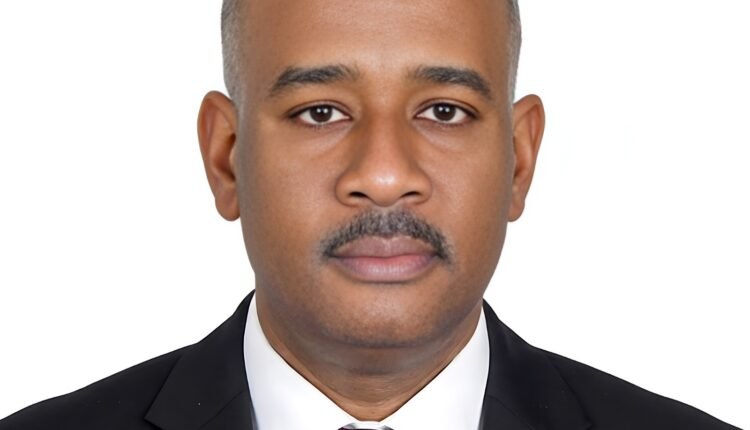
Mohannad Awad Mahmoud
What was termed the “December Revolution” was not—in my view—a revolution in the sense that would merit the lofty descriptions lavished upon it. It did not achieve a fully-fledged historical transformation, nor did it offer more than broad slogans, unsupported by a concrete vision of a functioning state. Instead, it opened the door to a deep political vacuum into which chaotic decision-making seeped, with competing centres of power pulling in different directions without a compass. At its peak, the scene was little more than roads blocked, pavements torn up, and daily life disrupted—while, in the background, entire institutions were being quietly uprooted, with a severity no less harsh than the noise in the streets.
While some, misled, believed they were “building the future” by paralysing the present, segments of the new political elite were, without fanfare, engaged in a reverse engineering project: the systematic dismantling of what remained of the state’s structure. No distinction was made between public and private sectors, nor between national and international institutions. The sole criterion was this: had the institution ever passed through the shadow of the National Congress Party? If the answer was yes, it was effectively sentenced to political death.
Among the institutions that fell victim to this exclusionary mood stands a particularly telling example: the African Political Parties Council. This was not a transient partisan body, as some might assume, but an institution with a diplomatic character, established through a formal agreement with the Sudanese government, represented by the Ministry of Foreign Affairs. It was treated as a continental political platform operating within the sphere of non-governmental diplomacy, contributing to shaping Africa’s political climate beyond traditional governmental channels.
Before proceeding, a methodological clarification is necessary: I do not write here as an analyst assembling material from reports, nor as a researcher living off footnotes and references. I write as a witness to events—present at the beginnings, involved in the founding, and having seen how this project was built step by step.
The origins trace back to an invitation extended by the Permanent Conference of Political Parties of Latin America and the Caribbean to Sudan to participate in a conference in Mexico, alongside a wide spectrum of global political parties. This was not a mere protocol engagement; it was a moment of realisation: if Latin America had succeeded in creating a transnational party framework, why should Africa not do the same?
The delegation returned with a continental vision. A committee was formed, statutes and action plans were drafted, and the idea crystallised into a founding conference held on 27 April 2012. It brought together forty-two political parties from thirty-seven African countries—most of them ruling parties—under one roof, in a rare scene on the continent.
Clear membership criteria were established: each country would be represented by its two largest parliamentary parties—the ruling party and the principal participating party—to ensure balance. By consensus, Sudan secured the position of Secretary-General and the honour of hosting the headquarters, becoming a platform for shaping continental political strategies.
The council developed a comprehensive structure: a women’s wing, a youth wing, a civil organisations arm, and an economic council. It held dozens of conferences and signed memoranda of understanding with the African Union, as well as with the International Conference of Asian Political Parties and COPPPAL. It went beyond theory into practice: contributing to mediation efforts in the Central African Republic, participating in election monitoring in Kenya and Equatorial Guinea, and helping shape joint parliamentary positions on sensitive issues.
In essence, it functioned as an African political “kitchen” operating from Khartoum—a tool of soft power, a channel of influence extending beyond formal frameworks, and a means of restoring Sudan’s leadership role on the continent.
Yet, at the height of the zeal to dismantle everything associated with the previous regime, this institution did not escape. Its premises were confiscated, and its activities frozen—not because of any failure in performance or deviation from its mission, but simply because it had been born in a time that had become politically unacceptable. Thus, through a cold administrative decision, Sudan lost an institution operating under an international agreement, bearing a diplomatic character, and representing one of its rare instruments of continental influence.
The bitter irony is that those who tore up pavements in the name of “clearing the way for the future” ended up demolishing institutions that were, in fact, opening pathways for Sudan towards Africa. They failed to grasp that politics is not an act of vengeance against the past, but an investment in what is possible; and that states are not measured by their capacity to destroy, but by their ability to utilise the instruments of power at their disposal—even if those instruments were born in contexts they may not favour.
Today, as the region undergoes a reconfiguration of its balances, Sudan finds itself outside many of the circles of influence it once helped shape—not for lack of capacity, but because it has, consciously or otherwise, turned its back on tools that could have kept it at the heart of the scene.
Thus, this is not merely a passing political misstep, but a condensed example of how what is imagined to be a “new beginning” can become a rupture with everything that might have been.
Shortlink: https://sudanhorizon.com/?p=13015