

One Secession is Enough
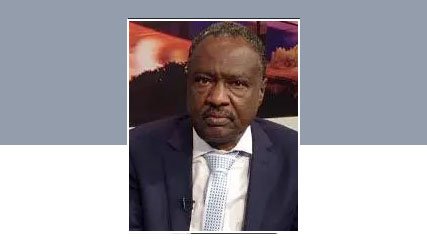
Rashed Abdel Rahim
The Rapid Support is no longer dreaming of seizing power and ruling Sudan. It has become far too feeble for that.
The rebellion has been shaken by the defection of Commander Al-Nour Al-Quba, who has joined the government. Protests have begun against the leadership for its absence and against Abdel Rahim Dagalo, who is accused of encroaching on many commanders and components of the rebellion. Nor will it end with Al-Nour Al-Quba; talk has begun of Al-Safana’s inclination to break away.
Abdel Rahim is accused of hostility towards the sons of Al-Mahamid and of causing numerous and widening splits.
The Rapid Support has begun to accelerate its steps towards its end, but will this mean the end of the war in Sudan?
It is regrettable to say that bearing arms by individuals or tribal militias has become commonplace. In eastern Sudan, there is the group of Sheikh Darrar, for example.
There is frustration and strong talk in Khartoum and central Sudan about the presence of the joint forces in Khartoum and other locations in northern Sudan.
People ask about the justification for these forces’ presence in the north when the war is in the west.
It seems that gold mining will be the open door to rebellion and war in Sudan. It financed the Rapid Support’s rebellion and is currently sowing problems between the sons of western Sudan and the inhabitants of the areas where they mine.
The culture of ‘Hawakeer’ (traditional land rights) does not prevail in northern Sudan; rather, people are wary of it.
The sons of northern tribes are not present in western Sudan’s mining areas, while the sons of Darfur are spread across the northern regions.
This is a tangible reality. Attempting to cover it up or bypass it will be a cause of future problems, not far removed from weapons.
The war that erupted on this very day three years ago should serve as a warning that motivates us to ensure it is the last war in our country.
Achieving peace and its sustainability will not be realised merely by ending the war, but by confronting all its causes. These causes are varied, but the most dangerous stems from cultural concepts, meanings, and political slogans that were clear within the Rapid Support.
Non-decisive handling of military manifestations can be understood as tolerance of them and acceptance of them.
Failure to confront the cultural values and concepts born of war will return them stronger and more severe.
Sudan needs changes in governance, regions, educational curricula, the civil service organisation and regulation, the tribal system, and many other urgent issues of change – that is, if we want to preserve Sudan as one, unified country… and one secession is enough.
Shortlink: https://sudanhorizon.com/?p=12896