

A Reading of the Malaysian Government’s Position Towards the War Against Iran (3–3)
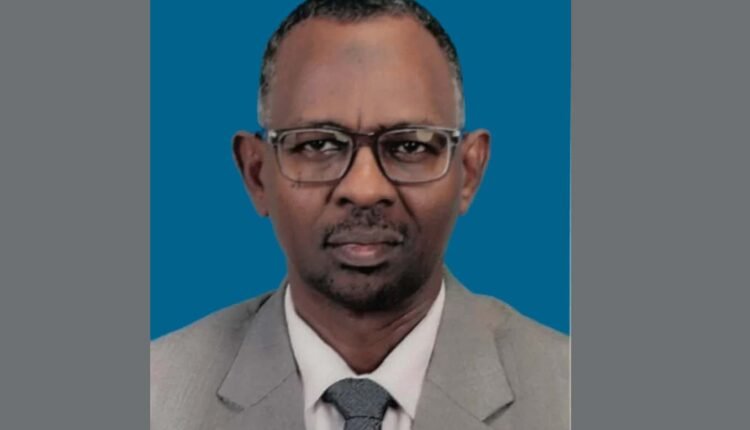
Dr Ahmed Abdelbagi
Anwar Ibrahim is regarded as one of Malaysia’s prominent Islamic figures and the originator of an initiative to establish a multi-ethnic, multi-religious political party—contrary to Malaysia’s traditional party structure, which has historically been organised along ethnic lines. This was evident in the major ruling coalition that governed Malaysia for 63 years, comprising parties such as the United Malays National Organisation, representing Muslims, alongside the Malaysian Chinese Association (MCA) and the Malaysian Indian Congress.
Since assuming office in November 2022, Anwar Ibrahim has adopted a political approach under the slogan “Madani Malaysia”, while continuing the established tradition of supporting Islamic causes and reassuring the Muslim electorate—who form the majority—that such issues remain a priority for his government.
The Official Malaysian Position
In line with Malaysia’s foreign policy orientation in support of Islamic causes, Anwar Ibrahim announced on 26 March 2026 that Malaysia affirms Iran’s right to self-defence in accordance with international law. He called on all parties to exercise restraint and to protect civilians and infrastructure in neighbouring states. He also emphasised that Gulf countries should not be drawn into a conflict they did not choose, warning of the broader economic and social risks to regional stability, and stressing that citizens should not bear the consequences of decisions taken elsewhere.
The Malaysian Ministry of Foreign Affairs also issued a statement on 28 February 2026 condemning both the attack on Iran and Iran’s retaliatory actions against Gulf states. The statement called for restraint to prevent escalation that could destabilise the region and have serious global repercussions. Malaysia reiterated the need to resolve disputes through diplomacy and respect for international law. It urged the international community, including the United Nations, to take urgent and effective action to de-escalate tensions and restore peace and stability.
In addition, the Malaysian Parliament held an emergency session to discuss the war on Iran, during which members observed a minute’s silence for Ali Khamenei and others. Both government and opposition members expressed solidarity with Iran. Anwar Ibrahim described the American attack on Iran as hypocritical, arguing that the United States and Western countries preach human rights and democracy while violating them.
The Malaysian Foreign Minister also held a telephone conversation with his Iranian counterpart Abbas Araghchi on 25 March 2025, during which they discussed the war and its implications for the economy, security, and regional stability. The Iranian minister emphasised that security in the Strait of Hormuz was a natural consequence of aggression against Iran.
The Malaysian Popular Position
In solidarity with Iran, several Islamic organisations in Malaysia convened on 7 March 2026 at an Islamic thought institute. These organisations called on the Malaysian government to urge both ASEAN and the Organisation of Islamic Cooperation to push for an end to the war.
In the same context, the People’s Justice Party—leading the governing coalition—called, in a statement reported by Al Jazeera, for the formation of a bloc including Malaysia, South Africa, and Brazil to represent the Global South, and for the initiation of a neutral international dialogue grounded in international law. The party also called for an OIC summit that would move beyond condemnation towards meaningful reform and consultation, involving intellectuals, scholars, and civil society institutions to rebuild cohesion among affected societies. Its foreign relations official described the American-Israeli war on Iran as an act of aggression contrary to international law.
According to the same report, Malaysian civil society organisations opposing the war placed hope in the American electorate to curb the escalation pursued by the administration of Donald Trump. In a joint statement, they argued that American voters could use their political influence in the upcoming midterm elections on 3 November 2026 to affect policy direction.
These organisations also condemned threats by Donald Trump to seize Cuba and destroy Iranian energy facilities, calling for accountability for what they described as an unlawful war. They warned of the consequences of targeting energy and water infrastructure, particularly given the Gulf states’ heavy reliance on desalination—100% in Qatar and Bahrain, 80% in the UAE, and 50% in Saudi Arabia.
The statement—signed by organisations including election transparency groups and Islamic youth movements—called for an end to what it termed “aggression” against Iran, reopening the Strait of Hormuz to ensure oil flows, and warned that the absence of a clear stance from other Western powers could prolong the conflict.
Analytical Conclusion
It appears that Anwar Ibrahim’s rhetoric opposing the war on Iran is directed more towards a domestic audience than an external one. It seeks to reassure the Muslim electorate—who constitute approximately 63% of Malaysia’s population—that his government remains aligned with Islamic causes, particularly with general elections approaching within roughly a year.
At the same time, Malaysian civil society plays a notable role in supporting or opposing government policies, benefiting from a degree of freedom of expression that allows it to influence both domestic and, to some extent, external discourse. In contrast, the Ministry of Foreign Affairs’ statement adopted a more balanced and professional tone.
Nevertheless, some analysts warn that Malaysia’s stance could expose it to tensions with the United States and strain relations with Gulf Cooperation Council countries—particularly Saudi Arabia and the UAE—with which Malaysia maintains significant trade and investment ties. Malaysia also depends on these countries for oil and petroleum imports.
Others argue that, from a strategic perspective, Malaysia would be better served by maintaining neutrality and balanced relations with major global actors—including the United States, China, Europe, and the Middle East—lest its position be interpreted as alignment with Iran. Such perceptions could create friction with Gulf states, especially given Malaysia’s recent role in facilitating a May 2025 summit among ASEAN, the GCC, and China. Sympathy towards Iran, in this context, may be misunderstood and risk undermining the economic relationships that emerged from that summit.
Shortlink: https://sudanhorizon.com/?p=12693