

Rizeigat Leader to “Sudanhorizon”: El-Mostariha Events Mark a Dangerous Turning Point Testing the Tribe’s Historic Unity
Cairo – Sudanhorizon – Sabah Moussa
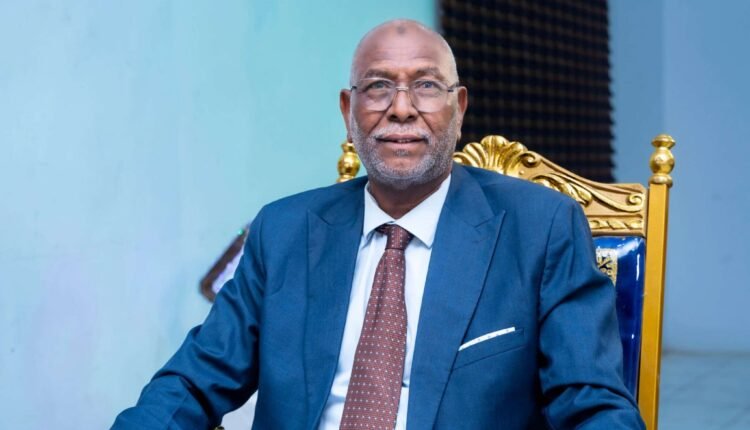
Al-Deif Issa Aliou, founder of the General Coordination of the Rizeigat Sons, said that the recent events in the area of El-Mostariha, in the domain of Sheikh Musa Hilal in North Darfur, represent a highly dangerous development in the trajectory of the ongoing conflict in the region.
Aliou, a Rizeigat leader, told Sudanhorizon in an exclusive statement that historically, the Rizeigat tribe had not witnessed internal conflict among its different branches. He noted that the Mahamid are one of the Rizeigat’s sub-branches and described the recent events as an unprecedented occurrence within the tribe’s internal structure.
He added that attempting to frame the events as movements by the Rapid Support Forces or as a purely military confrontation does not change the fact that, ultimately, it will be counted as a conflict between the Mahariya and the Mahamid, with serious social and tribal repercussions.
Aliou explained that the Rizeigat consist of three main branches: the Nawāyba, the Mahamid, and the Mahariya, in order from eldest to youngest lineage. He warned that any violations resulting from the attack—such as killings, rape, or looting—would have profound consequences within the tribe in the near future and could leave wounds that are difficult to contain.
He said the conflict in Darfur has grown increasingly complex and now leans heavily toward tribal confrontation. He pointed to reported attempts to attack the area of Tina and parts of Dar Zaghawa, as well as calls circulating online for tribal escalation by members of the Zaghawa community.
Aliou stated that whatever justifications the Rapid Support Forces may offer will not change the reality that the conflict in Darfur has taken on a tribal dimension between Arab and “Zurga” communities, led by the Mahariya, particularly the sons of Mansour from the Dagalo family, headed by Mohamed Hamdan Dagalo, and allegedly supported with funds and equipment from external actors.
He stressed that Sheikh Musa Hilal, if able to emerge publicly, would not remain silent about what happened, but would likely attempt to reposition himself and lead the conflict again, potentially in coordination with the Sudanese Armed Forces and drawing on his previous external relations. He referred to a statement from the Sahwa Council indicating that Hilal is in a safe location, believed to be inside Chad.
Aliou also addressed past disputes between Musa Hilal and Mohamed Hamdan Dagalo during the former regime, which escalated after the killing of Dagalo’s cousin. He noted that the Rapid Support Forces arrested Hilal, who remained in detention until after the revolution, before being released through tribal mediation.
He said the General Coordination of the Rizeigat Sons had issued a statement condemning and denouncing the Rapid Support Forces but acknowledged that the Coordination does not have a practical role it can play in the current conflict.
Aliou described the recent escalation by Musa Hilal as poorly timed, saying he now finds himself “between two jaws of a vise.” He clarified that the earlier arrest targeted Musa Hilal and two of his sons, whereas the recent incursion could result in painful violations.
He predicted that Hilal may head toward Khartoum or Port Sudan after reaching Chad, noting that access to either city would likely be possible only via Chad or through desert routes toward Libya.
Shortlink: https://sudanhorizon.com/?p=11614