

From Absence to Presence: How Sudan Returned to the Heart of African Decision-Making
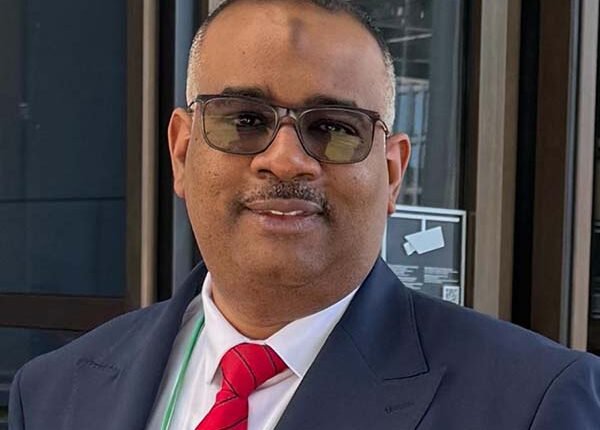
Muhannad Awad Mahmoud
It was not an ordinary meeting in the African Union’s calendar, but a turning point that brought the Sudan file back into the continent’s institutional decision-making structures after a period in which multiple initiatives and tracks had unfolded without clear central coordination under the Union’s umbrella. On 12 February 2026, the African Union Peace and Security Council (PSC) convened its 1330th ministerial-level meeting, dedicated entirely to the situation in Sudan. The file was subsequently included in the agenda of the AU’s most recent Ordinary Summit, held on 14–15 February in Addis Ababa, according to the official programme published on the Union’s website.
The communiqué issued by the PSC following its 1330th meeting left little room for ambiguity. It clearly stated that the war in Sudan cannot be resolved sustainably through military means. It called for a humanitarian truce leading to an immediate ceasefire as a gateway to an inclusive Sudanese political process driven by genuine national will. This formulation represents a formal consolidation of an African position rejecting the use of armed conflict as a tool for reshaping power by force. It reflects an institutional conviction that continued military confrontation will prolong the crisis and deepen its humanitarian and regional costs.
One of the communiqué’s central elements was the Council’s rejection of any attempt to establish a parallel government in Sudan, and its call on Member States and partners not to recognise such entities. This clause constitutes an important political safeguard for the unity of the sovereign state. It closes the door on fragmentation scenarios driven by the imposition of an alternative political reality under the cover of war.
The Council also condemned external interference in the conflict and tasked its relevant mechanisms with identifying external actors supporting the warring parties within a specified timeframe. This shift — from general descriptions of interference to an institutional process of tracking responsibility — carries strategic implications. It moves the debate from the level of political accusation to that of accountability within the African framework. It lays the groundwork for coordinated pressure on any regional or international actors found to be fuelling the conflict.
Despite the continued suspension of Sudan’s membership in AU institutions, this session witnessed a notable development: the participation of Sudan’s Minister of Foreign Affairs, Ambassador Muhi al-Din Salim, in a consultative session of the Council. This participation does not amount to lifting the suspension, but it does signify Sudan’s transition from complete absence to presence within the deliberative chamber — even if only in a consultative capacity. The distinction is fundamental in managing balances within the Council, as direct engagement with the state’s position limits the monopolisation of the narrative by other actors.
At the summit level, the inclusion of the report on conflicts in Sudan within the Assembly’s agenda elevated the file to the highest political discussion among Heads of State and Government. Once a matter reaches that level, it is no longer merely a security issue handled within a specialised council. Still, it becomes a question tied to regional stability, border security, population movement, and broader economic and humanitarian implications.
In this context, the diplomatic efforts led by Sudan’s Embassy in Cairo assume particular significance. According to a direct statement by Ambassador Lieutenant General Engineer Imad al-Din Mustafa Adawi, engagements within the League of Arab States helped create the political climate that facilitated the Foreign Minister’s participation in the Council session. Institutionally, the PSC communiqué confirms that the Arab League addressed the meeting, reflecting coordination between the Arab and African tracks within the recognised framework.
Engagement through the Arab League was not an alternative to the African Union but rather a means of strengthening Sudan’s position within it. Broadening the circle of regional support provides Sudan with additional political depth at a moment when Khartoum seeks to consolidate its presence within continental institutions, particularly given the ongoing suspension.
Strategically, what occurred during the second week of February 2026 may be read as the beginning of a gradual process of reintegrating Sudan into AU institutions. The gain was not the end of the war, nor the immediate lifting of suspension, but the restoration of Sudan’s voice within the decision-making chamber, the reaffirmation of state legitimacy, and the opening of an institutional pathway for addressing external interference.
Yet this step remains a beginning, not an end. Consultative participation requires sustained diplomatic engagement if it is to translate into meaningful influence. Implementation mechanisms must back the language in the communiqué to make it tangible pressure on the ground. Moreover, no political track will succeed unless it convinces Sudanese citizens themselves that it does not merely reproduce military balances under a veneer of negotiation.
What took place in Addis Ababa returned Sudan to the heart of the African debate over its future. The challenge now is not simply to demonstrate presence, but to invest it wisely — by broadening alliances within the Peace and Security Council, strengthening Arab–African coordination, and presenting a realistic vision that persuades the continent that Sudan’s stability is inseparable from Africa’s own stability.
Shortlink: https://sudanhorizon.com/?p=11421