

The War Narrative and the Prospects of Peace (6–7): Possibilities, Opportunities and Challenges
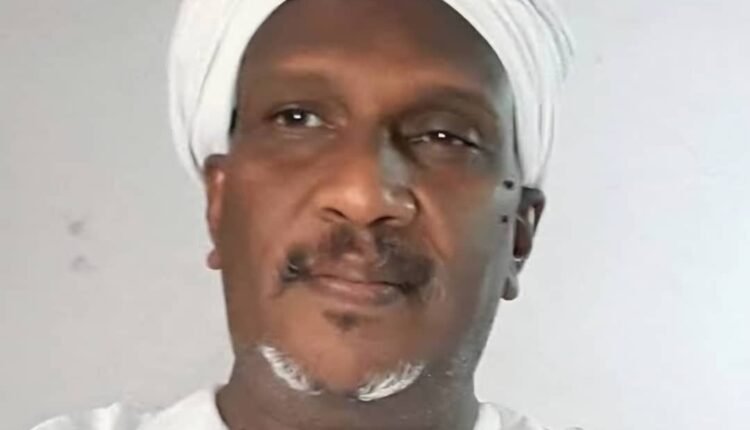
Taj Al-Din Banaga
In this article, we attempt to examine three possible future scenarios in some of their forms (whether as a continuation of the current situation, or as an upward or downward trajectory), alongside an analysis of the political, security, and social context that shapes these possibilities in light of the ongoing war and persistent internal and regional tensions.
Introduction:
Sudan—endowed by God with unparalleled human and natural resources and a distinctive geostrategic location—is facing a war of aggression that erupted in April 2023. Subsequent developments have torn the social fabric and threatened the country’s security, unity, and state-building project. Violence, grave violations, and external dependency have continued, culminating in the declaration of a parallel government.
The war has generated a severe humanitarian and economic crisis, alongside international and regional pressures that affect all future scenarios.
There are internal and external efforts and initiatives to resolve the crisis, but to date, they have been unable to produce peace, a lasting ceasefire, or a comprehensive political settlement.
Potential Future Scenarios:
1. The Optimistic Scenario (Upward Trajectory):
An end to the war, and the restoration of peace, security, and stability across the country.
(A desirable and possible scenario)
In this scenario, the war is halted through decisive military resolution: the victory of the Armed Forces and the defeat of the Rapid Support Forces militia, or its surrender, or its acceptance of negotiations that guarantee the protection of civilians, the evacuation of service facilities, the facilitation of humanitarian relief, the return of forcibly displaced persons, and the integration of fighters—excluding leadership—into the regular forces, in line with established Sudanese precedents. The remaining fighters would be demobilised and reintegrated into society in accordance with recognised DDR commission experiences. In addition, those who fuel the war from within and from abroad would exit the scene, while the international community and friends of Sudan would assume responsibility for reconstruction.
An inclusive, participatory political process would follow this through a Sudanese–Sudanese dialogue that lays the foundations for transitional justice based on an authentically Sudanese model, addresses acute livelihood and security crises, and establishes interim institutions to govern until the next elections.
This scenario is desirable and capable of resolving the country’s crisis and achieving security and stability, but it is surrounded by unavoidable challenges, including:
– a lack of trust among armed and civilian actors alike, as well as blatant external ambitions and interventions.
Its chances of success lie in genuine national will, resolve, awareness, real popular support, and a cohesive internal front—provided these are accompanied by cooperation and pressure from international partners and friends.
2. The Pessimistic Scenario (Downward Trajectory):
The continuation and protraction of the war is due to sustained external support for the rebellion.
In this scenario, the war persists for a longer period and over a wider نطاق, with deepening social and political divisions, expansion of the conflict into additional areas, and the possible increased involvement of tribal or regional groups. This would result in rising displacement and destruction, a near-total collapse of the economic and social fabric, and the potential expansion of the parallel government, which might even gain recognition—akin to Somaliland—or evolve towards a model closer to the Libyan experience.
The situation could deteriorate further into state collapse, with the state unable to control all its territory and the emergence of regional or tribal dominance independent of central authority. This scenario is fuelled by international and regional actors driven by greed for the country’s wealth and resources, or by envy and hostile intent.
This is the most dangerous scenario and poses an existential threat to the state itself. The government, political and civil forces, and the entire population must resist it by all possible means.
3. The Third Scenario: Continuation of the Status Quo
In this scenario, the army consolidates full control over areas under its influence, prevents the militia’s expansion, and paralyses its capacity to manoeuvre on the ground or via drones. The government restores essential services, secures people’s safety and livelihoods, and creates conditions conducive to voluntary return. This would need to be completed by an agreement to halt hostilities and facilitate humanitarian work—similar to the Jeddah Declaration of May 2023—along with guarantees for implementation, international commitment to responsibilities for international peace and security, the application of necessary pressure to prevent harmful external interference, and encouragement of positive international cooperation.
Conclusion:
Sudan today stands at a decisive crossroads: a country exhausted by war yet rich in potential. The path to the future holds many opportunities despite the challenges. The war—despite its devastation—has opened a window highlighting the necessity of supporting and rehabilitating the regular forces to safeguard national security and sovereignty. It has also underscored the need to redefine the relationship between the centre and the regions through genuine decentralisation that ensures balanced, sustainable development and effective political participation. This would enable the state to leverage its strategic geostrategic location and vast resources in balanced regional and international partnerships, prioritising supreme national interests—rather than allowing Sudan to remain an arena for clashing regional and international agendas and the settling of scores.
To be continued…
Shortlink: https://sudanhorizon.com/?p=10116