

Yasser Sorour in Khartoum… An Ambassador for the Post-War Era
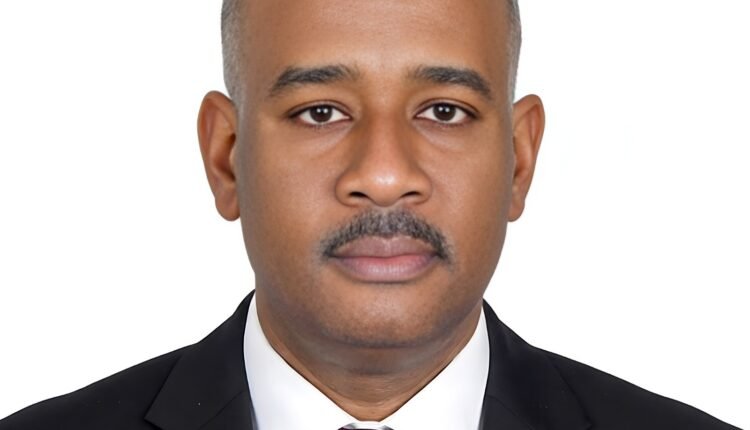
By Muhannad Awad Mahmoud
I received the gracious invitation from the office of His Excellency Ambassador Lieutenant General Engineer Imad al-Din Mustafa Adawi, Sudan’s Ambassador to Egypt, to attend a reception honouring Ambassador Yasser Sorour on the occasion of his appointment as the Arab Republic of Egypt’s Ambassador to Sudan. I made sure to arrive exactly on time.
In a single sentence, the reception was a beautiful tableau in which the Residence of the Sudanese Ambassador in Cairo captured the depth of the relationship between the Nile’s northern and southern banks. Distinguished diplomatic, political, media, and business figures from both countries attended; warm speeches kept speakers at the podium so long that it seemed none of them wanted their words to end; and a choir performed Egyptian and Sudanese songs, completing the scene with emotion and beauty.
Among the leading guests, alongside Ambassador Yasser Sorour and his wife, were Minister Plenipotentiary Karim Mokhtar, Deputy Assistant Foreign Minister for Sudan and South Sudan Affairs; His Excellency Dr Mohamed El-Orabi, former Egyptian Foreign Minister and Chairman of the Egyptian Council for Foreign Affairs; as well as several senior Egyptian Foreign Ministry officials, journalists and businessmen.
From the Sudanese side came former Foreign Minister Ambassador Dr Ali Youssef Al-Sharif, together with a number of ministers from the Government of Hope who happened to be in Cairo, most notably the Minister of Culture, Information and Tourism, Mr Khalid Al-Aiser, who addressed the gathering from the podium, alongside a broad group of diplomats, former ministers and businessmen.
My friend Engineer Monjed Youssef also attended, representing the Egyptian-Sudanese company. In my view, he is the most optimistic Egyptian I know about the future of Sudanese-Egyptian relations.
The reception was not merely a farewell to an official moving from one post to another. Rather, it seemed like a public renewal of an old covenant between two peoples brought together by the Nile long before politics drew borders.
Had I been allowed to speak that evening, I would have begun with Ambassador Hani Salah, Egypt’s Ambassador to Sudan, whose term ended in recent days and who will be succeeded by Ambassador Yasser Sorour.
Ambassador Hani Salah concluded his mission with a distinguished honour when His Excellency Lieutenant General Abdel Fattah al-Burhan, Chairman of the Transitional Sovereignty Council, awarded him the Order of the Two Niles, First Class, in recognition of his efforts to strengthen relations between the two countries.
Ambassador Hani Salah’s tenure coincided with one of the most difficult periods a diplomat could face in his career. War broke out, the lives of millions were shattered, and more than 1.5 million Sudanese crossed into Egypt, where they found the doors of a neighbouring society open to them. They lived among its cities and neighbourhoods rather than in tents and refugee camps.
The presence of Sudanese in Egypt was not a one-way burden. They rented and purchased property, opened restaurants and shops, established companies and factories, and generated economic activity and employment opportunities.
Such integration could not have taken place so easily in another country. For a Sudanese person, Egypt is not a foreign place; it is a natural extension of his homeland, society and culture.
Sudanese people will continue to remember this, privately and publicly, regardless of political assessments or changing circumstances.
Politically, Egypt maintained a position of profound importance: support for Sudan’s unity, sovereignty and national institutions, foremost among them the armed forces, while rejecting its partition or the creation of parallel entities alongside the state.
This position reached its clearest expression when His Excellency President Abdel Fattah El-Sisi declared explicit “red lines”, foremost among them preserving Sudan’s unity and safeguarding its institutions.
Many brotherly and friendly countries stood by Sudan, but I particularly value the Egyptian position for its insistence on the phrase “supporting state institutions”.
Sudan today, after the enormous destruction inflicted upon its institutions, economy and infrastructure, does not need assistance alone. Above all, it needs to restore the state itself.
Whoever supports Sudanese institutions is supporting Sudan’s continued unity and its capacity to recover.
This position reflects a deep Egyptian understanding of Sudan’s nature, as well as a genuine intention to protect the state as an entity rather than manage its crisis indefinitely.
While we recognise the institutional role of the Egyptian state, reports and recommendations from ambassadors and diplomatic missions remain essential inputs to decision-making.
For this reason, Ambassador Hani Salah deserves recognition for what he accomplished during a period of war and immense political and humanitarian pressure—an exceptional period that cannot be measured by conventional standards of diplomatic performance.
We have become accustomed to Egyptian ambassadors to Sudan leaving behind a legacy that is difficult to surpass.
It is enough to mention Ambassador Osama Shaltout, who remained close to Sudanese people even after completing his mission, to the extent that some jokingly describe him as “Sudan’s ambassador in Egypt”. He continues to attend their occasions and take an interest in their concerns, and he was among the distinguished guests at that very reception.
Whenever we think an ambassador has set a standard that will be difficult for his successor to match, the successor arrives and adds to that legacy.
It is almost as though we might borrow the famous saying about Umar ibn al-Khattab and say to each of them:
“You have certainly made things difficult for the ambassadors who come after you.”
Today, the responsibility passes to Ambassador Yasser Sorour, but at a completely different stage.
If Ambassador Hani Salah’s era was one of war and preserving the state, Ambassador Yasser Sorour’s era should be one of return, reconstruction, and building major economic partnerships.
Choosing a diplomat of Ambassador Yasser Sorour’s calibre for this mission sends a clear message about Sudan’s place in the Egyptian leadership’s calculations.
He has served as Assistant Foreign Minister and Director of the Department of Sudan and South Sudan Affairs. He has also spent many years working on Nile Basin affairs, in addition to serving at Egypt’s mission to the United Nations and at its embassies in Pakistan, Italy, Bosnia and Herzegovina.
He is not going to Sudan to begin learning about the country. He arrives carrying accumulated knowledge of its affairs, complexities and strategic position within Egyptian national security.
The voluntary return of Sudanese people from Egypt is gaining momentum. Thousands of Sudanese are now returning to their country every day, and the numbers have begun to rise more noticeably alongside the Sudanese government’s decision to return state employees to work from inside Sudan, including those in taxation and various government ministries and institutions.
The decision to resume university operations from Khartoum has also clearly encouraged large numbers of academics, employees, students, and their families to return.
However, many families and business owners will not base their return on an administrative decision. They will return when they find electricity, water, hospitals, schools and basic services.
Therefore, the fastest way to expand and accelerate voluntary return is to speed up reconstruction and restore essential services.
Here, Egypt — with its expertise, companies, and geographical proximity — can play a role no other country can with the same combination of efficiency and speed.
Yet I believe Ambassador Yasser Sorour’s greatest task goes beyond rebuilding what the war destroyed. It is to establish a new economic relationship founded on shared interests.
Official trade between the two countries has reached about one billion dollars annually, even during the war. But the real figure is higher, because a significant portion of cross-border trade — particularly in sesame, livestock, gold and other commodities — is not fully reflected in official statistics and does not contribute to the two economies as it should.
The objective should not be to halt this movement, but to regulate and develop it: upgrading border crossings, payment systems, transport and inspection mechanisms so that fragmented border trade can become a genuine economic engine.
Many initiatives have been launched under the banner of “Thank You, Egypt”, and every sincere expression of gratitude deserves appreciation.
But I believe Egypt is not thanked through slogans alone. We thank it by building shared interests, increasing trade and investment, and connecting production, markets, and infrastructure—so the relationship becomes resilient to political fluctuations because it is firmly rooted in people’s lives and everyday interests.
One of the most important issues I hope the new ambassador will make a priority is changing the perception of Sudan.
There is a saying commonly heard in diplomatic circles: an ambassador cries twice — once when he is told he is going to Sudan, and again when it is time to leave.
My friend Graham, the former South African Ambassador to Sudan, once told us that when he was appointed, his friends asked him:
“What have you done to your God to deserve being transferred to Sudan?”
After arriving, however, he discovered a country completely different from the image created by the news: a generous and honourable people, renowned for hospitality and good company, and a country rich in resources, culture and diversity.
This paradox exposes a profound injustice in the media portrayal of Sudan.
Sudan often appears before the world only when there is war, famine or a coup, while its resources, opportunities, culture and people disappear from view.
Worse still, significant sections of Egypt’s business and intellectual communities themselves know very little about Sudan, except those who have previously worked there or interacted closely with its people.
This “blind spot” has prevented many opportunities for cooperation.
I therefore hope Ambassador Yasser Sorour will make media engagement an integral part of his mission by strengthening the media attaché’s office at the Egyptian Embassy and encouraging Egyptian television channels, newspapers and production companies to be present in Sudan — not to embellish reality, but to portray it in its entirety: its challenges, opportunities, resources and stories of recovery.
Egyptian media, with its experience, influence and reach, can provide a strategic service to both countries if it helps Egyptians and the wider world see Sudan as it truly is, rather than as it is reduced to in crisis bulletins.
As for the essence of my own vision, as a businessman interested in the economies of both countries, I believe Egypt will inevitably turn southwards sooner or later.
It would be better for it to do so now, within a carefully considered strategic partnership, rather than later under the pressure of necessity.
Egypt’s allocation of Nile water is fixed at 55.5 billion cubic metres per year, while per capita availability has fallen to around 500 cubic metres — roughly half the water-poverty threshold. Agriculture accounts for around three-quarters of water demand.
As population growth continues and the water gap widens, expanding agricultural land within Egypt becomes increasingly costly and places greater pressure on resources.
Sudan, by contrast, has vast agricultural land, water, and natural resources, while Egypt has advanced agricultural expertise, seeds, technology, and farmers capable of significantly increasing productivity.
The equation is simple: the more Egyptian agricultural investment expands in Sudan, the less pressure there is on water and land resources in the north, while production and food security increase in both countries.
This is not a call for Egypt to take from Sudan. It is a call for the two countries to produce together.
Land, water and opportunities from Sudan; expertise, technology, capital and markets from Egypt — within equitable partnerships that preserve sovereignty, distribute benefits fairly and create jobs for Sudanese and Egyptians alike.
Many initiatives and papers have been presented on agricultural integration, but they have often begun with enthusiasm and then stalled, and we do not know why.
The next phase requires moving beyond seminars to real projects: joint production zones, joint-stock companies, bank financing, roads, transport, storage and food processing, and long-term purchasing agreements.
Only then can the expertise of Egyptian farmers and Sudan’s resources restore the true meaning of the phrase “Sudan, the world’s breadbasket”.
In my view, this is the historic mission awaiting Ambassador Yasser Sorour: to move relations from the strength of emotion to the strength of mutual interest; from managing the consequences of war to shaping what comes after it; and from repeatedly talking about integration to implementing its first major projects.
We, the businessmen and investors operating between Egypt and Sudan, will not be spectators.
We will be partners and supporters of every step that builds this enduring relationship upon the foundations of production, investment and mutual benefit.
The farewell reception was beautiful.
But the most beautiful message has yet to be written.
It will be written in Khartoum, when Ambassador Yasser Sorour begins his mission and, with him, a new phase begins — one that we hope will one day be remembered as the moment when the unity of the Nile Valley was transformed from a beautiful poem into an economic project, built by two peoples sharing a common destiny.
Shortlink: https://sudanhorizon.com/?p=17595