

Where Do Forgiveness and Justice Stand in the Coming Sudanese Dialogue? (2–2)
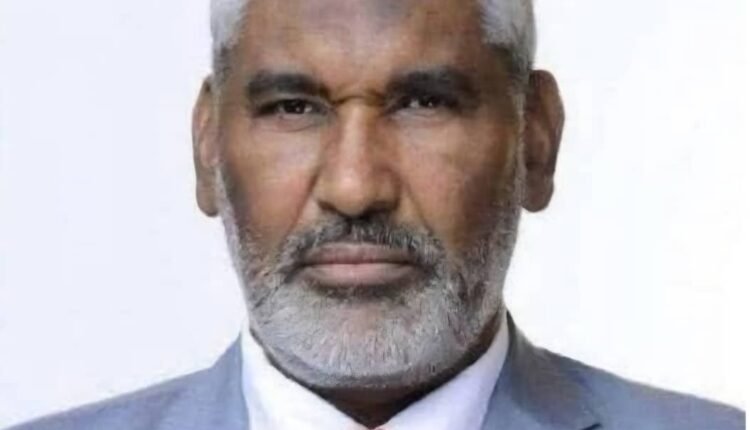
Abu Ubaida Ahmed Ali
If justice is a necessity, then the justice of the victor is not justice. Likewise, reconciliation built upon forgetting the truth cannot produce lasting peace. Sudan needs a form of justice that distinguishes between the guilty and the innocent; asks for evidence before judging affiliation; and holds accountable those who committed crimes, rather than those who merely bear the name of a tribe, region, or political party. From this perspective, the Sudanese dialogue, negotiations to end the war, and societal reconciliation are three distinct processes that should not be lumped together.
The national dialogue should be open to all Sudanese, but inclusiveness does not mean abandoning standards. The necessities of reality may require negotiation, but they do not automatically confer political legitimacy on everyone who has taken up arms. Societal reconciliation, meanwhile, is deeper and more enduring because it concerns rebuilding trust among Sudanese people.
Dialogue is not merely a hall to be prepared, chairs to be arranged, names to be invited and a final communiqué to be drafted. Genuine dialogue requires a national foundation and agreement on the meaning of the state, respect for its sovereignty and the rebuilding of its institutions. Above all, Sudan needs a unified national military institution, operating in accordance with the constitution and the law, as well as a resolution of the issue of weapons and regular armed forces in a manner that prevents the recurrence of multiple armies and competing loyalties. A modern state cannot be built with two armies, nor can a stable democracy be established upon weapons wielded by forces with divided loyalties.
The greatest danger is that future dialogue may become a political bargain among elites, in which negotiators divide power among themselves while the people remain outside the room. Sudan does not need a bargain that reproduces the crisis; it needs a national project that rebuilds the state, returns the displaced and refugees, reconstructs cities and villages, reopens schools and hospitals, repairs the economy, restores the civil service, places weapons under the authority of the state, and establishes a democratic political system deriving its legitimacy from the people.
The safest path is therefore:
Truth → Justice → Reconciliation → Reconstruction → A Democratic State
These stages may overlap, but none should be allowed to cancel out the others.
Sudan does not belong to a political party, movement, alliance or military force. Sudan belongs to its people; the army belongs to the state; the state belongs to the people. Power is a responsibility, not a prize, and politics is public service, not an inheritance.
To the advocates of forgiveness, we say: yes, we want forgiveness. We want the sons and daughters of Sudan to shake hands, the displaced to return to their homes, refugees to return to their homeland, students to return to their schools, and farmers to return to their fields. But do not ask the victim to forget before knowing the truth, nor to forgive before seeing justice done.
And to the advocates of justice, we say: yes to justice, but do not turn it into revenge, and do not use the blood of the martyrs as fuel for political vengeance.
In the end, we want a Sudan in which the state triumphs over chaos, the law over force, justice over revenge, forgiveness over hatred, citizenship over tribalism, and peace over war.
That is the peace Sudan deserves. And that is the forgiveness that does not kill justice.
Shortlink: https://sudanhorizon.com/?p=17342