

UK: Arrangements to Elevate UNSC’s Meeting on Sudan This Month to Ministerial Level
Sudanhorizon – Mohamed Osman Adam
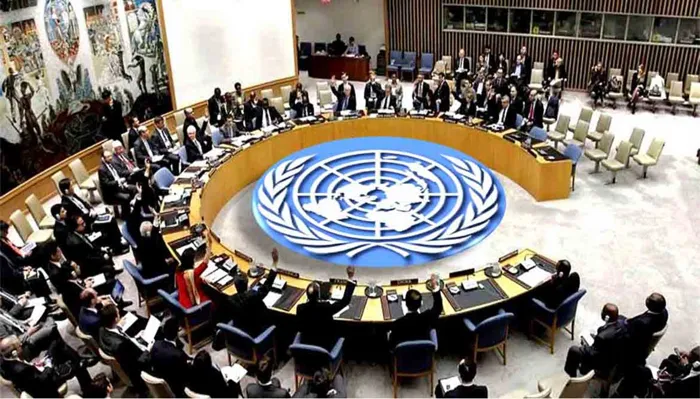
The United Kingdom is seeking to elevate the UN Security Council (UNSC) meeting on the situation in Sudan, scheduled for the 19th of this month, to ministerial level in an effort to give further impetus to the ongoing developments in Sudan.
Britain assumed the presidency of the Council for the month of February from Somalia, which held the presidency in January 2026.
The Council’s official website stated on Tuesday that the Security Council is expected to receive its quarterly briefing on the situation in Sudan in February, and that the United Kingdom, which holds the rotating presidency of the Council during February, intends to elevate the briefing to the ministerial level.
The Council’s monthly report also states that the Council was scheduled to receive a briefing this month on the work of the sanctions committee on Sudan pursuant to Resolution 1591. However, as of the time of writing the report, the committee’s chair has not yet been appointed, as Council members continue their negotiations regarding the allocation of seats to subsidiary bodies for this year. In this context, the United Kingdom proposed that the Sanctions Committee (1591) fulfill its reporting requirements through a written statement.
The report noted that the Council meeting was expected to address the escalating conflict on multiple fronts in Sudan, where the Sudanese Armed Forces are attempting to expel the Rapid Support Forces militia and consolidate their territorial control over strategic locations. They are intensifying their efforts to capture and defend key cities through ground operations, artillery shelling, intensive drone strikes, and other aerial bombardments.
The Kordofan region has emerged as a major center of conflict, while fighting continues in other parts of the country, including North Darfur. In South Kordofan, the humanitarian situation in the towns of Dilling and Kadugli continues to deteriorate.
The Chairman of the Sudanese Transitional Sovereign Council and Commander-in-Chief of the Sudanese Armed Forces (SAF), Lieutenant General Abdel Fattah al-Burhan, met last Monday in Port Sudan with a British delegation headed by Admiral Edward Algren, Senior Military Advisor at the UK Ministry of Defence for the Middle East and North Africa.
During the meeting, they discussed the overall developments in Sudan, the efforts being made to achieve peace, security, and stability, and reviewed the trajectory of bilateral relations between the two countries and prospects for strengthening and developing them in a way that serves mutual interests.
The delegation also included the UK Special Envoy for the Horn of Africa, Richard Crowder, and the British Military Attaché in Cairo.
In a press statement following the meeting, Richard Crowder, the UK Special Envoy for the Horn of Africa, affirmed the support of the UK government and people for the Sudanese people.
He emphasized that his country is dedicating resources to supporting Sudan in achieving security and stability, restoring essential services, and advancing development and recovery.
He also expressed his regret for the suffering and tragedy endured by the Sudanese people as a result of the ongoing war.
Crowder added that they had held important talks with the Chairman of Sudan’s Sovereign Council regarding the urgent need for a ceasefire, and that they expressed their profound shock at the images emerging from El Fasher, which revealed widespread brutality and mass killings.
Crowder stressed the need for concerted international efforts, led by the United States and its partners, to end the conflict, provide humanitarian assistance, and put an end to the atrocities witnessed in El Fasher. He noted that the United Kingdom would assume the presidency of the UN Security Council in February and would host a joint conference with Germany in Berlin in April to support Sudan.
The British envoy affirmed London’s commitment to close coordination with its partners in the United States, Norway, the United Nations, and the European and African Unions to ensure lasting peace and stability in Sudan.
The Security Council website stated that media reports indicated the Sudanese Armed Forces and allied forces entered Dilling on January 26, after the city had been besieged by the Rapid Support Forces (RSF) militia for nearly two years. This reopened the eastern road linking Dilling to North Kordofan State. This advance also facilitated the reopening of supply routes to Dilling, allowing the Sudanese Armed Forces to resupply their garrison.
At its meeting on December 22, 2015, the Security Council received a proposal from Sudan’s transitional Prime Minister, Kamil al-Tayeb Idris, calling for an immediate ceasefire in Sudan, to be monitored by the United Nations, the African Union, and the League of Arab States. The proposal included the complete withdrawal of the RSF from areas under its control and the reintegration of its fighters not accused of war crimes into society. Idris also pledged to hold free elections after a transitional period.
The Rapid Support Forces militia, which controls the main cities in Darfur, rejected the proposal, while the UN Secretary-General, Antonio Guterres, was informed of the initiative, which was welcomed by the Chairperson of the African Union Commission, Mahmoud Ali Youssouf, who described the proposal as a “comprehensive” and “forward-looking” framework.
Shortlink: https://sudanhorizon.com/?p=10916