

Transitional Founding in Sudan: From Conceptual Outlines to the Necessity of Mechanisms
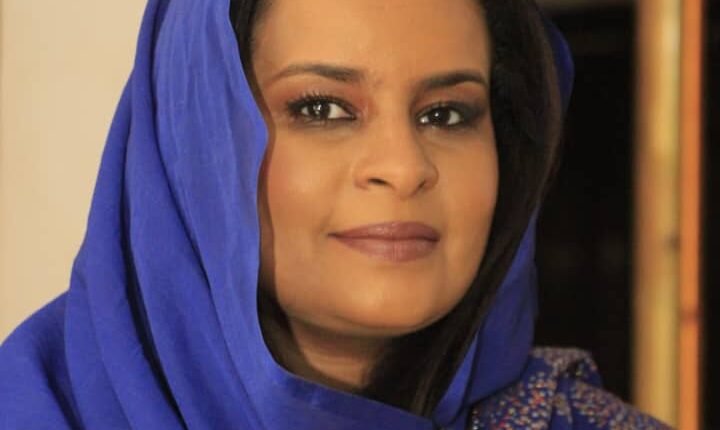
Dr Mayada Siwar Al-Dahab
The article “Sudan’s Earthquake” by Ambassador Obeid Murawih, published two days ago, does not merely offer a critical reading of the past or a diagnosis of the present crisis. Rather, it goes further by outlining a conceptual framework that seeks to re-found the Sudanese state on a new basis. This proposition, in itself, represents an important shift in political thinking—one that moves beyond managing crisis towards envisioning state-building on fundamentally new foundations.
The article proceeds from a central premise: that Sudan is undergoing a historical moment requiring a profound reassessment of its experience of national governance. Any genuine transition, therefore, cannot be a mere passage, but must instead be a conscious founding process that redefines the relationship between state and society. Within this context, the call for “truth and candour” emerges as a necessary entry point for any national reconciliation—an idea grounded in real human experiences of conflict resolution and peace-building.
However, the significance of this vision lies not only in its theoretical value but in its capacity to be transformed into a practical project. It is here that the primary gap becomes evident. Despite its intellectual richness, the article remains largely at the level of conceptual outlining, without sufficiently advancing to the level of institutional mechanisms. Transitional founding, at its core, is not an abstract idea but a complex political and institutional process that requires precise identification of the tools needed to translate vision into reality.
For instance, discussions of truth-telling and reconciliation require implementable instruments and clear procedures: Who oversees the process? What powers are granted to it? How is its transparency and independence guaranteed? And what binding outcomes does it produce?
Similarly, the call for a new transitional phase built on a different foundation necessitates clarity regarding its structure: What are the institutions of transitional authority? How are regions and social forces represented? What is the nature of the relationship between civilian and military institutions? And what timeframe governs this phase to prevent it from becoming an indefinite transition?
In this regard, it is important to recall that these questions are no longer purely theoretical. Preliminary answers have already been proposed through the “National Founding Platform” vision, developed by a group of experts, which—two years ago—presented a roadmap for the structure of the transitional authority, mechanisms of gradual transition, and ways to manage the phase in a manner that balances stability and change. Such efforts constitute an important foundation upon which further work can build, particularly as they move the debate from theoretical reflection to practical proposal.
The article’s emphasis on the role of youth in shaping the future is likewise a positive element, but it requires meaningful integration into the structure of the transitional phase. The issue is not merely about acknowledging the role of youth, but about creating clear pathways that enable their genuine participation in decision-making within stable and sustainable institutions.
At the same time, it must be recognised that youth are not a homogeneous bloc; they themselves are part of the broader political and social polarisation. Moreover, managing a state under complex—or near-collapse—conditions requires a degree of institutional experience that cannot be overlooked. A more realistic approach, therefore, lies not in replacing one generation with another but in building a balanced transitional partnership that brings together experience and dynamism.
At another level, the article raises the problematic assumption of “voluntary concession”—what it describes as a “zero-sum equation”. While calls for political actors to transcend their interests in favour of the nation may appear compelling in theory, they collide in practice with the very nature of politics, which is inherently rooted in competition over power and resources. Experience shows that political actors rarely relinquish their projects voluntarily, except under real pressure or shifting power balances. This is further complicated by the absence of a guarantor capable of enforcing such commitments, as well as by the unequal distribution of military, political, and economic influence among the actors involved.
Accordingly, the challenge does not lie in issuing such calls, but in translating them into enforceable frameworks supported by clear arrangements and binding mechanisms.
Within this context, the importance of building a broad, non-ideological political alliance becomes evident—one that transcends traditional alignments and is grounded in a minimum programme focused on the tasks of the transitional phase, rather than reproducing ideological or partisan conflicts. Such an alliance could serve as a political incubator for transitional founding, provided that it is built upon clear foundations, effective coordination mechanisms, and a shared vision that prioritises state stability and reconstruction over narrow interests.
In this sense, the transition moves from the realm of general ideas to that of a structured, practical process—one that recognises the nature of conflict and seeks to manage it within organised frameworks that pave the way towards sustainable stability.
Ultimately, what the article offers is an intellectual foundation upon which further work can be built. Yet, for it to evolve into an implementable project, it must move from the level of general vision to that of institutional construction. This transition is what distinguishes an inspiring idea from a political project capable of effecting real change.
Reducing this process to an initiative led solely by “those with insight”, or to state adoption alone, overlooks a crucial factor: all major transformations arise from a complex interaction between organised popular pressure, relative political consensus, and the acceptance—or neutrality—of the military institution. Any simplification of this complexity risks reproducing the crisis in new forms.
In conclusion, “Sudan’s Earthquake” lays an important cornerstone in a necessary debate about the future of the state. However, it remains a beginning rather than an endpoint. The challenge now lies not only in generating new ideas but in refining them, building upon previous initiatives, and translating them into clear, implementable mechanisms capable of withstanding the complexities of political reality. Only then can the outlines of transitional founding evolve into a concrete path towards reshaping the state on more coherent and stable foundations.
Shortlink: https://sudanhorizon.com/?p=12359