

The Post-War State: Who Will Rebuild the Apparatus That Builds It? (1-2)
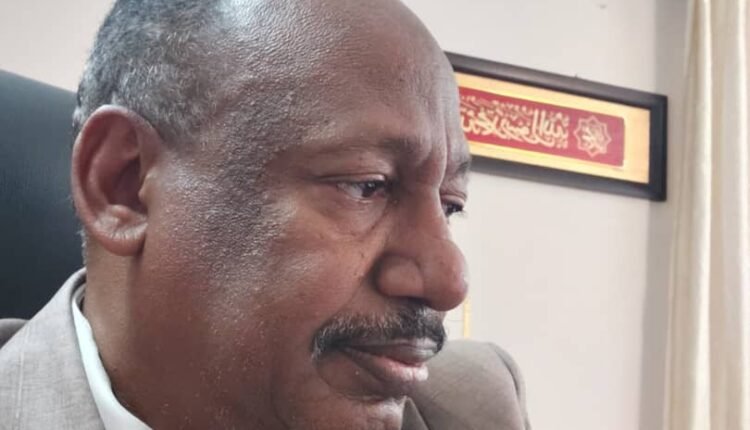
By Dr Al-Sadiq Ali Haj Al-Sheikh
When the war ends, the hardest question begins: how do we rebuild a state capable of rebuilding what has been destroyed, safeguarding what is rebuilt, and creating a different future for its citizens?
Destruction is not limited to what the eye can see. When war passes through cities, it may destroy a home, burn a road, close a school and extinguish the lights of a hospital. But deeper destruction quietly seeps into the spirit of a place, the institutional memory of its organisations, and the state’s ability to know what it wants and to do what needs to be done, when it needs to be done and in the right way.
When the guns fall silent, and the country begins to catch its breath, the question is not simply: What was destroyed, and how do we rebuild it? The deeper question becomes: What kind of state do we want to build?
Nations do not recover through bricks and mortar alone, nor do they regain their health simply by repainting walls and reopening doors. The state is a living organism. It has a mind that plans, a hand that implements, a memory that preserves institutional knowledge, a conscience that provides oversight, and a heart — the citizen — for whom it exists.
This is why Sudan’s civil service is more than a collection of ministries, departments, units and employees. It is the quiet thread that connects the state to people’s daily lives: in the school that opens its doors, the hospital that receives a patient, the land that is registered, the document that is issued, public funds that are managed, the project that is completed, and the road that connects a village to a town.
When this thread weakens, the state does not collapse all at once. Instead, it gradually erodes. The gap widens between what the laws say and what people experience, between what plans envisage and what reaches the citizen, and between what the state spends and the impact it actually delivers.
The War Has Exposed Long-Standing Fragilities
The war has revealed the extent of the damage to state institutions, but it did not create all the weaknesses we currently suffer from. It was preceded by years of accumulated administrative problems, including overlapping responsibilities, inadequate workforce planning, declining training, weaknesses in some recruitment and promotion systems, poor links between responsibility and results, and uneven capabilities across institutions and levels of government.
For this reason, simply returning the administrative apparatus to its pre-war state is not necessarily the right objective.
This difficult moment has given us a rare opportunity to reconsider the foundations themselves: how should the Sudanese state function?
The aim should not be to restore the past exactly as it was, but to learn from it and then build a government apparatus better equipped to deal with the Sudan that will emerge from the war — a Sudan facing enormous needs in reconstruction, development, public services and resource management.
The Civil Service: A Matter for the State, Not Merely for Employees
Discussion of the civil service is often reduced to employee numbers and the size of the wage bill. Yet, at its core, the civil service is the mechanism through which government policies are translated into action.
A school does not function through a decision alone. A hospital cannot provide healthcare through regulations alone. A road project is not completed simply because it has been approved in the budget. Behind all these things are employees, engineers, accountants, planners, technicians, managers and leaders who possess institutional knowledge and turn decisions into reality.
The public servant is therefore not merely a line item in the budget, but part of the state’s institutional capital.
This does not mean that everything within the civil service is fit for purpose, or that every employee performs to the required standard. It means that reform should view employees as part of the solution and seek to unlock their potential rather than reducing them to a financial cost.
Is Public Service Attractive or Repellent to Talent?
This raises a question that deserves to be at the heart of the debate: is public service in Sudan still attractive to skilled professionals, or has it become a force that drives them away?
A public-sector career does not attract talented people through salary alone, although fair pay is essential. It also attracts them when it offers a clear career path, a respectful working environment, opportunities for learning and advancement, a fair system of performance assessment and promotion, and a sense that the institution values knowledge and experience.
If the public sector cannot retain or attract talent, the state loses something that cannot easily be replaced: its professional memory and technical capacity.
At the same time, the state has every right to ask: what value does each position add? Are the resources spent on an institution commensurate with the results it delivers? Does the government apparatus really need all these positions, units and structures?
Both questions are legitimate and not contradictory.
Employees need a state that treats them fairly, while the state needs employees who fulfil their responsibilities efficiently. Between the two, a new administrative compact must emerge — one based on fair pay for work, recognition for achievement, and accountability in return for responsibility.
Citizens and Public Servants: Two Sides of the Same Relationship
Another question then arises: are citizens satisfied with the services provided by the state?
It is not difficult to find citizens complaining about lengthy procedures, too many service counters, unclear responsibilities or delays in processing their requests. But it would be wrong to turn such complaints automatically into a condemnation of the employee.
The employee works within a system whose procedures may be complicated, whose powers may overlap, whose resources may be limited and whose technological systems may be weak.
An employee may genuinely want to complete a task but lack the tools or authority required to do so.
At the same time, public servants retain a professional responsibility to be disciplined, treat people properly, comply with the law and perform their duties.
The right question, therefore, is not: Who is at fault — the employee or the citizen?
Rather, it is: How do we design an institution that makes it easier to serve citizens while giving employees greater capacity to do their jobs?
Is the Problem the Employee or the System?
It is easy to put everything on the employee. It is equally easy to absolve the employee entirely and place all the blame on the system.
The reality is more complicated.
Employees are responsible for their conduct, integrity and discipline, but their performance is also affected by the institutional environment in which they work. If job descriptions are unclear, powers overlap, incentives are weak, training is limited and performance-assessment criteria are vague, the institution is not enabling employees to perform at their best.
Reform should therefore not become a campaign to search for people to blame. It should be a project to build a system in which good performance is possible, competence is valued, and shortcomings can be addressed and subjected to accountability.
Redrawing the Map of the State
Perhaps the most important requirement for Sudan’s civil service is to reconsider the state’s structures.
Over the years, ministries, departments, authorities and independent institutions have accumulated, while responsibilities and mandates have sometimes overlapped. In some cases, more than one body may operate in the same field or perform similar functions without sufficient coordination.
This creates a need for a comprehensive institutional review — not one aimed at cutting structures simply for the sake of reducing their number, but one that asks:
What is the role of each ministry? What should its departments do? Which institutions could be merged? Which functions could be consolidated? What should be delegated to the states? And which functions does the state no longer need to perform in the same way?
The objective is to create a government apparatus with clear responsibilities, less duplication, greater agility, and stronger delivery capacity.
The Administrative Shadow
In such an environment, what might be called the “administrative shadow” emerges: repetitive procedures, overlapping units, responsibilities divided between several bodies, and, at times, positions that are disproportionate to the actual workload.
This shadow does not necessarily mean employees do not work. An employee may be competent and dedicated, yet work within a structure designed in such a way that procedures, coordination, and duplication consume part of their capacity.
Structural reform therefore becomes a means of freeing employees themselves from unnecessary administrative burdens.
The Sudan We Want to Build
Ultimately, the question is not how to restore the civil service to the past, but how to make it capable of serving the future.
The Sudan that emerges from the war will need a government apparatus capable of managing reconstruction, attracting investment, developing public services, managing resources, building infrastructure, expanding education and healthcare, and managing relations between the federal centre and the states.
This Sudan cannot be managed by an institution weighed down by overlapping responsibilities and outdated procedures.
We have an opportunity to redefine the civil service: from an apparatus managed by regulations and procedures to one managed by objectives and results; from an employee tied to a fixed office to a skilled professional who can be deployed wherever the state needs them; and from an institution that measures its success by the size of what it possesses to one that measures success by what it delivers.
To be continued in Part Two: How Can We Build a Government Apparatus for the New State?
Shortlink: https://sudanhorizon.com/?p=18459