

The Nightmare of Violence
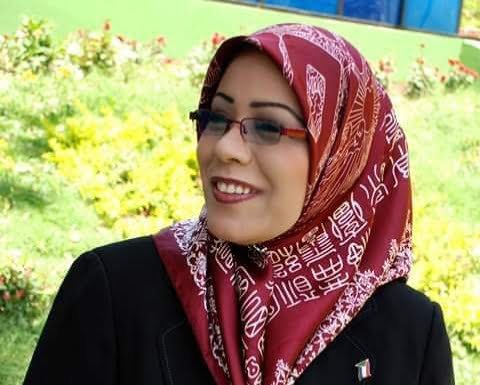
Dr Inas Mohamed Ahmed
The war in Sudan is witnessing a rapid escalation across regional and international platforms, calling for an end to the conflict. The UN Secretary-General has urged swift action to end what he described as a “nightmare of violence”. Meanwhile, Washington continues its efforts to halt the war—whether at the request of the Saudi Crown Prince or through the work of the Quartet, which is now pushing for a three-month “ceasefire”. This proposal would allow the militia to catch its “strangled breath” and receive fresh supplies of weapons, mercenaries, and equipment from the “state of malice”, enabling it to continue killing, looting, and displacing the Sudanese people. For this reason, the Sudanese Armed Forces rejected it, and it was nationally categorised as the worst proposal ever submitted—because it calls for dismantling the army and dissolving the security services while leaving the rebel militia untouched.
According to its contents, Sudan could even be placed under international guardianship—an unacceptable violation of sovereignty.
This ill-intentioned document was drafted during the period when the “state of malice” was setting the Quartet’s agenda and before the balance shifted, consigning both the agenda and its sponsors to the shelf as we moved into a new phase.
The United Nations, whose team held its first meeting in Khartoum on Monday, 24 November 2025—its first since the outbreak of war in mid-April 2023—has taken a step described by UN spokesman Stéphane Dujarric as a strong indication of enhanced humanitarian coordination on the ground. This means that the organisation and its agencies are now closer to the battlefield, where information, testimonies, and facts will be directly present—leaving no room for distortion, misdirection, or concealment.
Meanwhile, Massad Poulos announced from Abu Dhabi that he had presented a “plan” to end the war, but it had not been accepted.
The obvious question is: why did his plan fail to gain acceptance?
How could it, when it was not neutral in the first place—and when the mere presence of the UAE within the Quartet is itself the clearest proof? Even more telling is that Poulos made his statements as part of a media briefing in Abu Dhabi.
What is even more provocative is Anwar Gargash’s remark that “Abu Dhabi welcomes US leadership and its efforts to end the atrocities in Sudan.”
Who committed these atrocities?
Who fuelled them by arming the militia and supplying it with matériel and mercenaries?
Abu Dhabi is the last entity entitled to speak about atrocities in Sudan.
In parallel, the United Nations describes the war in Sudan as “the world’s largest humanitarian crisis”, marked by war crimes, crimes against humanity, and horrific atrocities requiring urgent international intervention across all mechanisms. This was the assessment of the UN Under-Secretary-General, Tom Fletcher, during his meeting with Sudan’s Permanent Representative in Geneva, Ambassador Hassan Hamid. Fletcher reviewed what he witnessed during his visit to Sudan—the scale of violations and crimes committed—and affirmed the positive role of the Sudanese government in opening border crossings for the delivery of humanitarian aid.
Meanwhile, on the German–French border, the European Parliament has called for holding those responsible for Sudan’s tragedy and humanitarian catastrophe to account. During a meeting in Strasbourg, MEPs demanded firm measures to prosecute those involved in grave violations and brutal crimes against civilians. They intend to vote on a draft resolution condemning systematic abuses, calling for strengthened cooperation with the International Criminal Court, and urging the imposition of European sanctions on perpetrators.
The world’s growing attention to the war in Sudan and its implications strengthens our insistence on the national roadmap presented by the Sudanese government and submitted to the United Nations in February 2025. This roadmap outlines clear steps that lead to clear outcomes for ending the war.
The official position of the Sudanese government is now reshaping the strategic landscape. It links the internal mechanisms for halting the war with the need to stop external interventions and the foreign support provided to the terrorist militia to prolong the conflict. It clarifies the necessary remedies and stages needed to move towards political recovery—through Sudanese consensus, without guardianship or directives from any external party.
Shortlink: https://sudanhorizon.com/?p=9077