

The Media Between Malice and Foolishness
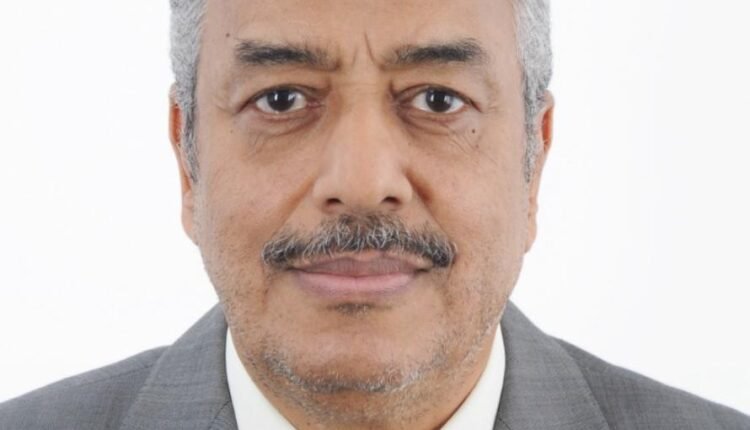
Dr Ismail Satti
When one follows what is written in the media — and I am not speaking here solely about Sudanese media — it becomes possible, after some reflection, to classify a broad segment of it into two categories, with scarcely a third:
Malicious media… and foolish media.
As for foolish media, it is familiar enough.
It is the kind of media that swallows narratives exactly as they are presented and reproduces them without critical reasoning, knowledge, or even the most instinctive sense of doubt.
It is the media that imagines relaying information is equivalent to understanding it, and that repeating grandiose terminology can substitute for analysis.
You find it breathlessly chasing “trends”, confusing noise with truth, and mistaking the intensity of coverage for depth of understanding.
In linguistic terms, the fool is slow of comprehension, lacking in discernment, and easily deceived.
This type of media requires no conspiracy, because its intellectual inadequacy alone is sufficient to produce misinformation automatically.
But this is not the more dangerous form.
The more dangerous form is malicious media.
This is media that does not appear outwardly hostile.
Indeed, it may at times seem to stand beside you, sympathise with your cause, or even defend you.
Yet its real function is not to reveal the truth, but to reshape it in a manner that reconstructs the audience’s consciousness in ways that serve prevailing balances of power and interests.
This kind of media does not always lie through words; rather, it lies through proportions.
It magnifies what ought to be minimised, and minimises what ought to be magnified.
It redraws the image of conflict so that the powerful appear less brutal, and the weak appear less weak, until matters become confused for the audience and the moral standard disappears into the fog.
Among the most insidious tools employed by this form of media is the exaggeration of the capabilities of the defeated and weaker side while diminishing the capabilities of the victorious and stronger side.
At first glance, this may seem like fairness towards the weaker party, but in reality it can be the exact opposite.
For this kind of media manipulation does not merely reshape perceptions of conflict abroad; it is also exploited domestically within mass communication, leading ordinary audiences to drift into a state of emotional euphoria, celebrating promises of victory that may never materialise.
Then, as realities unfold, those same audiences collide with crushing disappointment and a deep sense of grief and defeat.
One of the essential conditions for entering wars — or even evaluating them rationally — is that each side should know its true capabilities as they are, not as it wishes them to be. It must prepare multiple scenarios for unfolding events: the best, the worst, and the most likely, and then equip itself politically, militarily, and psychologically for each possibility.
As for self-aggrandisement and living within a fabricated media image, it may grant temporary emotional exhilaration. Still, it often ends up being a cause of shock and collapse.
When a besieged force, a devastated state, or an unarmed people are portrayed as possessing extraordinary powers or as being an equal adversary to the force crushing them, the psychological and political consequences become extremely dangerous.
This is because the neutral observer will no longer see a scene involving oppressor and victim, but rather a balanced conflict between equal sides.
At that point, the excessive use of force against the weaker party becomes easier to justify, because — according to the manufactured media image — that party is not truly weak, but fully capable of defending itself.
If it is then defeated, crushed, or unable to protect its people, it becomes the one blamed.
As though the media were saying to the victim:
“We convinced the world that you were strong. If you failed to survive, then the fault lies with you.”
We saw this model clearly in the American wars against Iraq.
During the long years of sanctions beginning in 1992, and later during the 2003 war, Western media consistently exaggerated Iraqi capabilities, military arsenals, and the so-called Iraqi threat, until it appeared to the world as though the United States were waging an existential war against a vast military empire, rather than against an exhausted state emerging from a devastating war and suffocating sanctions.
The same scene was repeated even more brutally in the Gaza Strip.
A besieged population with no airports, no air defences, and no conventional army is portrayed as though it possesses sufficient instruments of power to make the destruction of its neighbourhoods and the killing of its children merely a “legitimate defensive response”.
Even language itself becomes complicit in the falsification:
It is not called “bombing civilians”, but rather “targeting infrastructure”.
Not “killing children”, but “collateral damage”.
Not “occupation”, but “a security operation in self-defence”.
Today, we see something similar in the Zionist-American confrontation with Iran.
The media does not want Iran to appear entirely weak because portraying it as a pure victim would generate broad international sympathy and potentially embarrass major powers before global public opinion.
For that reason, Iran is depicted as a massive force capable of threatening the entire world, so that any attack against it appears as a legitimate preventive measure.
This is not journalism in the true sense, but the engineering of perception.
It is the media that does not merely report war, but actively participates in constructing the psychological and moral stage upon which war is justified.
Other examples of this pattern can also be seen in the treatment of Serbia during the North Atlantic Treaty Organisation bombing campaigns in the 1990s, Afghanistan after the September attacks, and even during certain phases of the Russo-Ukrainian War, where images of strength and weakness shift according to the political and media requirements of the moment.
The problem is that audiences often fail to notice this type of manipulation because people naturally focus on what is being said rather than how it is being said, or on the scale and prominence it is given.
Yet malicious media operates precisely within this grey zone:
Not always by inventing lies outright, but by redistributing light and shadow.
In today’s world, the real battle may no longer be solely a battle of weapons, but a battle over defining who is strong, who is weak, who deserves sympathy, and who should simply be abandoned to their fate.
For killing becomes far easier…
When global consciousness is reshaped so that the victim appears less innocent, less vulnerable, and less deserving of compassion.
Shortlink: https://sudanhorizon.com/?p=13820