

The Empowerment Removal Disaster: How the Committee Destroyed Sudan’s Institutions and Emptied Its Treasury
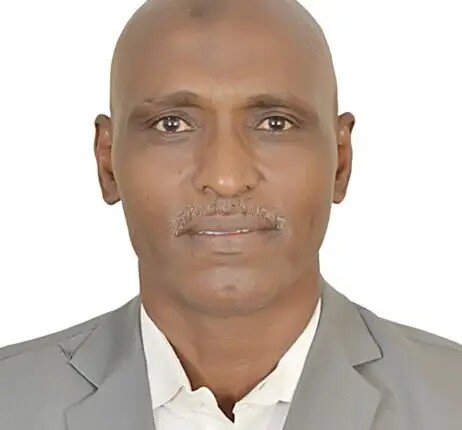
Dr Muzammil Suleiman Hamad
The Empowerment Removal Committee [removing traces of the former government from state institutions] has announced its intention to resume its activities inside and outside Sudan, despite having been officially suspended by the Transitional Sovereignty Council. This presents the author’s description of a paradox of tragic irony: how can the Committee operate freely and implement decisions when its activities have been formally frozen? It appears, in this framing, that the Committee acts as though it exists above the state and its laws—disregarding the suspension, and overlooking the consequences of its past actions, including mass dismissals, seized assets, and the migration of skilled professionals.
According to this perspective, the Committee moved beyond correcting a prior political trajectory and instead engaged in a broad dismantling of state institutions. Its impact extended to the judiciary, where hundreds of Supreme Court judges and judicial staff were dismissed—creating a vacuum that has affected the integrity and functioning of the courts.
The effects also reached the civil service, where more than 12,000 employees—including technicians, administrators, university professors, doctors, educators, healthcare workers, and even sanitation workers in Khartoum State—were dismissed. This, the author argues, led to a significant professional and humanitarian crisis.
The Committee is further accused of confiscating assets, including real estate, projects, vehicles, and both public and private properties, without adequate legal oversight. This, in turn, is said to have disrupted institutional resources and destabilised the national economy.
One of the most serious consequences highlighted is the mass migration of skilled professionals, with more than 5,000 academics, doctors, and engineers reportedly leaving Sudan. This exodus created substantial gaps in education, healthcare, and technical sectors, directly affecting development and institutional stability.
Economic Impact
Economically, the Committee’s actions are described as having contributed to the flight of domestic, regional, and foreign investment. Investors, according to the author, lost confidence in Sudan’s legal and institutional environment after witnessing asset seizures without clear oversight or accountability, alongside a lack of transparency in resource management. This resulted in economic stagnation and heightened financial instability.
A particularly serious claim relates to the handling of confiscated funds. The article states that millions—and even billions—of dollars were reportedly seized but not transferred to the state treasury or the Ministry of Finance. This assertion is attributed to statements from three successive finance ministers during the government of Prime Minister Abdalla Hamdok:
Dr Ibrahim Elbadawi (August 2019 – July 2020)
Dr Heba Mohamed Ali (July 2020 – February 2021)
Dr Jibril Ibrahim (February 2021 – August 2021)
According to the author, all indicated that the Committee’s funds were not incorporated into formal state financial systems or subjected to standard accounting controls—reflecting what is described as a deeper crisis of governance and oversight.
Legal and Institutional Accountability
The article highlights a report by a review committee chaired by the Undersecretary of the Ministry of Finance, which is presented as a key legal document. This report is said to provide evidence of procedural violations, document arbitrary decisions affecting individuals and institutions, and assess the broader damage caused.
Its existence, in this view, necessitates legal proceedings against those responsible, as well as the establishment of mechanisms to restore rights and rebuild trust in state institutions.
Proposed Way Forward
In response to what is described as a “catastrophic experience”, the author calls for the creation of an independent judicial commission or a specialised court to examine the Committee’s actions. Such a body should:
Possess clear investigative and adjudicative powers
Operate on professional and legal standards, free from political influence
Ensure accountability for violations
Restore rights to affected individuals
Help stem the loss of skilled professionals
Contribute to rebuilding institutional credibility
Conclusion
The article concludes that any attempted return of the Committee without oversight or accountability would represent not only a threat to institutions but a continuation of harm against national capacities and state resources.
In this framing, justice is not optional but a national and strategic necessity—essential for repairing institutional damage, restoring confidence, and ensuring that such an experience does not become a recurring model of governance.
Ultimately, accountability is presented as the only path towards rebuilding the state, restoring institutional trust, and safeguarding the future of coming generations.
Shortlink: https://sudanhorizon.com/?p=12218