

The Dialogue Committee and Our Divided Political Parties
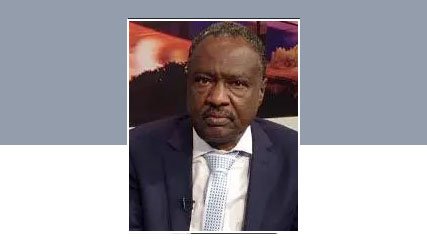
Rashid Abdel Rahim
The history of Sudanese political parties shows little tolerance for remaining outside power. They either become government partners or oppose it, and they have not hesitated to hand power over to the military when authority has shifted away from them to another political force.
Sudanese parties tend to either oppose the regime or participate in it. Their record offers little to suggest they are prepared to support a government while remaining outside it, regardless of how successful that government may be.
Moreover, most of our political parties are largely absent from society and devote little time to work that does not serve their objective of enjoying the privileges of power.
The parties rarely play a visible role in addressing major national issues. Their contribution to tackling tribalism and racism remains limited. They have little involvement with Sufi orders, cultural or sporting groups, trade unions or their activities.
The political parties that formed the Hamdok government and opposed the current regime have now become supporters of the rebellion, making it difficult for them to secure an opportunity to participate in the political process. They have also announced their rejection of dialogue.
This group includes the Umma Party faction led by Brima Nasser and most of the Imam’s daughters, a small number of members of the Democratic Unionist Party, and left-wing parties such as the Sudanese Congress Party, the Ba’ath Party, and the Nasserist movement.
These parties have achieved little electoral success in elections held under successive political eras and have historically had no parliamentary representatives.
Since the era of the Forces of Freedom and Change, however, their voices have become louder and more prominent than those of the groups that supported and participated in the current government. These include the Sudan Justice Alliance (TAS), headed by Dr Bahr Abu Garda; the Central Sudan Track led by Al-Tom Hajo; the Northern Track led by Al-Jakoumi; the National Movement Forces led by Dr Tijani Sisi; the Democratic Bloc, which includes the Democratic Unionist Party – Original, the Juba Peace Agreement movements, the Amin Daoud Alliance, and the Democratic Alliance for Social Justice led by Al-Tijani Al-Sisi and Osama Daoud [as referenced in the political grouping].
Among the Umma Party factions that support the army are the faction led by Abdel Rahman Al-Sadiq Al-Mahdi and the faction led by Dr Al-Sadiq Al-Hadi Al-Mahdi.
Given the current state of these political forces, little suggests we are heading toward a successful political outcome, even if elections are held and a new government is formed.
The government that emerges from this dialogue will have to confront an opposition that supports the rebellion.
We now face a committee tasked with preparing the ground for dialogue, yet many questions surround it. How was the committee formed, and who selected its members? What are the positions of its members towards the current opposition, and what are their inclinations towards the Somoud coalition?
The crucial question remains: will the committee withstand the scrutiny of watchful eyes and perform its duties in the face of a sharp, strong, influential, and probing media?
Shortlink: https://sudanhorizon.com/?p=17545