

Sudan Among the Powerful
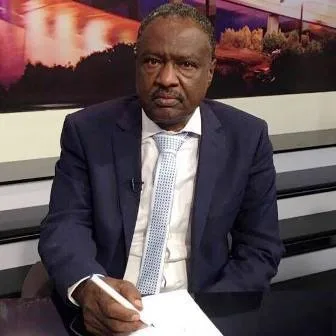
Rashid Abdel Rahim
The world around us is in turmoil—so what will become of Sudan? And where does it stand amid major transformations now coming into view, while we have been living through a war that has dragged on for years? Following serious threats by the United States against Iran and the movement of naval fleets, the situation suddenly de-escalated. The key conclusion to be drawn is that global conditions have become unstable and liable to be turned upside down at any moment.
It is now evident that the United States is being run by a reckless president who sees nothing to restrain him—even at an advanced age—from repeating the ugly act carried out against Noriega: removing a head of state from his seat, installing a replacement, administering the country, and plundering its wealth and oil, all without any meaningful response from the world or its Security Council.
Countries that are vigilant about their security and sovereignty have sought to safeguard themselves by building reliable alliances and partnerships. Pakistan, Turkey, and Saudi Arabia have begun building a strong alliance that, if completed, would give these countries formidable financial, military, and scientific power—power that would command respect and help restore a measure of balance to international relations.
As for the greatest form of protection, its path is power. North Korea is manufacturing nuclear weapons, and its leader openly defies international laws—yet no one dares approach it. We may not be able to form such an alliance or possess such power, but we can take firm positions that preserve our statehood.
Sudan’s rejection of the ceasefire requested by the Quartet led to its collapse. Historical evidence—and our own experience—shows that such initiatives often conceal agendas that pave the way for the fragmentation and loss of the country, as happened with the secession of South Sudan, facilitated by reliance on “Operation Lifeline Sudan”, which channelled aid, weapons, and equipment to the Sudan People’s Liberation Movement. Sudan’s firm stance in the face of the Quartet is the path to safeguarding the nation.
States that fear military power and the coercion of the great powers are the ones that fall; those that stand firm are the ones that protect their land and people. This was seen in Vietnam’s confrontation with the United States, and in Afghanistan’s resistance first to the Soviet Union and then to the United States—where determination and strength of will enabled the expulsion of American forces.
Even countries with fewer military resources, smaller populations, and limited equipment have preserved themselves by relying on resolve. Somalia—one of the weakest states in the world—managed to force American forces out. By contrast, when Venezuela hesitated, it lost its will, its president, its country, and its wealth.
Even European countries, America’s closest allies, have begun to grow stronger and adopt firm positions in the face of arrogance, as France recently did by standing its ground and deploying military forces to protect Greenland after Trump threatened to seize it.
In Sudan, we have faced the gravest threats—going beyond pressure in international forums and incitement to reach a direct war on our soil. We confronted wealthy states that fuelled the rebellion with lethal weapons and all manner of equipment, and we faced mercenaries arriving from our immediate neighbourhood—Chad, Mali, the Central African Republic, Niger, and South Sudan—as well as from as far afield as Latin America. Yet our people and our army stood firm, achieving victories with the means available to us, through prudent management of external relations and with appreciated assistance—though not equal to, nor close to, the support received by the rebellion.
We prevailed through our will and determination, and we came to understand that a strong, courageous, and unflinching stance is our way out. Our army achieved victories that mirror the strength, resolve, and steadfastness of our people.
We were a country that supplied its African neighbours with food, education, and culture—and we still are, and will remain so. Strong, we shall continue to spread peace and dignity, build respectful relations, protect our people, and provide development, progress, and prosperity—without becoming a subservient follower, tossed about by shifting circumstances from one direction to another.
Shortlink: https://sudanhorizon.com/?p=10528