

SAF Chief of Staff in an Interview with Al-Shorouk: No Future for the RSF in Sudan
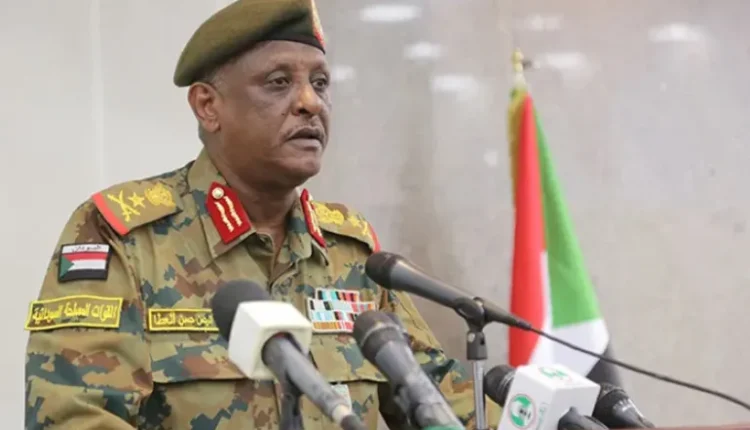
Khartoum – Interview by Samar Ibrahim:
The Egyptian newspaper Al-Shorouk conducted an interview with Lieutenant General Yasser Al-Atta—the member of the Sudanese Sovereign Council and Chief of Staff of the Sudanese Armed Forces (SAF). This was his first interview with an Egyptian newspaper since his appointment as Chief of Staff last April. The discussion covered the map of ongoing battles, priorities for the coming phase, and the regional and international scenarios surrounding Sudan.
During the interview, the Chief of Staff spoke about post-war Sudan: the form of governance, the roles of youth and political parties, and Al-Burhan’s refusal to assume power despite “popular campaigns”—though he added, “We will compel him.”
Given the importance of the interview—both in terms of its content and its timing—we at *Sudanhorizon* decided to republish it for the benefit of our readers.
– Let us begin with the current military map: which axes are a priority for the Sudanese Army at this stage?
All axes are priorities for us in the Sudanese Army, but the “head of the snake” lies in the major cities of the Darfur region—El Fasher, Ed Daein, Nyala, El Geneina, and Zalingei. We will soon enter these areas and liberate them from the Rapid Support Forces militia; everything the enemy is doing in Kordofan, Darfur, and Blue Nile will collapse and vanish. Although the enemy is present in Nyala and other Darfur cities, we remain vigilant regarding events in Blue Nile State, as the conflict could spread to areas such as the Dinder Reserve, Jebel Halawa, and Al-Fashqa; they might even attempt to reach the Red Sea coast. However, our efforts are focused on liberating Darfur, and we will soon triumph over the Janjaweed there.
– Some hold the impression that the military establishment might not favor a protracted war within Darfur. To what extent does this reflect reality? Does SAF currently possess the capability to wage this battle?
We believe that God will grant us victory because we are in the right, and we have faith in the will of our nation and the resolve of our fighting youth—across the army, intelligence services, Joint Forces, support battalions, mobilized volunteers, and popular resistance units. Furthermore, there is no such thing as an “easy” or “difficult” war; war is a matter of precise planning that takes into account all elements of the enemy’s strength and counters them accordingly.
We possess the precise preparations to address every aspect of warfare, and thus, we are capable of achieving victory over them. Ethiopia seeks to exploit the war to gain access to the port of Assab, and we have evidence that “Rapid Support” drones were launched from its airfield in Assosa.
While losses and some setbacks are inevitable during war, the most difficult task was the battle to liberate Khartoum. At the outbreak of the war, the militia numbered over 146,000 personnel, and they continued to receive support and mobilize within the capital throughout the conflict; they also possessed around 12,000 vehicles and combat armored units. Nevertheless, they were defeated by the Sudanese Army. True, the mission took time, but ultimately our plan was successfully executed. Subsequently, we managed to liberate Al-Gezira State and other areas across the Central Region fronts, and we are now on the verge of advancing toward Darfur from all directions.
We will not cede a single inch to the Janjaweed. Although a large proportion of them were Sudanese from indigenous tribes, they engaged in the killing, looting, rape, destruction, and displacement of the Sudanese people, driven by ethnic motives steeped in hatred and racism. We will not abandon our people in Darfur to this Janjaweed criminality; it is a historic responsibility—and the duty of the national army—to halt the militia’s crimes in Darfur.
Therefore, our collective decision is to defeat the Janjaweed and establish security and stability for our people in Darfur, Kordofan, and Blue Nile.
– What about the Kordofan front? Is the objective to secure the city of El Obeid or to advance westward toward Darfur?
The Sudanese Army has made significant strides in opening the route to Dilling and Kadougli in South Kordofan, including the reopening of the “exports route.” Just months ago, the militia threatened to sever the sole artery connecting Kosti to El Obeid and, by extension, the rest of Kordofan. Now, the route to Al-Rahad, Dilling, and Kadougli has been fully secured and reopened. We have completely eliminated the threat to El Obeid and the major national highways connecting these axes, securing all these strategic locations with substantial troop deployments.
Furthermore, we have deployed forces westward to shift the battle away from vital transport routes. We are currently preparing additional forces to push west toward Darfur; Kordofan has become a launchpad for operations into Darfur, just as the Northern Region serves as a starting point for fronts in the north.
– Do you fear the secession of Darfur?
Darfur will not secede—we will not allow it—nor will any part of Sudan break away. The Rapid Support Forces’ control over the western region will soon come to an end.
– The Blue Nile front has heated up. Why did the Rapid Support Forces choose to open this front? What is the significance of the timing? And was Ethiopian territory exploited for this purpose?
The Rapid Support Forces militia sought to open that front for one reason only: to disrupt the Army’s advance toward Darfur. However, when comparing this objective to the likely outcome, their goal will not be realized. We can mobilize one or two million fighters from a population of 48 million Sudanese; consequently, all their attempts will fail. Their move toward the Blue Nile actually depletes the strength they need to confront us in Darfur, and it will certainly not divert the Army’s attention to another area. The Army is fully capable of managing battles on all fronts simultaneously. The Darfur region is the priority for the current phase; the Blue Nile front was opened to obstruct the advance toward it, while the liberation of El Fasher, Nyala, and El Geneina is now imminent. As for Ethiopia, its interest lies in seizing fertile agricultural lands in border areas—such as Al-Fashaga, Jabal Halawa, Qeissan, Kurmuk, and Damazin—to exploit Sudan’s current circumstances for agricultural gain over a period of one or two years (though they naturally hope to extend this duration). Furthermore, if Ethiopia were to occupy the Al-Fashaga region—where the Ethiopian Amhara ethnic group, currently at odds with Prime Minister Abiy Ahmed’s regime, is present—it would facilitate an alliance between the Prime Minister and that group, after winning them over and shifting them from the opposition camp to the camp of supporters—especially given the historic dispute between Sudan and Ethiopia regarding border markers in that region.
Abiy Ahmed is also pursuing a key objective: if he were to seize the Al-Fashqa and Al-Damazin areas, he could then potentially capture the port of Assab in Eritrea—securing a Red Sea outlet for his country with the backing of allied regional states—on the premise that the territory is Ethiopian rather than Eritrean. However, this entire scheme will not come to fruition.
– Sudan has repeatedly accused Addis Ababa of launching drones from the Ethiopian airport in Assosa. What evidence supports this?
All nations possessing satellite capabilities are aware of this fact, as are the UN organizations operating on the ground in those areas. We have also obtained satellite imagery and intelligence confirming the use of Assosa Airport—and several other Ethiopian airfields—to launch drones in support of the Rapid Support Forces (RSF) as they moved into Sudanese territory. We have received further information that cannot be disclosed at this time.
The Sudanese army has shot down a number of these drones; the devices recovered and examined from them revealed their launch points and other data. We also contacted the manufacturers, who confirmed that the aircraft had been purchased by the militaries of regional states allied with both the RSF and Ethiopia.
– The Chadian army has accused its Sudanese counterpart of targeting its territory. What is the truth of the matter?
Approximately 250 to 300 combat vehicles belonging to the militia crossed the border from Libya into Chad, advancing about 70 kilometers into Chadian territory, before being destroyed near the Sudanese border. We have suffered greatly from this substantial support for the militia. We repeatedly warned officials in Chad and Libya to halt this support, but to no avail; consequently, it became necessary to counter this, especially given the escalation of such armed support.
– *What is the situation in the border triangle area where Sudan, Egypt, and Libya meet?*
There is a small militia presence there—about 30 combat vehicles—alongside 110 Libyan vehicles belonging to the “Subul al-Salam” (Paths of Peace) battalions. However, most of these forces are engaged in gold prospecting while also securing the passage of supplies to the militia inside Sudan. We have formed a force to eliminate them, and we will gain greater control over the situation there.
– *The impact of unregulated or artisanal mining has sparked controversy, particularly regarding the “Wadi Allaqi” area. What is the truth of the matter?*
All the events in question took place within Egyptian territory; they did not occur on our soil, as some have claimed.
A group of Sudanese miners had crossed into Egyptian territory and were working alongside Egyptian miners in Egyptian areas. Then, six “Technical” vehicles (pickup trucks mounted with weapons) belonging to the Sudanese Joint Forces arrived without orders from their command—indeed, even their presence in Sudan’s Northern Region was unauthorized. They likely did not realize the exact extent of the border; they crossed into Egypt and proceeded to a mining site where an Egyptian company was operating. A confrontation ensued, prompting Egyptian security forces to intervene, and the vehicles withdrew. The following day, two of their armed vehicles returned but were again confronted by Egyptian security. Subsequently, coordination between the two countries led to the withdrawal of the Joint Forces from those areas and their replacement with a Sudanese Army unit to prevent any further unauthorized actions.
– *Do you fear that the imposition of a comprehensive no-fly zone affecting the Sudanese Army might impact the course of military operations? How are you preparing to deal with this scenario?*
We are pressing ahead with our battle to the very end; we pay no heed to the narratives propagated by the US and the Security Council. The army and the people are confronting a force—backed by regional states and using the Rapid Support Forces (RSF) as a tool—that seeks to colonize Sudan. After the militia’s hard power was depleted, they brought in over 40,000 mercenaries from South Sudan, along with tens of thousands from Chad, Libya, Ethiopia, Somaliland, and West Africa, as well as around 2,000 mercenaries from Colombia, Ukraine, and the remnants of the Russian Wagner Group. None of this concerns us; what matters now is liberating our country, and no decisions will hinder us.
– How do you respond to the current allegations that the Sudanese army has used chemical weapons during the war?
This is a political lie—part of the machinations of the shadowy cells within the RSF militia, the agents of the Forces of Freedom and Change (Central Council), and the states supporting them that are targeting Sudan. They claim that the army used chemical weapons at some point during the war—specifically in the Al-Mogran and Karari areas. Regarding Al-Mogran: had such weapons been used there, I would have been less than 600 meters away at the Al-Muhandiseen military zone. To the west—less than a kilometer away—only the White Nile separates Al-Mogran from the Omdurman military zone. Similarly, the densely populated Tuti Island was less than a kilometer away from us. To the east—about 2 to 3 kilometers away—lay the General Command (with all its stationed forces), the Signal Corps, and the Bahri garrison. Our Armored Corps forces were located just 6 kilometers away. So, among all these people—myself included—who was actually affected by these alleged weapons?
Furthermore, consider the Al-Jaili area, which was torched by the Janjaweed; it housed depots for gas, kerosene, and petrol, as well as the main oil refinery. The nearby Free Zone—also burned down—contained materials such as cyanide, urea, and mercury. Yet, did this entire cocktail of substances—combined with the chemical weapons the army supposedly used—leave a single trace? Did any disaster occur as a result of chemical reactions? Such talk is absurd and false.
It is certain that, through satellite surveillance, the US and the West know full well that the SAF did not use chemical weapons. However, this is used as a pressure tactic—one to which we will not yield. Nevertheless, we welcome them to Sudanese soil to investigate this claim.
– So, you would welcome an international commission of inquiry?
Yes… we have no objection to a visit by an international commission of inquiry, because we are convinced that the army possesses no chemical weapons. Even if the commission’s report were to be falsified, the world would eventually find out.
The truth eventually came to light—much like how the facts emerged after the US invaded Iraq under the pretext of it possessing nuclear weapons, when in reality, Iraq was innocent of that charge.
– Was the pressure intended to secure a truce? Or was it aimed at removing Islamists from the political landscape, as the United States claims?
Early in the war, under Saudi auspices, the Sudanese Army signed a truce with the Rapid Support Forces (RSF), yet the latter failed to honor it. As for the “Quad” mechanism—or any committee that includes the United Arab Emirates—it is rejected.
Regarding the alleged presence of Muslim Brotherhood members or Islamists within the army: speaking as Chief of Staff, if I were to invite politicians—including Islamists—to a meeting, they would not accept the invitation.
When figures from the Forces of Freedom and Change were in power, why didn’t they clarify to us at the time that the army was controlled by Islamists? Why didn’t they arrest a single Islamist leader and bring them to trial? On the contrary, it was *we* who arrested key Islamist figures after the revolution and imprisoned them—even before the Forces of Freedom and Change took office. They remained in prison until the war broke out; it was “Hemedti” who broke open the prisons and released them. Yet now, those same politicians demand that we in the army arrest them again—after they have already fled to various Arab and European countries! Nevertheless, Al-Bashir and key figures of his regime remain in prison to this day.
Even the RSF’s claims that the army is filled with Islamists are false. In fact, Hasabu Mohamed Abdul-Rahman—the Deputy Head of the Islamic Movement—is a leader within the RSF. Furthermore, the media figures and politicians supporting the militia’s agenda are all Islamists—most notably Taha Osman Al-Hussein, among others. Is Taha *not* an Islamist, while *I* am?!! All Rapid Support commanders belong to the National Congress Party, and Hemedti and his brother Abdul Rahim are members of the Islamic Movement’s Shura Council; I tell them that these are false political allegations.
– Given current political developments—most notably the National Dialogue—what is the future of the military establishment, and of the Rapid Support?
The Rapid Support has no future in Sudan; there will never again be an entity known as the “Rapid Support” in the country.
As for the National Dialogue, it is a political process. We, as military personnel, have no role in governance, though we do have a relationship with the State itself. After thirty years of Islamic Movement rule, political parties have become increasingly weak and fragile; most of their leading figures have foreign ties and a tenuous connection to the homeland. Consequently, we must mobilize all elements of comprehensive national power to solidify the State’s foundations—especially given the dysfunction within the political sphere, where the nation is not a priority for these parties. We must bring them back to prioritizing the nation above all else.
We are not opposed to democracy—which is defined by elections—and we currently have a civilian Prime Minister. When I eventually retire, I will become a civilian myself; is it lawful to bar me from holding any position in government?
The problem, however, is that the term “civilian state” is being hijacked to circumvent democracy. The army does not wish to rule the country, but given these maneuvers, we believe the head of state for the next three or four election cycles should be the Commander-in-Chief. There is a faction within the army leadership that envisions a first term where the Commander-in-Chief serves as Head of State while the winning parties run the executive branch; in the subsequent term, the Commander-in-Chief would retire and then run for election. However, my own view is that the Commander-in-Chief—regardless of who holds the title—should remain Head of State, while parliamentary elections lead to the formation of an executive government possessing full authority to manage the state’s executive apparatus.
After the war, neither we in the army nor the Sovereign Council are clinging to power. However, this arrangement is necessary to protect Sudan from external and internal threats—foremost among the internal threats being the political parties themselves, due to their unpatriotic, foreign-linked agendas.
– But some young people launched a campaign to nominate General Abdel Fattah al-Burhan for the presidency; did he reject it?
A few days ago, I hosted a group of young people and figures from the December Revolution—including revolutionaries, resistance committee members, and members of the “Ghadiboon” (Angry Ones) movement—from the capital’s seven localities and representatives from all regions. The Chairman made a surprise visit and issued that statement rejecting the nomination.
Al-Burhan is not clinging to power, but we fear our country’s collapse and the disintegration of the state. We will compel him to assume leadership—to serve as the head of authority for several terms—until we have strengthened and supported our parties into becoming truly patriotic ones. We want Sudanese youth to form new, strong, patriotic parties with the nation’s interests at their core. We will involve them in governance so they gain experience, eventually allowing us to hand power over to them.
– The great December Revolution involved all the people of Sudan; are the current leaders truly worthy of the scale and grandeur of this revolution?
No, we want genuine leadership from the patriotic youth who organized and engaged with the revolution before the intervention of these cancer-ridden parties. We stand with them—shielded by the army and the people—until they are capable of managing the state; however, the country will not be handed over to those traitors again.
– But hasn’t General Al-Burhan issued decrees pardoning them so they can participate in the domestic dialogue?
Can any of them actually come to Sudan? They cannot, and I imagine the public reception awaiting them would be far from pleasant.
– What is the status of the agreement with Russia regarding the granting of a naval base on the Red Sea?
I am not closely following that file; it is a political matter—likely with the Council of Ministers or the Sovereign Council—but it is currently stalled. The Russians want the agreement ratified by a Sudanese parliament, just as i
Shortlink: https://sudanhorizon.com/?p=18016