

We Love Egypt, but We Love Sudan More
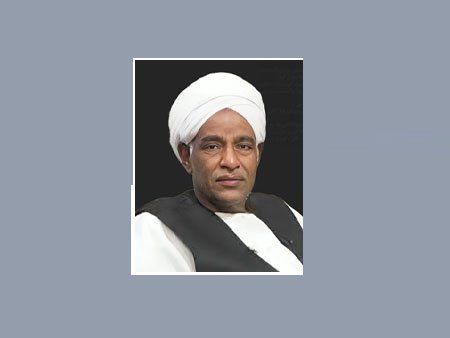
Mahjoub Fadl Badri
Sudanese people, in general, have been culturally and emotionally connected to Egypt since time immemorial, given the presence of righteous saints and men of God there. Egypt is home to Al-Azhar Al-Sharif, which includes the Sennariyya section for Sudanese students. It was also the first destination for Sudanese seeking opportunities abroad, whether to pursue religious learning or to find work in the military.
Neither the occupation of Sudan by Muhammad Ali Pasha nor the retaliatory campaigns led by his son-in-law, Muhammad Bey al-Daftardar, following the killing of Ismail Pasha, eroded this affection for Egypt. Those campaigns claimed nearly 20,000 lives in the areas between Shendi, Al-Matamma and Al-Damar.
Sudanese people generally believed Egyptians were innocent of the bloodshed inflicted on the Sudanese because the ruling elite of Muhammad Ali Pasha’s dynasty, including his son-in-law Muhammad Bey al-Daftardar, were not native Egyptians. The Khedival family’s origins lay in different places: Kurtcha in Albania, Konya in Turkey, and Kavala in Greece. Arabic was not their mother tongue, although they were Muslims.
Sudanese people refer to that period as the First Turkish Rule, which was brought to an end by the Mahdist Revolution. By implication, the Anglo-Egyptian colonial administration, or Condominium Rule, represented the Second Turkish Rule, since Egypt itself was powerless and under British occupation. Thus, the Sudanese harboured neither bitterness nor hatred towards the Egyptian people, whom they regarded, like themselves, as victims of colonialism.
Even after Sudan gained independence, Sudanese views of Egypt remained unchanged, despite historical grievances and disagreements over the international boundary between the two countries, including the Halayeb Triangle and the Wadi Halfa salient. This was so despite Sudan’s sacrifice of Wadi Halfa, its land and its inhabitants, to make way for the construction of the High Dam, as well as the unrepaid water loan, unfulfilled promises and all the other injustices committed both before and after independence.
Needless to say, relations between states are not the same as relations between peoples. We therefore find that the Sudanese people love the Egyptian people and do not hold them responsible for their governments’ actions, whatever those actions may be. Our country is waging an existential war and is receiving political and diplomatic support, and perhaps military support too, from Egypt, beyond any doubt. This is welcomed by both the Sudanese people and their government.
No reasonable person would deny any country’s right to defend its sovereignty, borders and citizens by whatever means it considers appropriate, provided it neither goes too far nor falls short of what is necessary. However, Egypt’s use of excessive force against gold miners along the border between the two countries constitutes a departure from the established norms governing how states address such problems. This is particularly true when dealing with innocent individuals who cross an unmarked border, have little control over their circumstances and certainly have no intention of challenging the Egyptian government. The Egyptian authorities could have taken appropriate measures instead of bombing them all at once with aircraft.
On the other hand, the isolated incident in Sudan that resulted in Egyptian deaths and injuries appears to have been a reaction to the killing of dozens of young gold miners. It should be viewed only as an isolated act, not as a reflection of the general mood among the Sudanese people. It would never occur to them that the Egyptian army might turn its weapons against their Sudanese brothers, who have stood by Egypt in all its wars and opened their territory and military camps to it.
Egypt’s hospitality towards Sudanese people when the War of Dignity broke out, and its treatment of them as guests who support themselves financially rather than receiving assistance as refugees, does not prevent us from condemning the bombing that claimed lives, even though the investigation into the circumstances of the operation has yet to be completed.
What is now required of both governments is to take the necessary steps to establish the truth, uphold justice and nip discord in the bud as swiftly as possible, before the rift widens beyond repair. The people of Sudan have already endured enough from a war that has devastated everything in its path. We don’t need any more tragedies.
Without superiority or an inferiority complex, we love Egypt, but we love Sudan more.
Shortlink: https://sudanhorizon.com/?p=19020