

Rebels or Genocidaires? Decoding U.S. Editors’ Shift in Language on Sudan’s RSF
Sudanhorizon – Mohamed Osman Adam
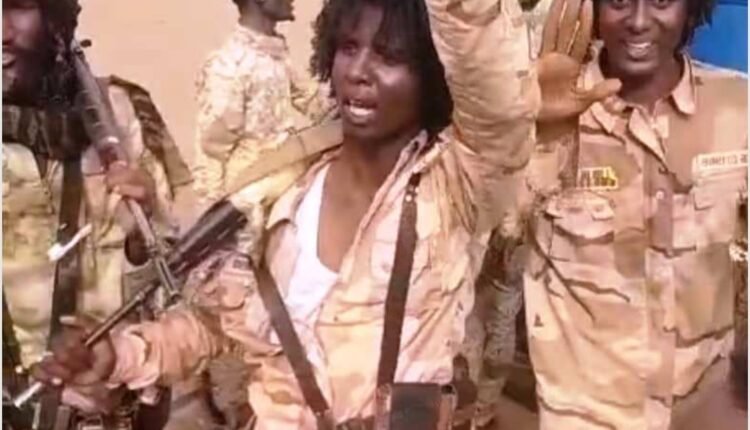
The New York Times published an article in which, for the first time in an editorial, it described the Rapid Support Forces (RSF) as “rebels”. Given that this was an opinion piece, its authors must surely have been fully aware of the distinction between describing the RSF as “rivals of the army” and describing them as “rebels”. Does this therefore represent a change in opinion, or is “rebels” simply another term being used to describe the Rapid Support Forces?
The article as a whole suggests that the editors were deliberate in their choice of terminology. The word “rebel” may be a neutral term, but in sociolinguistics it implies the existence of an established central authority against which other actors have rebelled. Accordingly, these forces have rebelled against the government, and the government therefore has the political right to use all available means to suppress them. This represents a change of political significance.
The opinion article, published under the headline “The World Must Wake Up to Sudan’s Atrocities”, reflects the views of the editors, even if those views differ from the general policy of the institution concerned. As the headline indicates, they described what the RSF militia had done in the past—even if it had done so with the approval of the government at the time—and what it is planning to do today as “atrocities”.
The newspaper’s editorial was published today, Monday, 13 July. It explained that the editorial “represents the views of a group of journalists whose opinions are informed by expertise, research, debate and certain longstanding values. It is separate from the newsroom.”
The editorial stated that, five months after the United Nations announced that acts of genocide had occurred in Sudan, another human rights catastrophe could be imminent.
Of course, I would point out that the reader will be aware that the report published five months ago by United Nations bodies and experts described what happened in El Fasher in October 2025 as bearing “all the hallmarks of genocide”.
Today’s article added that this was not an isolated case and that these “rebel” groups have “a history of committing atrocities”, suggesting that what happened was not random but rather the result of careful planning.
The opinion article went on to state:
“The Rapid Support Forces, a rebel group that controls parts of the country and has a history of committing atrocities, have massed outside the strategically important city of El Obeid and have nearly encircled it. About 600,000 people face severe shortages of food, water and medicine, and the Rapid Support Forces have already killed some civilians in drone strikes.”
In support of this account, the opinion article then cited the United Nations High Commissioner for Human Rights, Volker Türk, who wrote:
“The warning signs from El Obeid are unmistakable: Another human rights catastrophe is unfolding in Sudan.”
The writers then expressed regret that there are numerous reasons why the war in Sudan is so often ignored, despite being deadlier than conflicts that receive considerably greater attention. One reason, in their view, is that Sudan does not fit into broader global political debates in the same way as the wars in Ukraine and the Middle East.
They also argue that Africa is frequently overlooked by people on other continents, reflecting racial and economic double standards.
“Sudan has suffered the ravages of war for so long that efforts to bring about peace can seem futile.
None of these explanations is acceptable. Indeed, they may only compound the enormous costs of the continuing conflict. The war in Sudan is among the deadliest in the world, with independent observers estimating the death toll at between 150,000 and 400,000. Millions of Sudanese have been displaced from their homes, with some seeking refuge in neighbouring countries.”
The article also warned that, in addition to the loss of life and suffering inflicted upon innocent people within Sudan itself, the longer the fighting continues, the greater the likelihood that instability will spread across the region.
The editors stressed that the world must do more to halt the killing and mass displacement in Sudan and that the threat facing El Obeid should serve as a catalyst for urgent action.
The opinion article argued that the United States is uniquely positioned to encourage regional powers to intervene to halt the current threat and bring the war to an end.
“American leverage over Egypt, Saudi Arabia and the United Arab Emirates, countries that have provided support to the warring parties, can restart peace talks and begin with a ceasefire. The Trump administration must urgently recommit itself to peace in Sudan and to protecting innocent civilians who face the threat of sexual assault, torture and killing.”
If you wish, I can also produce a more concise, newspaper-ready British English version, while retaining the article’s central argument about the political significance of the term “rebels”.
Shortlink: https://sudanhorizon.com/?p=15891