

Ramadan Reflections
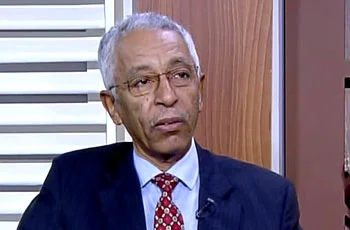
Dr. Dr Khidr Haroun
One of the most beautiful reflections I once heard about the month of Ramadan came from Professor Sayed Al-Khatib. I had accompanied him to the Mohammed Mosque, one of the mosques of our Sudanese brothers in the United States, whom Sayed used to call “Sudan America” affectionately. They had invited him to deliver the Friday sermon on a day in the 1980s.
He asked me why Laylat al-Qadr (the Night of Decree) is given such preference. As I recall, I repeated the common explanations people give about its virtues and their anticipation of its arrival. He then remarked—while speaking about the virtues of the blessed month—that he sees Ramadan, and fasting within it, as a celebration of the Qur’an, as expressed in the verse:
“The month of Ramadan in which the Qur’an was revealed as guidance for mankind…”
It is, he said, a divine call to give attention to the Qur’an. I do not recall whether he added that the reward of celebrating and honouring this month is Laylat al-Qadr, whose reward equals that of worship for more than eighty years—roughly the span of a person’s life at the peak of their intellectual maturity, even if old age later weakens the body and turns the hair grey.
For this reason, Muslims strive during Ramadan to maintain the continuous recitation of the Qur’an—though it would be even better if they did so throughout the entire year. This effort also stems from the virtues of reflection and contemplation on its meanings and messages, whose richness never runs dry, as well as the blessings of recitation, remembrance, and supplication.
When one experiences this spiritual joy, one understands the Prophet’s description of the Qur’an as a book “that never grows old with repeated reading.” Unlike other writings—which we may read once or twice at most—the Qur’an continually renews its meaning and impact.
This spiritual delight arises when a crucial condition is fulfilled—one mentioned at the opening of the longest chapter of the Qur’an, Surat Al-Baqarah, which is rich with essential guidance for a Muslim’s life. That condition is belief in the unseen:
“Alif Lam Mim. This is the Book in which there is no doubt, a guidance for the God-conscious.”
Who are the God-conscious? They are:
“Those who believe in the unseen…”
This is the key to faith—belief in God, the angels, the revealed scriptures, the prophets, the resurrection after death, and destiny with its good and its trials.
Those who deny the unseen view all heavenly religions as mere myths and illusions, and they ridicule the concept of resurrection after death. This dismissive attitude did not arise solely with modern scientific progress or the Enlightenment. It has existed since ancient times among those who restrict knowledge to what the senses can perceive.
It was expressed by Abu Jahl (Amr ibn Hisham) when he crushed a decayed bone in his hand and mockingly asked the Prophet whether God would bring it back to life after it had turned to dust. Similar scepticism has appeared across centuries—in jungles among barefoot tribes, as well as in the halls of the most prestigious universities. The common thread is the same: excluding the unseen from the sphere of life, often out of fear of being labelled backwards if one expresses reverence for it.
Yet the Almighty has revealed that some denial of the unseen—especially denial of resurrection—is often used as an excuse to follow one’s desires and surrender to base instincts. Ironically, when people find themselves overwhelmed by raging seas or peril in the skies, their hearts instinctively cry out to the Creator. But once safety returns, they return to mockery and denial.
The Qur’an asks:
“Does man think that We will not assemble his bones?”
The question of life after death has always been central to human thought. Reflect on the significance of this belief in the opening chapter of the Qur’an:
“Master of the Day of Judgment.”
After praising God as the Most Compassionate and Most Merciful, the verse reminds us of the Day when all will rise for accountability.
Throughout history, the human mind has struggled to answer the mystery of existence: How did life begin? Who brought it into being? Before revelation, human views differed widely—and they continue to differ among those who reject the unseen and the guidance of heaven.
Thus, debates among people will persist. The wise person distances themselves from fruitless argument. Whoever has been blessed by God with the gift of faith—even reaching the certainty of envisioning the Throne of the Most Merciful and the states of Paradise and Hell—should thank God, safeguard that blessing, and nurture it through continuous recitation of the Qur’an and contemplation of God’s creation.
Whenever the mind attempts to exceed its limits, it should remind itself that it is a created being that did not create itself, and that life continues even without its individual existence.
Even doubt itself often carries within it a natural inclination toward some form of belief. Philosophers have devoted entire disciplines—such as epistemology (the theory of knowledge)—to understanding how knowledge arises.
Great Greek philosophers such as Socrates, Plato, and Aristotle believed in the existence of a supreme divine being who created the universe. In one discussion I had with a Hindu, he explained that their belief includes a supreme deity above all others called Brahma, incomparable to anything. When I consulted the sources, I found his statement to be accurate.
Similarly, Dr. Francis Deng, in his book Africans of Two Worlds, wrote that the Nilotic peoples of southern Sudan also believe in a supreme God above all.
This echoes the verse in Surah Al-A‘raf (7:172):
“And when your Lord took from the children of Adam—from their loins—their descendants and made them testify concerning themselves: ‘Am I not your Lord?’ They said, ‘Yes, we testify.’”
After that primordial acknowledgement, humanity diverged along many paths.
“Among them are those who deviate, but upon God lies the straight path. And if He had willed, He would have guided you all.”
(O God), do not let our hearts deviate after You have guided us, and grant that we die among the righteous.
May God accept from us and from you fasting, night prayers, and all acts of devotion in this blessed month, and may He free us—and our parents—from Hellfire.
Shortlink: https://sudanhorizon.com/?p=12019