

Kidney Patients in Sudan: A Story of Patience Awaiting Hope
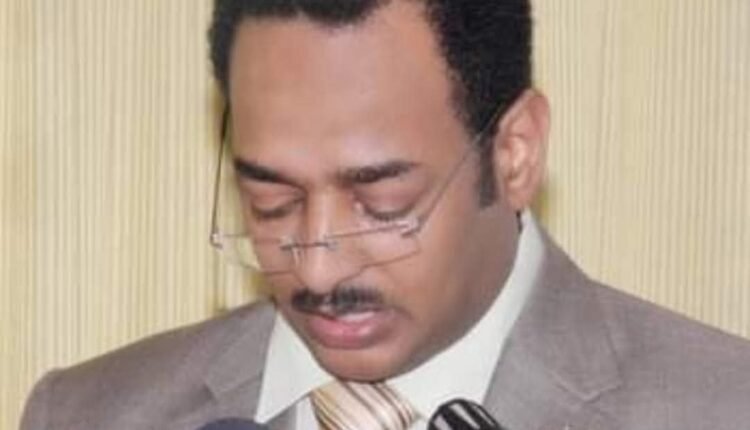
Dr Salah Da’aak
During my recent visit to Omdurman, the journey was not merely a trip from Port Sudan to Khartoum; it was a passage into a space of deep reflection on a reality quietly taking shape before us. I entered the Habib Al-Rahman Dialysis Centre in Omdurman after visiting several centres across different states along the way. Everything within the centre conveyed reassurance: evident cleanliness, precise organisation, and a level of care that closely approached international standards. Yet behind this orderly scene, another story was unfolding in silence—a story not visible in the details of the place, but in the faces of those seated within it, despite their welcoming smiles.
They were not only older people, as one might expect. Among them were young people in the prime of life, and children whose childhood features had not yet fully formed. It was a scene repeated in more than one centre and city, until it ceased to be a passing observation and became an urgent question: why is kidney failure increasing at this rate? What has changed in our lives that has allowed the disease to reach such young ages?
The answer cannot be quick or superficial. It requires serious scientific study to examine the causes in depth: chronic diseases inadequately controlled, changing lifestyles, possibly unsafe environments, or a level of health awareness that has yet to reach the required level. Perhaps the truth lies in a combination of all these factors. What is certain, however, is that this phenomenon can no longer be postponed, and that investigating its roots has become a necessity, not a choice.
Amid this concern, a wide door of hope emerges: kidney donation, as one of the humanitarian solutions capable of transforming the lives of thousands of patients. Medicine affirms that a person can live a normal life with a single kidney; indeed, the body adapts in remarkable ways, with the remaining kidney increasing its efficiency to perform a greater function—a manifestation of God’s grace and mercy. Some people are even born with one kidney and live their lives without ever realising it. This is not merely a medical fact; it is an invitation to rethink the concept of giving, and our capacity to become a reason for another person’s continued life. I know that some in our Sudanese society are hesitant even to donate blood, let alone a kidney—often due to limited knowledge and awareness of its risks and benefits.
Here, I recall a moving human story I encountered on a medical platform—a success story of a man named Mark Goralczyk, who lived for many years battling kidney failure. His life changed course in 2011 when his son decided to give him a new chance by donating one of his kidneys. That moment was not merely a medical procedure; it was a rebirth, granting him seven additional years of life. He did not merely survive—he devoted those years to giving, helping and supporting young people, as though the experience had granted him a deeper understanding of others.
Over time, however, the disease returned. When the transplanted kidney failed, his body could no longer endure another operation, despite his daughter’s willingness to donate. In September 2018, he passed away, leaving behind great sorrow—but also something far greater.
Just one month later, his daughters chose to transform their grief into action. One of them contacted a hospital in Chicago, and together they decided to honour their father by donating their kidneys to strangers. The question was not who would benefit, but how the message could continue.
From there, a remarkable chain of humanity began. The act of giving did not stop with two individuals; it cascaded to others, with each donor opening the door for another. What began as a gesture of loyalty became a network of transplants that restored life to many and brought hope back into homes that had nearly lost it. Thus, loss is transformed into meaning, and a person becomes a legacy that endures beyond their passing.
In Sudan, we need such models to become a deeply rooted culture. Kidney patient associations and treatment centres should adopt genuine awareness programmes that encourage donation and open doors of hope for patients. These patients are not merely medical cases—they are living members of society: among them are doctors, engineers, artists, heads of households, and students—people who can return to contribute to rebuilding life.
The experience of the musician Mohamed Wardi remains close in memory. After illness, he returned to continue his remarkable artistic contributions, as though life had granted him another chance to complete his journey.
The patients themselves are the truest face of this story. One of my colleagues, Dr Hassan Al-Sheikh—may God have mercy on him—was a registrar in Community Medicine at the Medical Specialisation Board. He was a beacon of activity, attending dialysis sessions and then, the very next day, participating in academic discussions or supervising examinations, as though the illness were merely a minor detail in a much larger journey. He lived on dialysis for more than fifteen years and passed away from causes unrelated to kidney failure. In Port Sudan, I met a man who had been on dialysis for over twenty-three years. He laughed and joked with those around him, living with remarkable contentment, holding on to a simple hope: that one day he might find a donor.
These people do not ask for much… only a chance.
Here lies the message that must not be overlooked: dialysis is not the end of life. It can be the beginning of a different way of living. A patient can work, participate in society, and live a normal life. Indeed, maintaining life and preserving morale positively reflects on the body itself—as though hope becomes part of the treatment.
Ultimately, this is not merely about a disease, but about the culture of a society—a culture that sees in donation a form of life, and in giving an extension of humanity. A culture that believes one kidney may save an entire life, and that an act of goodness, however small it may seem, can create an enduring impact.
We pray for health and well-being for kidney patients in Sudan, and that our society may include those who open doors of hope—those who believe that saving one life is, in truth, saving all humanity:
“And whoever saves one life, it is as if he had saved all mankind.”
Shortlink: https://sudanhorizon.com/?p=13195