

Impressions of a Returnee to Khartoum: The Deep State of Middlemen and Marginal Activities!!
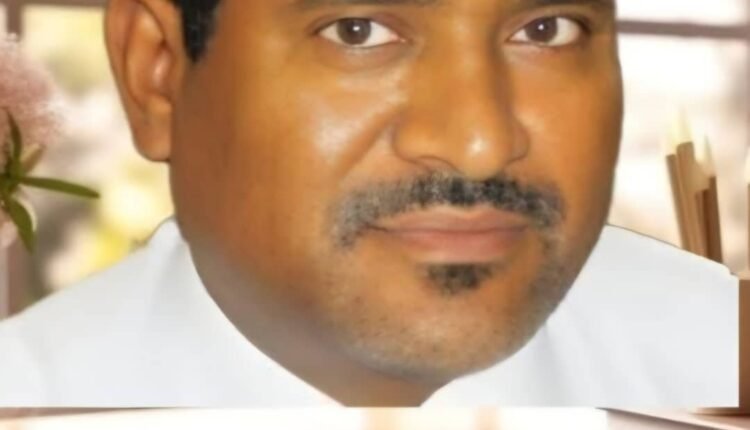
Dr Hassan Mohamed Saleh
Airlines usually inform passengers about the weather conditions outside when they arrive. When the flight attendant announced, in an Egyptian accent, that the temperature in Port Sudan at one o’clock in the afternoon was 42°C, the cabin erupted in comments and laughter, especially from those who had arrived from countries where even whales freeze to death. Even Cairo International Airport had recorded a temperature of 38°C at three o’clock that afternoon.
At Port Sudan Airport, arriving passengers are welcomed with good spirits, smiles and words of greeting, despite the cramped conditions. The airport consists of a small terminal hall where staff are drenched in sweat, and the place is crowded, even though passenger numbers are relatively limited.
A young woman representing one of the authorities was waiting to receive a group of arrivals believed to be from China. She gestured to them to come this way. The usual practice is to receive foreign arrivals by writing their names on a sheet of paper and holding it up to avoid embarrassment or confusion.
Port Sudan Airport, however, is almost entirely occupied by middlemen, with brokerage extending to everything from currency trading to taxi services. A person arriving from abroad cannot find a luggage trolley on which to carry their bags out of the airport, because intermediaries control all the trolleys. One of them hires the small airport trolley to the passenger and, once outside, effectively hands that passenger over to taxi drivers who transport them into the city, often together with other passengers.
The same scene is repeated at long-distance bus stations. Huge numbers of young men compete to sell tickets, while ticket brokers mingle with mobile-phone thieves and pickpockets.
The situation is no different when you reach your destination, where car or rickshaw drivers pursue you, looking for a new customer heading somewhere else.
Strong young men, who could instead be working in the fields and at production sites, are found engaged in marginal occupations or working as street vendors, carrying poorly manufactured Sudanese shirts and trousers to sell to people at inflated prices.
This is the “margin” that people create for themselves. Marginalisation is not about being born in the remotest rural areas, tending sheep, or studying at a basic or secondary school in Umm Guzain.
We passed through the State of Goodness, River Nile State, a generous and productive state with countless achievements and media platforms that provide news, highlight citizens’ concerns, and closely follow the work of the state government and local authorities.
During my time in River Nile State, I hoped to see the Animal Production City announced by Professor Ahmed Al-Tijani, Minister of Animal Resources and Fisheries. Instead, I found Dal Company products in shops alongside imported goods. I also saw locally produced dairy products with a distinctive Sudanese taste, as well as an abundance of fruit that needs improvement through new varieties and better presentation, since the flavour is fine.
Herds of goats feed on rubbish, and their milk is sold to people in Atbara and elsewhere. At the same time, there is a growing trend towards raising Saanen goats, which have spread to many farms and households in the capital and the states.
I was shocked and saddened by the enormous destruction that has befallen Khartoum. Buildings were destroyed with hatred and malice by the rebel militia. The Sudanese media rarely addresses these criminal acts, while journalistic discourse has largely been confined to calls for a return to the homeland. Yet this return has been more popular and spontaneous than official. People have reopened their shops and brought back taxis, minibuses and buses. Citizens have introduced solar energy into their homes and mosques through self-help initiatives and donations. Voluntary committees, led by the honourable so-called “remnants”, are also working in residential neighbourhoods to restore life, while citizens wait for the slow return of electricity.
News reports indicate that Sudanese university lecturers have begun returning to the country after the Minister of Higher Education and Scientific Research’s decision requiring universities to return to their premises in Sudan. Attendance has been set for 1 September 2026. Regrettably, however, neither the government nor the universities have prepared housing or transport for university lecturers in Khartoum State. The militia destroyed basic infrastructure, stole electricity transformers from residential complexes and looted vehicles.
Just as the government has been absent, so too have the trade unions representing higher-education employees failed to compensate those affected or to work with banks to provide university lecturers with vehicles and means of transport on instalment plans.
In conclusion
Rebuilding a state affected by war requires seriousness, sacrifice and commitment from the people who defended and liberated their country and are now embarking on reconstruction and increased production.
Intermediaries and brokers harm the economy. Their prevalence reflects a nation that is not sufficiently serious and a condition of laziness and inertia. If a vehicle or bus company already has an office and an administration, why should citizens not deal directly with those administrative bodies and make reservations without an intermediary, followed by an army of thieves?
Brokerage is not confined to this sector; it extends into areas of production as well. Because of this destructive activity, the state loses substantial resources, and the genuine producer suffers. The country will not progress unless we confront this dangerous phenomenon.
By the grace of God, I have returned to my homeland. We hope to see it recover from brokerage, disguised unemployment and other marginal activities, and turn instead towards genuine production and the productive employment of the energies of its young people.
Shortlink: https://sudanhorizon.com/?p=17291