

How Do We End Our War Fairly in a World Without Rules?
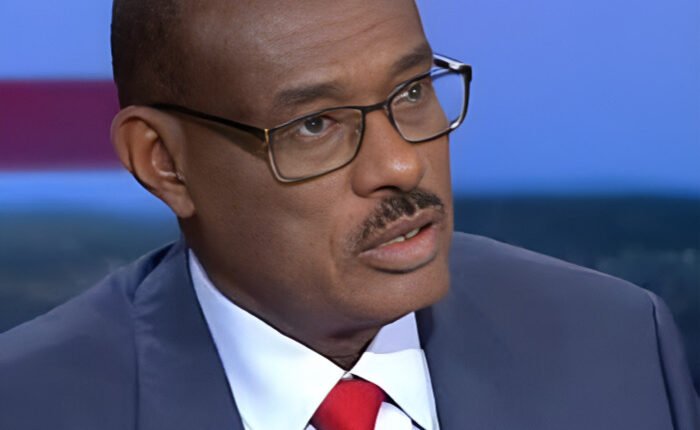
By: Dirdeiry M Ahmed
Last week, many listened with astonishment to the speech delivered by the Canadian Prime Minister at the World Economic Forum in Davos, Switzerland, on 20 January. The speech spread widely, drew praise, and was described as principled and realistic. The man spoke aloud what had long gone unsaid. Mark Carney declared that “the rules-based international order is fading.” He then reminded his audience of an article written in 1978 by the former Czech dissident—and later president—Václav Havel, describing how communists tightened their grip on Eastern Europe.
Havel recounted how, every morning, a greengrocer would begin his day by placing a sign in his shop window reading: “Workers of the world, unite!”—despite not believing a word of it. He did so to avoid trouble and to display “compliance”. Because every greengrocer on every street did the same, the communist system entrenched itself and endured through the participation of ordinary people in rituals they knew, deep down, were false. Havel called this “living within a lie.”
Carney told his audience—heads of state and leaders of major corporations—that it was time for states and companies alike to take down their signs. The hall erupted in applause.
He added that for decades, we had engaged in the institutions of the “rules-based international order” and extolled its principles, even though we knew that its story was partly untrue. The powerful exempted themselves when it suited them. Trade rules were applied unevenly. International law was enforced with varying degrees of severity depending on who the accused or the victim was. Yet American-led hegemony provided a stable financial system, collective security, and frameworks for dispute resolution. So, we put the sign in the window. We participated in the rituals. We largely avoided exposing the gap between rhetoric and reality.
Then he stated bluntly: “Let me be clear: we are in a rupture, not a transition.” In recent years, major powers have begun to weaponise economic integration, use tariffs as leverage, turn financial infrastructure into tools of coercion, and exploit supply chains as points of vulnerability. He added: “We can no longer live within the lie of mutual benefit through integration when integration itself becomes the source of our subjugation. A country that cannot feed itself, power itself, or defend itself has limited choices. And when rules no longer protect you, you must protect yourself.”
Most dangerous of all was what the Canadian Prime Minister said about what this means for his country and how it should respond. He argued that the question facing middle powers like Canada is not whether they must adapt to this new reality—because they must—but whether they do so merely by building higher walls, or by pursuing something more ambitious. He explained that Canada was among the first to hear the alarm bell, prompting a fundamental shift in its strategic posture. Canada, he revealed, no longer relies on the old, comfortable order based on geography and membership of major alliances. Its new approach rests on “values-based realism”—engaging with the world with open eyes, confronting it as it is, not as we wish it to be. His closing line was telling: “We no longer rely solely on the ‘strength of our values’, but also on the ‘value of our strength’. And we are building that power at home.”
It has become common to hear such sharp criticism of the “rules-based” order from an independent Western thinker or a leader from the Global South who has paid the price for that system in terms of security and stability. But for this frank admission to come from the Davos podium, voiced by the prime minister of a major Western country that benefited from that order for decades, is an event that merits serious reflection.
Nor was Carney an outlier. The German Chancellor Friedrich Merz, who leads Europe’s largest economy, endorsed Carney’s view. Speaking two days later, Merz said that the global order of the past three decades, based on international law, “was always flawed.” He echoed Carney’s call not to rely solely on the “power of values”, but to recognise the “value of power”, adding: “I share this view.” He even suggested it reflected the prevailing sentiment among Western elites: “Most people in this room share that perspective.”
This, then, is not a cool intellectual review, but a scalpel-sharp diagnosis of a watershed moment in the international system—a moment in which old reference points have disintegrated and a “rules-based” order has been replaced by one “based in power”. In this new world, the weak are no longer protected by law but exposed to the will of power. When Carney describes what is happening as a “rupture”, he is rightly saying that what we are witnessing is not an orderly transition to a new global system, but a rapid collapse without a consensual alternative.
Within a few short years, the tools of globalisation—supply chains, currency, technology, even food and energy—have shifted from instruments of cooperation to weapons of pressure. What does this mean for us in Sudan, especially at a moment when we need a functioning international system more than ever? And what does it mean, in particular, for our central question: how to end this war in a manner fair to the Sudanese people?
Under President Omar al-Bashir, Sudan refused to “live within the lie” of the rules-based international order. It did not perform the rituals of compliance or place the sign in the window. On the contrary, it challenged core assumptions of that order—resisting Western political conditionalities, rejecting externally imposed governance and security formulas, and pursuing sovereign policies that collided with the interests of dominant powers. As Havel predicted, the punishment was severe.
Not because Sudan was uniquely destructive to the global order, but because refusing the rituals of compliance threatened the system’s credibility itself. Thus came sanctions, isolation, reputational damage, and coercive diplomacy. Yet the empirical record complicates this simplified moral tale. Despite sanctions and isolation, Sudan built a viable oil sector from scratch, achieved the highest growth rates in its modern history over a full decade, implemented a continental-scale federal system that functioned—if imperfectly—expanded higher education on an unprecedented scale, reduced regional tensions, and came close to ending the Darfur war.
Rather than being welcomed by a system supposedly “rules-based”—the irony is striking—these developments were unsettling, because they suggested that living outside the lie does not necessarily mean collapse. Yet Sudan did eventually collapse.
Here, it is essential to distinguish between external punishment and internal failure. Sanctions and isolation were not primarily designed to improve governance, protect civilians, or foster democracy, as was claimed. Their purpose was to discipline non-compliance. US pressure to secede South Sudan formed part of a geopolitical recalibration of a problematic state, more than a humanitarian rescue of African Christians from Arab Muslims. In short, Sudan’s isolation and fragmentation were a message to others: this is the price of refusing to put up the sign.
Sudan did not collapse because it rejected the lie. It collapsed because it failed internally: it failed to institutionalise the transfer of power; failed to convert petrodollar revenues into a durable economic base and a robust social contract; failed to resolve civil–military relations; and failed to integrate peripheral actors except partially and elitistically. Sudan withstood external pressure, but failed to achieve internal transformation.
This distinction—harsh as it is—is essential for drawing lessons, and for understanding the challenge of ending Sudan’s war in the new world Carney describes.
But consider the alternative: what if Sudan had “complied” under Bashir and lived within the lie? Would it have performed better? Would it have avoided collapse? Rather than speculate, consider those states that did live within the lie. Did they fare better?
World Bank statistics over the past thirty years answer: in the short term, yes; in the long term, no—or at least not reliably. Many small and medium-sized states that complied gained access to finance, aid, and markets, avoided sanctions, and appeared stable. But that stability was often superficial, conditional, and reversible. When geopolitical winds shifted, they discovered that their sovereignty had eroded, that their development models were deeply dependent, and that their legitimacy was performance-based rather than structurally grounded. They enjoyed peace—but a peace without resilience.
Sudan, by contrast, lacked peace, but possessed resilience. Was it, therefore, better for Sudan to have lived within the lie? This is a false dichotomy. The real question is not between living within the lie or outside it, but between independence and illusion. Sudan’s error was not rejecting the lie, but failing to convert that stance into independence anchored in sustainable capabilities and robust institutions.
Havel’s model begins by taking down the sign—but it does not end there. Removing the sign without replacing false ritual with real structure invites chaos. Speaking truth without institutions to protect it is not independence; it is exposure.
If it is futile for Sudan today to re-erect the sign Bashir once rejected, what should it do? Let us pose, in the Sudanese context, the question Carney posed for Canada: do we confront reality by building higher walls, or by something more ambitious?
For Sudan, the question becomes: do we confront the war by seeking a hollow victory that militarises all of life, or by something more ambitious? More ambitious than victory is this: mobilising our energies and sources of strength; building democracy and durable institutions. Military victory may be necessary—but it is not the end. Our real victory lies in peace. And peace requires more than raw force: it requires unleashing Sudan’s true strengths so that they translate into internal stability and prosperity, regional influence, and international presence.
“Taking down the sign” today means firmly rejecting false frameworks for ending the war; rejecting settlements convenient for outsiders but unviable at home; insisting that peace emerge from Sudan’s political reality, not from the geopolitical interests of regional players. Conversely, “living within the lie” today means accepting elite bargains—such as those proposed by the Quartet—that freeze the war rather than end it.
Sudan should not restore the old sign that never protected anyone. But neither should it stand bare-chested before the storm. Taking down the sign is the beginning, not the end. The lesson from Havel, from Carney, and from Sudan’s own experience is that truth must be backed by capability; sovereignty must be paired with internal solidarity; and replacing the lie with truth must be institutionalised to become a durable path, not a descent into chaos.
As Carney advises, Sudan must read the world as it is, not as it wishes it to be. And the first thing it must read is that it lives in a world without rules. In such a world, being right is not enough to be vindicated; being wronged is not enough to earn sympathy. Being weak is not the tragedy—surrendering to weakness is. The greatest calamity is the belief that ending this war involves a choice between committing to the truth or turning your back on it in order to survive—thus returning the sign.
Shortlink: https://sudanhorizon.com/?p=10698