

Has the UN Security Council Become a Global Hyde Park?
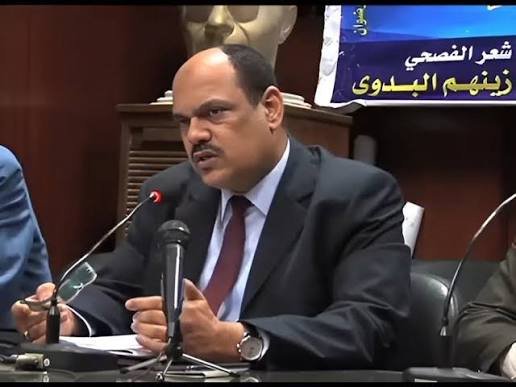
By Ambassador Rashad Farraj Al-Tayeb
Researcher in International Relations
The United Nations Security Council was meant to embody the collective will of the international community — the mechanism entrusted with maintaining global peace and security. It was designed as the organization’s executive arm, equipped with the authority, resources, and information to act decisively in the face of conflict.
Yet today, the Council appears to have lost sight of its founding purpose. It has become more a stage for rhetoric and prepared statements than an instrument of deterrence and resolution.
Since its establishment after World War II, the Council has accumulated a long record of failure and paralysis in the face of crises. Conflicts accumulate, resolutions are passed and forgotten, and wars persist unchecked. Nowhere is this impotence more visible than in the Palestinian cause — a just and clear issue backed by dozens of UN resolutions over the past eight decades, all of which have remained ink on paper.
The same pattern of inaction has repeated itself in Sudan’s ongoing tragedy. In its recent sessions addressing the situation in the city of El Fasher, North Darfur, the Security Council once again failed to take decisive action. As the Rapid Support Forces militia seized the city, horrific atrocities were committed — killings, rapes, ethnic cleansing, looting, and the burning of entire neighbourhoods — all in full view of the international community. Yet the Council responded with nothing more than recycled diplomatic rhetoric.
That day, the Security Council seemed less like a guardian of peace and more like a global version of London’s Hyde Park, where anyone can say whatever they please, with no accountability or consequence. Some member states spoke with astonishing ignorance or deliberate distortion about the nature of Sudan’s war, while others twisted facts to serve political agendas — as if performing in a public debate, not deliberating on human lives and national sovereignty.
Shouldn’t the Council first establish the facts on the ground before holding discussions and issuing statements? Isn’t impartiality and integrity the minimum moral duty when dealing with matters of war and peace?
The truth is not obscure. A faction that was once part of the Sudanese army — entrusted to protect the state and its institutions — turned its weapons against the nation. It seized bases, stormed cities, killed civilians, looted homes, and committed atrocities on an unimaginable scale. Its leaders openly declared their aim: the overthrow of the Sudanese state itself, targeting certain ethnic groups with displacement and extermination, and even broadcasting these crimes proudly for the world to see.
This rebellion then evolved into an external aggression, backed by regional and international powers that supplied money, weapons, and mercenaries under the pretext of fighting “terrorism” or “political Islam.” Despite this undeniable reality, some representatives still insist on referring to “both parties” and urging them to negotiate — as though this were a conflict between equals.
What logic is this? How can a sovereign state and its national army — constitutionally bound to defend its citizens — be equated with a rogue militia that has committed documented war crimes? How can those who tore their country apart be given a seat at the table to shape its future?
With this moral confusion and selective blindness, the Security Council has indeed turned into a “Global Hyde Park” — a place of endless speeches but no action, where the loudest voice replaces the just cause, and where victims are left to face their fate alone.
Shortlink: https://sudanhorizon.com/?p=8432