

Finance Minister: We’ll Focus on Tax Collection
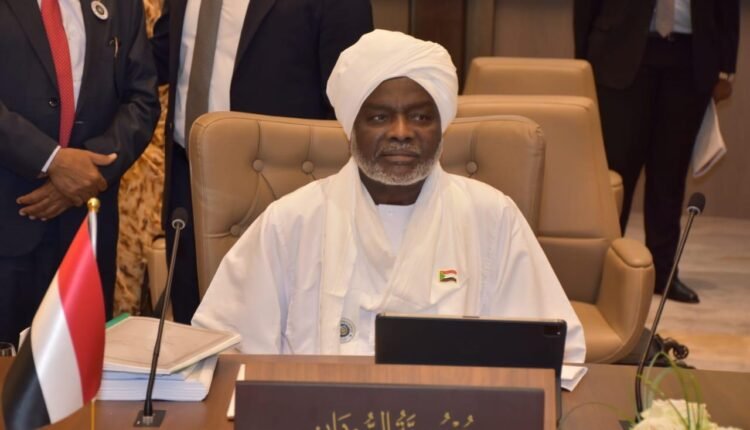
Port Sudan – Sudanhorizon
Minister of Cabinet Affairs, Lamia Abdel Ghaffar, has described the Export Forum held in Port Sudan on Monday as a practical step towards boosting exports and stimulating the national economy.
In her address at the forum, she praised the strategic partnerships between the investment sector and major producers and exporters, embodying the slogan of the “Government of Hope.”
She endorsed the Exporters Chamber’s proposal to link agriculture and industry, considering it a crucial point that should be included in the forum’s recommendations.
The minister called on the private sector to play a greater role in supporting small producers and increasing production, emphasizing the government’s commitment to implementing the forum’s outcomes.
For his part, Finance Minister Dr. Jibril Ibrahim has described investment in the agricultural sector as the safest way to achieve sustainable development in Sudan, noting that creating a favorable investment environment and developing infrastructure are among the most important factors that contribute to attracting investors and facilitating production and export processes.
Jibril clarified that the government’s role is to regulate production and economic growth, not to engage in direct production competition.
He stressed “We have no reservations about the private sector, even though we were raised under a socialist system. We extend a hand of cooperation and will be content with simply collecting taxes.” He emphasized that partnership with the private sector is the cornerstone of reviving the national economy.
The minister pointed out that the most prominent challenge facing farmers is low productivity, which limits their ability to meet their obligations to financing institutions.
He called for innovative and practical solutions to increase production by providing agricultural inputs, especially fertilizers.
Jibril added that small farmers do not need large loans to stimulate production, stressing that the Ministry’s experience with this group has demonstrated their high commitment to repaying loans on time. This necessitates strengthening their support and empowerment, as they are the backbone of the Sudanese agricultural economy.
The head of the National Chamber of Exporters, Dr. Wagdi Mirghani, criticized the fact that exports have remained at around $2 billion for a long time. Mirghani complained about the insufficient funding allocated to national projects.
He indicated that agricultural exports amount to approximately $1.5 billion, while gold exports reach $1.6 billion. He called for a structural change in the agricultural sector to increase production and productivity, addressing the low yield per feddan compared to Egypt.
He attributed the decline in exports to weak policies and inadequate financing for the agricultural sector.
Mirghani complained about the doubling of fees and taxes, which he said hinder agricultural exports, as produce passes through multiple checkpoints from production sites. He stressed the need for a five-year plan to increase production, aiming to raise the yield per feddan from 200 to 250 sacks, ultimately reaching 500 sacks per feddan.
He emphasized the importance of water harvesting and increasing production to facilitate regular irrigation. He pointed to the country’s proximity to Arab markets, which require food worth approximately $131 billion.
He affirmed Sudan’s capacity to meet the region’s needs with production reaching an equivalent of $10 billion.
He added that agricultural investment costs are low and easily manageable, yet cultivated areas have decreased due to the ongoing events in the country. He noted that sorghum constitutes about 50% of the total crop, wheat 1.1%, and corn and sesame 31%.
He argued that “We are striving to increase production through the implementation of comprehensive packages,” noting that the average Gum Arabic production is between 75,000 and 80,000 tons. He added that the latest exports of fruits and vegetables reached two million US dollars. He also pointed out that there is significant loss in gold production, emphasizing the need to regulate the sector.
He said companies are being assisted in obtaining financing to purchase the product, thus preventing leakage and controlling the excessive use of chemicals in traditional mining. He stressed the importance of transforming traditional mining into a regulated sector by streamlining the licensing procedures from the Ministry.
He called on the banking sector to expedite the provision of financing for gold production.
The Director of the Sudanese Mineral Resources Company, Mohamed Taher, has revealed that the company is currently reviewing and evaluating its existing partnerships with gold-producing companies.
He noted that the number of producing companies does not exceed 13 out of more than 100 companies operating in the sector.
Taher pointed to the major challenges facing the traditional mining sector, which has been inundated by various sectors since the outbreak of war.
This has led to unregulated transformations that have gone beyond traditional mining practices to include the establishment of factories and advanced mining projects without adherence to legal and environmental regulations.
He noted the negative impact of these deviations within the traditional mining sector in several states on the national economy and the environment.
He explained that some workers are exploiting the cover of traditional mining to engage in unrelated activities.
He affirmed that the next phase will witness serious steps to reorganize the sector and regulate its performance to ensure the sustainability of mineral resources and maximize their revenue for the state treasury.
Shortlink: https://sudanhorizon.com/?p=8660