

Fears of Ethnicisation and Expanding the Quartet
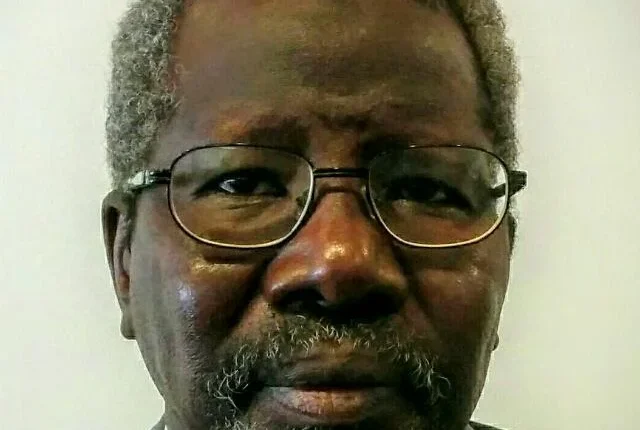
Dr Hassan Isa Al-Talib
Everyone knows where the United States stands in the war imposed on Sudan with an external agenda since April 2023. Geostrategically, America’s approach is built on managing distant foreign conflicts rather than ending them — a posture one must consider when looking at its positions on Gaza and even Ukraine.
The proposed truce is deceptive and riddled with traps. Its purpose is to gather together the Arab pastoral tribes who back the militia, many of whom have recently refused to fight, so they can return to their herds that await them in the South after the spread of war and looting in their areas and the rise in widows and orphans. It is also intended to reduce the high cost of mercenaries and to avoid the global embarrassment that has ensued from the international exposure of their actions.
Suppose the Sudanese government accepts the proposed truce without demanding the withdrawal of the militia from Bara, Nyala, and El Fasher, without insisting that it disarms, and without halting the flow of foreign weapons and mercenaries. In that case, it is simply agreeing — willingly or not — to the secession of Darfur and the declaration of a militia state. The foreign minister’s remarks, Ambassador Muhy al-Din Salim’s, at the funeral of Nazir Abdelqadir Munim Mansour were clear and revealing — there is no ambiguity in them.
Suppose the US-Lebanese mediator, Paulos, is serious about stopping the war against the Sudanese people and the extermination in Darfur. In that case, he must prove it by halting the continuous inflow of weapons — especially American arms from neighbouring airports — and by designating the rebellious militia as a terrorist organisation, in the same manner as groups such as Jabhat al-Nusra and the jihadist movements in the Sahel that the US already lists as terrorist. Those groups now supply mercenaries fighting alongside the militia in Darfur, using the same signals and types of weaponry seen in Burkina Faso, Mali, Niger and Benin.
This is the reality that Sudan’s negotiator must understand and act upon. There are no guarantees, no reliability, and no genuine pledges in these agreements; they are not based on any UN decision. Where, then, is their legal or legislative legitimacy? Especially given that the current authority in the country, which seized power, has failed to form a legislative council since 2019 to complete the governance triangle alongside the executive and the judiciary — a body that would express the prevailing public opinion of the Sudanese people, who have fought alongside their national army. So why involve the people in battle but exclude them from decision-making? Shura (consultation) is the decisive binding command for everyone: “and consult them in the matter… and conduct matters by consultation among them” — verses revealed to the Prophet ﷺ were even in the context of battle.
All previous truces with the rebellious militia resulted in the occupation of more territory by treacherous means, implementing the agenda that drives them. So what has changed now to justify making a three-month truce with no guarantees and no withdrawals?
The negotiators’ experience in Naivasha in 2005 — which ultimately led to the separation of the South in 2011 — must remain in the minds of our negotiators. The Sudanese delegation must act with the support of Sudanese public opinion, not a makeshift “Quad” that lacks any international or regional legitimacy. The Quad does not represent the United Nations, the African Union, the Arab League, or the Sudanese people; rather, it includes states that are ethnically aligned with the militia’s racist leadership, which despises Darfur’s indigenous peoples for their ethnicity — an origin they did not choose — and kills them on the basis of tribal or skin-colour identity. There is no representative of Darfur’s non-Arab communities in the Quad.
A prevailing belief among most people of Darfur — and to suspect falsely is a grave matter — is that the militia’s leaders and backers now call in their own kin within the region, driven by the cunning of an ambitious US ally who seeks to curb China’s influence in Africa, to control minerals across the Sahel, the Lake Chad basin, the DRC and Angola, and to create tribal client mini-states in eastern Libya, eastern Chad and Niger. Among Arab Darfuris, they plan to settle Arab groups from the Saharan diaspora to push them away from Europe’s southern shores, making these enclaves loyal outposts of a New Middle East project — places to which displaced Palestinians from Gaza and Ramallah might be relocated, following the Knesset’s recent unanimous approval.
President Trump’s maxim — “No deal is better than a bad deal” — is a deliberate piece of wisdom and a golden rule of negotiation that Sudan’s negotiator must adopt. Wisdom is the believer’s lost treasure. The Sudanese negotiator should adopt that motto and then present an alternative agreement for mediators and guarantors to deliberate over in order to reach a better proposal.
Sudan should also demand the expansion of the so-called Quad to include effective regional and local states — such as Turkey and Qatar — which enjoy the respect of the Sudanese people and have proven experience in brokering fair and successful agreements in the past, including the Doha accords and the Darfur peace process, in order to broaden the dialogue.
Yet the Sudanese people must rely on God and on the righteousness for which they fight. They must not be seduced by deceptive manoeuvres backed by international geostrategic interests that neither respect independence nor territorial unity, nor a nation or a tribe. This is the only path to preserving independent political decision-making and national sovereignty for the Sudanese nation.
He who does not defend his own land with his weapon will see it destroyed.
He who does not fear abuse will be abused.
Shortlink: https://sudanhorizon.com/?p=8467