

“Emirati Bases Serving Israeli Operations”: Leaked Document Reveals Details
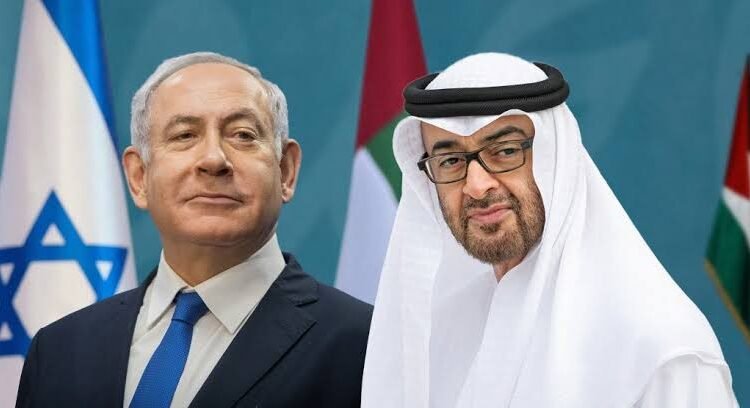
Sudanhorizon – Euronews
A leaked official document, obtained and published by the “Emirates Leaks” website, reveals a “comprehensive Emirati military plan to provide direct logistical and intelligence support to Israel during its military campaign in Palestine,” through a network of military bases spread along the southern Red Sea.
The document, dated October 2023, confirms that the UAE’s top leadership issued explicit directives to mobilize these bases to serve Israeli operations against what it described as “extremist elements.”
The document indicates Abu Dhabi’s intention to use military sites in Yemen, Eritrea, and Somalia – including Mocha, Massawa, Assab, Berbera, and Basa – as key platforms for supplying Israel with equipment, ammunition, and intelligence.
An internal summary within the document states that “it is necessary to prepare and rapidly mobilize available capabilities to supply our military bases in the southern Red Sea – especially in Yemen – with everything necessary to support the State of Israel.”
The text stated that UAE military officials conducted field visits to assess the readiness of these bases, confirming that the arrangements even included the transfer of 27 modern tanks via dedicated ships, in addition to shipping phosphorus missiles stored in the Eritrean base’s depots.
Direct Coordination and Communication Channel:
According to the leak, a secret meeting was held on October 19 at the Mocha base between Major General Saeed Al-Marzouqi, First Assistant Commander of the Emirati Forces in Yemen, and Brigadier General Tariq Mohammed Abdullah Saleh of the “Yemeni Resistance.” The two sides agreed to open a direct communication channel between the “Yemeni National Resistance Forces” and Israel, and to allocate “all light and medium weapons” and prepare them logistically and technically for transfer to Tel Aviv.
Two days after that meeting, UAE generals at the Eritrean base of Assab decided to allocate the entire Dahlak Archipelago – including the island’s airport, floating docks, and communication stations – to serve Israeli supply operations.
An operations room in Massawa, which had been monitoring the movements of the Islah/Muslim Brotherhood, was repurposed as an intelligence center dedicated to supporting Israel.
Investigations into Qatari and Kuwaiti Support for Hamas:
In another context, the document revealed that, following the October 7 attack, the UAE launched “extensive investigations” into Qatari support for Hamas, concluding that this support was “very substantial.”
Kuwaiti aid was described as “sufficient to impede any of our operations in the southern Red Sea,” indicating that Kuwait was classified as a “hostile party.”
This assessment led to a decision to significantly increase military spending, according to the document’s internal pages.
The security coordination also included a request for assistance from the American private intelligence firm Stratfor, which has an honorary office at the Assab base. A representative of the company, Ryan Paul, attended a meeting in Massawa where Emirati officials affirmed that support would continue “until the extremist elements in Palestine are defeated.”
A Network of Undeclared Military Bases:
Although the UAE has not officially acknowledged the existence of these bases, they can be tracked through satellite imagery, UN reports, and independent media. Since 2015, Abu Dhabi has established military installations in eight countries: Yemen, Somaliland, Puntland, Somalia, Chad, Libya, Sudan, and Eritrea.
Before announcing its withdrawal of forces from Yemen in December, under Saudi pressure, the UAE was particularly active in the Yemeni archipelago of Socotra, where it established a series of air bases on the main island, Socotra, and other islands such as Abd al-Kuri, Samhah, and Mayyun, in addition to maintaining a military presence at the port of Mocha on the mainland, according to a Middle East Eye report in October 2025.
In Somalia, it operates the Bosaso air base and the Berbera naval base. In Sudan, it supports the Rapid Support Forces through the Nyala and Malha bases.
In Libya, it controls military installations in the southeast under the command of Khalifa Haftar. The UAE also established the Amdjarass airbase on the Chadian-Sudanese border, which, according to a report published by the French newspaper Le Monde, was used to deliver weapons to the Rapid Support Forces.
In September 2015, the UAE established its first military base in Africa at the Eritrean port of Assab, which Eritrea had previously offered to the Iranian navy.
This base enabled the UAE to deploy tanks, artillery, and amphibious vehicles, and served as a transit point for auxiliary forces and a detention facility for Yemeni prisoners, before Abu Dhabi ended its military presence there in 2021.
A Security Turning Point with the Rise of Bin Zayed:
International reports, including one published by Le Monde in 2024, indicate that the UAE’s military expansion in the Horn of Africa coincided with the rise of Mohammed bin Zayed, who introduced what the report described as a “security turning point” in foreign policy, with an increasing focus on controlling strategic waterways in the Red Sea.
Factors such as the Arab Spring, tensions with Iran, Somali piracy, and the war in Yemen have prompted the UAE to bolster its military presence on African coasts and along vital supply lines.
Arab and international media outlets hostile to Israel cited the document, commenting that it revealed “an unprecedented level of direct Emirati military involvement in supporting Tel Aviv, exploiting a network of bases stretching across one of the world’s most important maritime routes.”
Shortlink: https://sudanhorizon.com/?p=10395