

Bankers to Sudanhorizon: Appointment of Acting General Managers, Recognition of Banks
Sudanhorizon – Hala Hamza
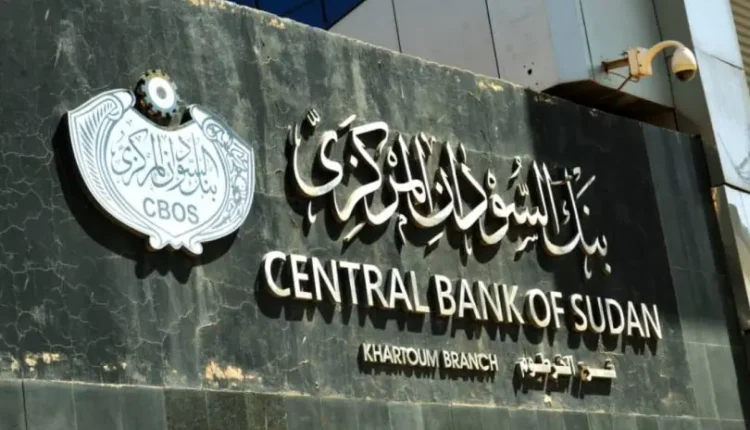
Former bankers outlined several scenarios regarding the decisions of the Governor of the Central Bank of Sudan, Amina Mirghani, to appoint acting general managers for some banks. In statements to Sudanhorizon, they indicated that the appointments were either issued within the framework of regulatory oversight or reflect a new direction by the central bank toward direct intervention in banking affairs, in line with its legal powers.
Former advisor at the Central Bank of Sudan, Anwar Mohamed, told Sudanhorizon that banks, under normal circumstances, are companies registered under the Companies Act and licensed by the Central Bank to conduct banking activities. Accordingly, banks—through their general assemblies—are responsible for selecting board members and appointing general managers.
He pointed out that the Banking Regulation Act grants broad powers to the central bank in supervising and managing banks, as it acts on behalf of depositors to safeguard their funds and savings, as well as to regulate banks’ contributions to financial policies that directly affect the country’s economic conditions.
He added that the legislator has given the central bank authority to inspect banks and take measures in accordance with regulations after receiving reports, in a way that serves the public interest. These measures may range from dismissal, accountability, and fines, among others. The bank also has the right to appoint a supervisor or controller for a bank if it is facing insolvency, financial deterioration, corruption, or other conditions that threaten its continuity and the rights of depositors. Such appointments are made for a specified period and under conditions outlined in the appointment decision.
Banking expert Dr. Marwa Qabbani told Sudanhorizon that the banking and investment landscape has recently witnessed a series of administrative decisions, including the dismissal of boards of directors and executive managers, and the appointment of temporary administrations for Savings Bank and Gulf Bank. These steps aim to reorganize the situation of several financial institutions.
She noted that these developments come amid growing calls for institutional reform and enhanced governance within financial and investment institutions, following widespread criticism of the performance of some entities in recent times.
Qabbani added that these measures also include efforts to complete executive structures and boards of directors in banks, contributing to improved performance efficiency and administrative stability.
She also pointed out that the Central Bank of Sudan had issued a statement months ago addressing concerns raised about certain banking institutions, reflecting official engagement with key economic issues.
Qabbani revealed that further decisions are expected in the coming days regarding the Livestock Bank, with expectations of appointing a new general manager as part of the ongoing wave of changes and the completion of administrative and executive structures in banks. She considered these steps an indication of a move toward restructuring the financial and banking sector in a way that enhances stability and serves the national economy.
A banking expert and former banker, who preferred to remain anonymous, told Sudanhorizon that the recent central bank decisions to appoint general managers for two of the country’s major banks may appear on the surface as routine regulatory and administrative measures. However, a closer reading reveals that they are not merely temporary administrative fixes, but clear indicators of deeper transformations within the banking system, carrying implications beyond their apparent scope.
The expert explained that the timing and thematic linkage between the appointment decisions suggest that the Central Bank of Sudan has begun shifting from cautious monitoring to direct intervention in the affairs of certain banking institutions. Such a transition usually occurs when risks exceed acceptable limits or when traditional remedies are no longer sufficient. He noted that these decisions indicate that the next phase may involve more stringent measures.
The expert added: “When the financial regulator begins to intervene in management, it is often a precursor to other measures such as restructuring, mergers, or the imposition of new capital requirements. These steps suggest that the Sudanese banking sector is entering a phase of restructuring that may push some weaker institutions out of the market.”
He concluded that the recent decisions by the Central Bank of Sudan are not merely administrative actions, but an implicit declaration that the banking sector has entered a warning phase.
For his part, former director and banking analyst Dr. Saleh Jibreel described the central bank’s decision to appoint acting general managers as a normal procedure.
He told Sudanhorizon that performance reports are what determine for the Central Bank of Sudan the areas of weakness or shortcomings and their causes, in order to address them—especially given that the conditions of war have disrupted the operations of many banks.
Shortlink: https://sudanhorizon.com/?p=13293