

Al-Jakoumi: Quint Meeting Sunday; Sumoud Rejected Equal Representation with Other Coalitions
Cairo – Sudanhorizon
The Quint Mechanism—comprising the African Union (AU), the United Nations (UN), the League of Arab States, the European Union (EU) and the Intergovernmental Authority on Development (IGAD)—is continuing its preparatory meetings for the intra-Sudanese dialogue in the Ethiopian capital, Addis Ababa. The consultations focus on engaging Sudanese political groups regarding the formation of a preparatory committee to oversee the dialogue, as well as discussing the country’s broader political process.
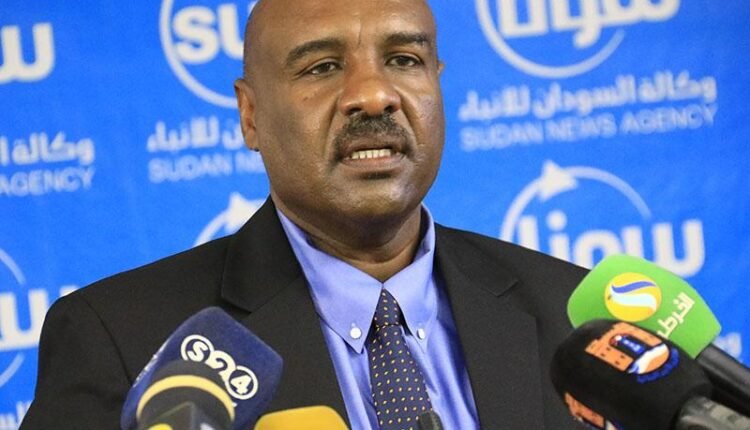
Speaking exclusively to Sudanhorizon, Mohamed Sayed Ahmed Sir Al-Khatim Al-Jakoumi, Chairman of the National Forces Coordination, said the coalition is scheduled to meet the Quint Mechanism on Sunday to present its vision for the dialogue process, in addition to proposals it had previously submitted to the mechanism in June.
Al-Jakoumi said the coalition received an official invitation for ten representatives but brought an additional ten delegates at its own expense to ensure broader representation from Sudan’s various regions and the political forces affiliated with the coalition. He explained that, during an earlier consultative meeting, the coalition presented its vision for the preparatory phase of the dialogue, while the Quint Mechanism raised questions regarding the coalition’s call to separate the political track from the military track, its concept of an inclusive dialogue without exclusion, and the role of the international community in Sudan’s political process.
Al-Jakoumi argued that the real reason the Sumoud coalition declined to participate in the mechanism’s dialogue consultations was because it had been allocated the same level of representation as other political alliances. He said the Quint Mechanism invited only ten representatives from Sumoud, which the coalition rejected, despite being free to bring additional participants at its own expense since the meetings were being held separately with each alliance rather than as joint sessions.
He further claimed that Sumoud had become accustomed to securing the largest share of representation at previous Sudanese dialogue meetings by including groups it described as representing youth, women, academics and independents, which, he alleged, enabled it to control nearly two-thirds of the representation. He cited the Berlin Conference and previous Addis Ababa meetings as examples, claiming that Sumoud alone had secured 26 of the 40 invitations extended for the Berlin conference.
Al-Jakoumi reiterated his coalition’s opposition to inviting what he described as groups aligned with Sumoud, arguing that it was Sumoud—not other participants—that had crowded previous dialogue meetings despite accusing others of doing so. He questioned what he described as the coalition’s disproportionate political and popular representation, calling it a “favoured entity” of regional and international organisations.
He further alleged that Sumoud has received extensive support from the United Nations despite, in his view, having no significant political history and consisting largely of newly established political parties. He accused regional and international actors of backing the coalition to pursue their own agendas in Sudan and alleged that Sumoud serves as the civilian wing of the Ta’sis (Foundation) Alliance. He also claimed that parties such as the National Umma Party and the Sudanese Congress Party have become divided between Ta’sis and Sumoud.
Al-Jakoumi also said that the Declaration of Principles Forces had sought to hold a meeting with the Quint Mechanism in Nairobi, but the request was declined. According to him, the mechanism was already meeting with international envoys assigned to Sudan in Nairobi, and when the group requested that the mechanism come to its venue, the request was refused—a decision he said reflected positively on the mechanism.
Concluding his remarks, Al-Jakoumi said the National Congress Party (NCP) had been excluded from the political process following Sudan’s 2019 revolution, adding: “We now want a dialogue process that is not based on exclusion.”
Editor’s Note: The statements in this report reflect the views of Mohamed Sayed Ahmed Sir Al-Khatim Al-Jakoumi and have not been independently verified by Sudanhorizon.
Shortlink: https://sudanhorizon.com/?p=16419