

Al-Burhan and the Central Bank of Sudan
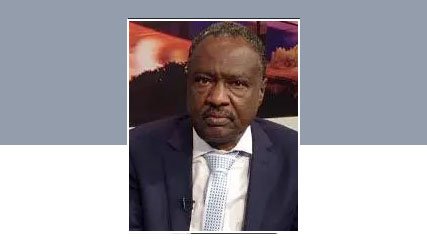
Rashid Abdelrahim
Twenty-three companies operating in the gold sector threatened to halt production, and the Central Bank of Sudan quickly backtracked and cancelled its decisions.
When President Al-Burhan asked the Director of the Electricity Distribution Company how long it would take to restore power once the payment he said caused the disruption had been received, the director said it would take a month. The President rejected this timeframe and gave the Director one week.
The following day, the Director set about restoring the electricity supply.
How much did the country lose as a result of the electricity shutdown in the Bahri industrial area? How much did it lose from the disruption affecting all the factories?
Neither this decision nor the President’s surprise visit prompted the Minister of Energy to take action to address the crisis, nor did they spur the government as a whole into action.
The Minister of Industry appeared to have heard nothing about what had happened and made no attempt to implement similar reforms in the industrial areas of Khartoum and Omdurman, or in factories across the country.
The rapid reversal of a decision concerning gold—the country’s most important commodity and largest source of foreign currency—together with the decisions taken by the President at the Bahri factory, are strong reasons for making changes, not merely by dismissing the entire government, but by changing the way it operates, as well as its strategies, plans and programmes.
Every delay in decisions needed to put the machinery of government right further deepens the financial and monetary crisis.
The President has effectively declared the government dead on several occasions. The first was when he said, “We will help the government carry out its duties.” The second was when he appointed supervisors from the Sovereignty Council to oversee sectors within the government. He declared it dead again at the factory in Bahri, when the President demonstrated in practice that the government does not need support because it is already dead.
The Central Bank of Sudan has also shown it does not know the extent of its own capabilities and resources, having rapidly reversed its decisions on 23 companies involved in gold waste and exports.
Delays in urgently needed measures threaten the popular standing and support President Al-Burhan has built.
Many issues require swift, comprehensive action by the President.
The Capital Preparation Committee’s achievements in preparing the capital for residents’ return stalled after the removal of its chairman, Lieutenant General Jaber, while the Khartoum State government has been unable to complete its work and has also failed to deliver on many other important tasks.
The slowness characterising the government’s responses, in contrast to the immediate decisive action expected from the President, threatens to lead to comprehensive deterioration.
Unresolved mistakes accumulate, giving rise to bigger mistakes and greater suffering.
We are facing a Sovereignty Council whose movement and activity we can scarcely see; a Prime Minister who, when he does act, does not appear to choose the right areas in which to intervene; and ministers whose inability is exposed by the Presidency of the State, yet who remain inactive.
We are also facing a governor who has expended all his energy and can no longer deliver results in a state that is the country’s capital.
The states are no better off than Khartoum and the central government. They, too, need change, reform, and development.
The banks are failing to perform their duties, while the Central Bank of Sudan stands by as their problems multiply. How much have people suffered from the Bankak application, which has remained the only service providing banking services to the public despite the complaints against it? The central bank has been unable to correct its shortcomings, nor has it managed to encourage other banks to provide tangible services to citizens.
The banking sector has also failed to finance citizens seeking to install solar-energy systems—a step that could lift a significant burden from the state.
Within the civil service, individuals and bodies are working to obstruct the functioning of government for political reasons. No action has been taken against their disruptive activities, even though senior figures have pointed them out and identified them.
All of this ultimately falls upon the Sudanese people, who have not yet fully emerged from the harm caused by the war, only to be burdened further by the failure of the civil service.
Shortlink: https://sudanhorizon.com/?p=18503