

African Presidents of Sudanese Origins (2–3): President Bédié — As My Grandmother Told It
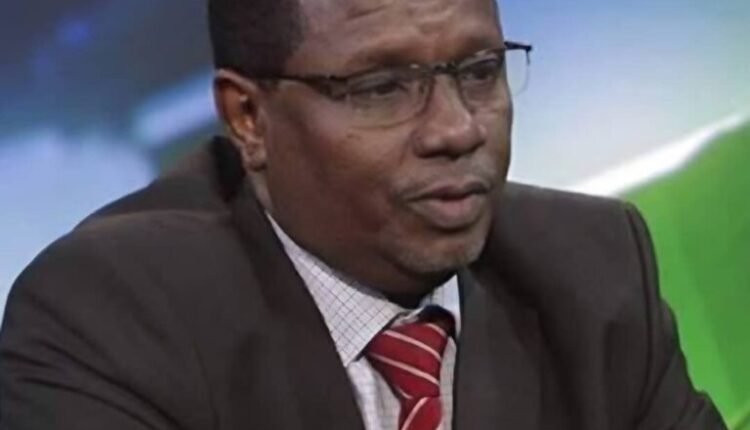
Ambassador Atta Al-Mannan Bakhit
Henri Konan Bédié was a seasoned politician from the Republic of Côte d’Ivoire who was closely associated with Félix Houphouët-Boigny, the country’s first president and an independence leader known to his supporters as the Sage of Africa.
Henri Bédié assumed the presidency following President Houphouët-Boigny’s death in 1993 and governed during a highly critical period until 1999. He remained active in Ivorian and African politics until his death in 2023.
At an African Union summit, Sudan was represented by President Al-Bashir. The Sudanese Ministry of Foreign Affairs recommended that President Al-Bashir meet with the President of Côte d’Ivoire, Henri Konan Bédié, to request his country’s support for projects submitted by Sudan to the African Development Bank, which is headquartered in Abidjan, Côte d’Ivoire. As the host country, Côte d’Ivoire plays a significant role in shaping decision-making within this long-established African financial institution. Accordingly, the Sudanese presidential protocol submitted a request for the meeting. As is well known in diplomatic protocol, the president who requests a meeting pays a visit to the president being requested at his place of residence. The Sudanese delegation, therefore, prepared to move to the Ivorian president’s residence, as diplomatic custom requires.
The first surprise in this remarkable presidential meeting came half an hour before the scheduled time, when a representative of the Ivorian protocol arrived and informed us that the Ivorian president had decided to visit President Al-Bashir at his residence instead. We were greatly pleased by this decision. I served as the interpreter between the two presidents during that meeting.
President Konan Bédié arrived on time, accompanied by his Minister of Foreign Affairs, Amara Essy, who later served as Chairman of the African Union. The Ivorian president opened the meeting by saying: “Your Excellency, I was keen to take the initiative to visit you because I have long loved your country, Sudan—not just now, but since my childhood.” He continued: “You may find this surprising, and that is natural, as geographically you are very far from us, and your political history is different from ours.”
He then added, “I love Sudan for two reasons, which I will tell you without any particular order.” Surprise and admiration were evident on President Al-Bashir’s face, and he replied: “I would be delighted to hear the reasons for your admiration for my country.”
The Ivorian president said: “I will begin with the second reason. When I graduated from university, I worked at the African Development Bank. At that time, the Governor of the Bank was your compatriot, Mamoun Beheiry, the first Governor of the African Development Bank.” He continued: “I worked in the Governor’s office and came to know Mamoun Beheiry closely. He was a teacher to me, took a particular interest in me, and I learned the fundamentals of financial and banking work directly from him. In truth, Your Excellency, I was deeply impressed by this man, and he remained vivid in my memory to the extent that, to this day, whenever I enter the African Development Bank building, I remember my teacher Mamoun Beheiry. I would like to know from you whether he is still alive.”
President Al-Bashir and the members of the delegation were impressed by this beautiful loyalty. President Al-Bashir praised Mamoun Beheiry and informed him that he was still alive in Khartoum. The Ivorian president was delighted by this news and said that he would invite Mamoun Beheiry to visit Côte d’Ivoire to see that one of his students had become a head of state.
President Al-Bashir then asked him about the first reason for his love of Sudan. Without hesitation, he replied: “The first reason is my grandmother.” He went on: “I was born in a small village, and like all African families, my grandmother was responsible for raising and guiding us. She would gather us around her every evening and tell us about the history of our ancestors, recounting the lives of our forebears and narrating fascinating stories. She would repeatedly tell us: ‘My children, you are not from this country; you are from Kush.’ We would ask her, ‘Where is Kush?’ and she would say, ‘Sudan.’ My grandmother preserved every detail of our ancestors’ journey from Meroe all the way to Côte d’Ivoire—a story that was both captivating and delightful. She always advised us, saying: ‘My children, when you grow up, you must go to Sudan and search for your ancestors and relatives.’” He concluded by saying: “Your Excellency, from my childhood, I knew that I had ancestors in Sudan, but I did not know how to connect with them. That is the true reason for my love of your ancient country.”
President Al-Bashir was greatly impressed and moved by the Ivorian president’s account, and jokingly said to him: “So, Your Excellency, you are Sudanese.” President Bédié laughed and replied: “I hope you will not announce this information to the media, Your Excellency, because Ivorians would demand that I be removed from the presidency.” Everyone laughed.
President Al-Bashir seized the opportunity to invite President Bédié to visit Sudan, promising to organise a visit to Meroe so that he could see the civilisation of the ancestors and meet his teacher Mamoun Beheiry. The Ivorian president accepted the invitation and promised to send his Minister of Foreign Affairs promptly to make the necessary arrangements.
Indeed, the Ivorian Foreign Minister did visit Sudan to arrange President Bédié’s visit. Unfortunately, however, Côte d’Ivoire experienced a military coup that overthrew President Bédié’s government, preventing the anticipated visit to the land of the ancestors. The Ivorian president passed away with a lingering sense of regret, without having met the descendants of his forebears or seen their land.
Shortlink: https://sudanhorizon.com/?p=10165