

Addis Ababa and Sudan’s Coming Battle for Legitimacy: Who Has the Right to Choose the Participants in the Dialogue?
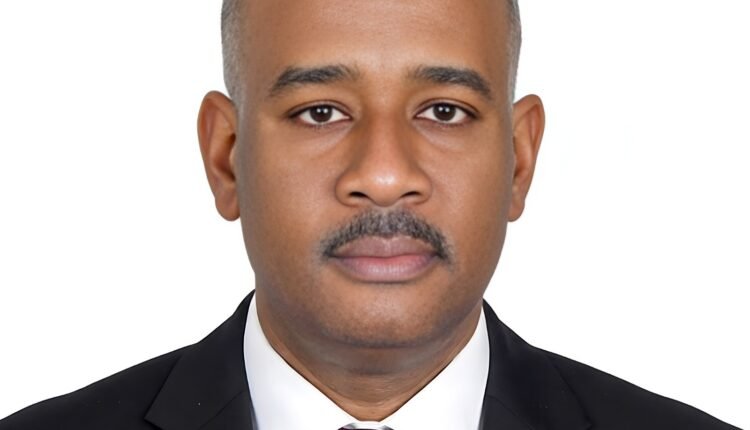
Mohand Awad Mahmoud
Anyone reading the final communiqué issued by the Quintet Mechanism following the Addis Ababa meetings might initially conclude that the process amounts to little more than another round of political consultations aimed at bringing Sudanese parties closer together and creating conditions for an inclusive dialogue that could lead to peace. A closer reading of the statement, however, particularly when viewed against the trajectory of international initiatives from the Berlin Conference to the recent Addis meetings, points to a very different conclusion. The issue is no longer simply about managing the war or searching for a political settlement. It has evolved into a deeper and more consequential struggle: the battle over who has the authority to represent Sudan and shape its political legitimacy in the post-war era.
Perhaps the most striking aspect of developments since the Berlin Conference is the gradual transformation in the role being played by the Quintet. Initially, the focus was on ending the war and creating a conducive environment for dialogue. The discussion then shifted towards the need to involve a broader spectrum of political and civil actors. Later, proposals emerged to establish a preparatory committee for dialogue, followed by calls to expand participation in the forthcoming political process.
At first glance, such a progression may appear natural. In reality, however, it reveals a gradual shift from the role of mediator to one with far greater influence over the political landscape that will ultimately shape the next governing order.
A traditional mediator does not create political actors or determine their identities; it simply brings together parties that already exist on the ground. Once the central debate becomes focused on who should participate and who should not, who represents whom, and who possesses legitimacy and who does not, mediation begins to evolve into a process of political engineering.
Nor can this accelerating political activity be separated from the military developments that have unfolded over recent months. As the balance of power on the battlefield moves towards producing a new reality, the political struggle over who will manage the post-war transition becomes increasingly important. The contest over the composition of the preparatory committee is therefore not separate from the conflict on the ground; rather, it is its political extension, pursued through different means. Actors who may be unable to influence military outcomes naturally seek to shape the political environment that will interpret those outcomes and determine how they are translated into arrangements of governance, authority and influence.
This brings us to the central question that should concern every Sudanese citizen: what exactly does the Quintet want?
Three possible explanations present themselves.
The first hypothesis is that the Quintet seeks to create a new political and civil bloc capable of serving as a local partner in any future settlement. Many of the forces that dominated Sudan’s political landscape before the war have fragmented, experienced internal divisions, and lost influence. The objective, therefore, may be to reconstruct a new political centre that can provide the next political process with a broader civilian foundation.
The second hypothesis is that the Quintet seeks to prevent any new military reality from automatically becoming a new political reality. As power balances shift on the battlefield, some international actors may fear that military superiority could translate into complete political dominance. Building new political platforms could therefore be an attempt to redistribute political influence irrespective of military outcomes.
The third hypothesis, and perhaps the most significant from a long-term strategic perspective, is that the Quintet is not merely facilitating dialogue among Sudanese actors but is working to establish a new political reference point capable of speaking on behalf of a broad segment of Sudanese society. Such a body could eventually become an internationally recognised partner in any future transitional or negotiating arrangements.
These hypotheses are not mutually exclusive. Indeed, they may all be operating simultaneously to varying degrees.
If this reading is correct, a more important question immediately follows: who gave the Quintet the authority to determine who represents the Sudanese people in the first place?
The communiqué referred to broader Sudanese voices, a wider range of stakeholders and a Sudanese-led process. Yet it did not explain who would determine the identity of those Sudanese participants, what criteria would govern their selection, or what legal or political framework would underpin such decisions.
This is where the real problem begins.
Democracy is not built by selecting competitors before the competition begins, nor by distributing political legitimacy through closed-door negotiations. It is built by granting all actors the right to participate and then allowing society itself to determine its preferences through legitimate political processes.
For this reason, the controversy surrounding the exclusion of the National Congress Party should not be viewed simply as an issue concerning a single political party. Rather, it should be understood as a symptom of a much larger problem concerning the nature of the process itself. If the political process is genuinely inclusive, why is there discussion about excluding one party or another? If exclusion is acceptable today, what prevents the circle of exclusion from expanding tomorrow? And if participation is granted through elite political understandings reached behind closed doors, what remains of the very concept of popular representation?
The issue here is not the defence of the National Congress Party or any other political organisation. It is the defence of a fundamental principle: the right to political participation should not be determined by the preferences of rivals or by the judgment of international mediators.
From a broader security and strategic perspective, the most dangerous aspect of this process may not be what is said inside conference rooms but the messages it sends to political and military actors on the ground. When armed groups find places for themselves within the political process while debate centres on excluding other actors engaged in political activity, the implicit message becomes deeply troubling. It may be interpreted to mean that bearing arms is not an obstacle to political recognition and, in some circumstances, may even be an effective route to obtaining it.
That message alone can sow the seeds of the next conflict, even as efforts are underway to resolve the current one.
Yet the greatest danger lies elsewhere.
Perhaps the most significant passage in the Quintet’s statement was its rejection of any parallel government or arrangements that might further fragment Sudan.
In principle, this is both a necessary and sensible position.
However, strategic analysis raises a question that cannot be easily ignored: if a parallel government is unacceptable because it creates a competing source of legitimacy, is it acceptable to establish a parallel political reference point outside state institutions and treat it as the legitimate representative of Sudanese society?
What, in practical terms, is the difference between a parallel government and a parallel political authority if both claim to represent large segments of the population outside existing constitutional and institutional frameworks?
The most dangerous forms of fragmentation in modern history rarely began with declarations of secession. More often, they began with the multiplication of competing centres of legitimacy. Once military, political, revolutionary, negotiated, and international legitimacy begin to coexist, the state gradually loses its role as the common national centre. As centres of legitimacy multiply, so too do centres of power. And as centres of power multiply, political, regional and tribal identities begin searching for their own autonomous structures of representation.
It is precisely here that the risks relating to Darfur emerge.
Darfur is not simply a region that can be detached from Sudan or retained within it through a political decision. It is a complex system of tribal, military, social and regional balances. Any political process perceived as biased, selective or externally imposed may encourage different actors within the region to seek separate avenues of representation. At that point, the danger is not necessarily secession in the traditional sense. Rather, it is the emergence of multiple centres of influence within Darfur itself, each with its own allies, its own vision for Sudan’s future and its own sources of legitimacy.
This is precisely the path that has led numerous states towards gradual fragmentation without any formal declaration of independence.
The real danger in the Addis Ababa process, therefore, does not lie in whether the dialogue succeeds or fails, nor in whether one party or another participates. It lies in the larger question quietly taking shape behind the scenes: who will possess the authority to define Sudanese political legitimacy in the post-war period?
Will it be the Sudanese people themselves through an open national political process, or will it be a selected group of actors approved by international and regional stakeholders?
This is the question Sudanese citizens should be debating today.
If the current approach continues, the danger will not simply be the failure of the political process. It will be the creation of competing legitimacies within a single state. And when legitimacy becomes fragmented, centres of power become fragmented as well. Once that happens, preserving the unity of the state itself becomes increasingly difficult.
The question that will shape Sudan’s future over the coming years is therefore not who will participate in the next dialogue, but who has the authority to choose the participants.
That is where the real battle over legitimacy begins. It is also where we will discover whether the current process is intended to facilitate dialogue among Sudanese actors or to construct a new political authority capable of speaking on their behalf.
Between those two possibilities lies the difference between mediation that helps build a state and a process that may, even with the best of intentions, reopen the legitimacy crisis that has haunted Sudan for decades.
Shortlink: https://sudanhorizon.com/?p=14581