

UN Official: El Fasher a “Crime Scene”
Sudanhorizon – Agencies
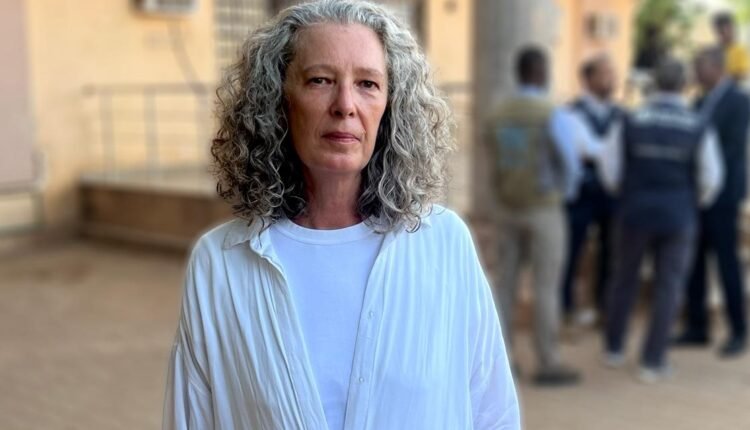
Denise Brown, the UN Humanitarian Coordinator for Sudan, sounded the alarm on Monday after returning from El Fasher, saying that “traumatized” civilians are living in “degrading and unsafe conditions.”
Brown warned that El Fasher “is an epicenter of human suffering in this war,” noting that the city, which was once home to about one million people, has become “a ghost of its past” and a “crime scene.”
This was the first time a UN assessment mission had reached El Fasher since the Rapid Support Forces (RSF) took control of the city in western Sudan.
“These people are living in extremely precarious conditions,” said Denise Brown, the UN Humanitarian Coordinator for Sudan, adding, “Some are living in abandoned buildings. Others… are in primitive conditions, with plastic sheeting and no sanitation, no water,” adding that“these are degrading and unsafe conditions for the people.”
A mission from the UN Office for the Coordination of Humanitarian Affairs (OCHA) was able to enter El Fasher on Friday, two months after the Rapid Support Forces (RSF) seized control following “arduous negotiations,” Brown was quoted by AFP as saying. “Large parts of the city have been destroyed,” Brown said, speaking via video link on Monday.
She asserted that El Fasher “is an epicenter of human suffering in this war,” noting that the city, once home to nearly one million people, is now “a ghost of its former self” and “a crime scene.”
El Fasher was the last army stronghold in the vast Darfur region. By capturing it, the RSF consolidated its control over roughly a third of Sudan. The RSF seized El Fasher at the end of October after an 18-month siege and a brutal offensive marked by reports of massacres, sexual violence, abductions, and arrests, which displaced more than 107,000 people, according to the UN.
The world’s worst humanitarian crisis. Brown stated that despite the massive displacement, there are still Civilians in El Fasher: “We don’t yet have enough information to determine their number.”
The UN official stated that the city is still suffering from “famine.”
During the visit, which lasted several hours without security escort, the UN mission visited locations agreed upon with the Rapid Support Forces, including the Saudi Hospital, shelters for displaced people, and five UN offices.
The Saudi Hospital was the site of an attack in October that killed at least 460 people, according to the World Health Organization.
Brown explained that “the hospital building is still standing and it has clearly been cleaned, but there are no medical supplies,” adding, “There are some medical personnel; we don’t know if they are doctors or nurses, and very few patients.”
Brown also noted the presence of “one small market” selling rice, tomatoes, onions, potatoes, and biscuits “in very small bags, which shows that people cannot afford more.”
She warned of the presence of a number of detainees inside the city, saying, “We were unable to see them, but we are certain that there are detainees.”
She also mentioned seeing armed men in the streets, explaining that the mission had moved in Only in areas agreed upon with the Rapid Support Forces, she emphasized, “We’ve only seen the tip of the iceberg.”
The ongoing war in Sudan, which began in April 2023 between the Sudanese army, led by Abdel Fattah al-Burhan, and the Rapid Support Forces, led by Mohamed Hamdan Dagalo, has claimed the lives of 128 humanitarian aid workers, according to Brown, who added, “We were very concerned about unexploded bombs and landmines” scattered throughout the city.
Shortlink: https://sudanhorizon.com/?p=9998