

A Cross-Border Crisis
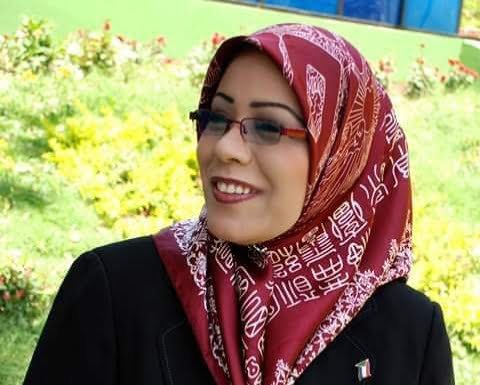
Dr Enas Mohamed Ahmed
For many years, Sudan has participated in numerous regional and international efforts to combat irregular migration. In support of these efforts, the International Organisation for Migration (IOM), established in 1951, has provided Sudan with assistance across a range of areas, including capacity-building, combating human trafficking, developing legislation, and training national personnel. However, the regulation of migration itself has remained a subject of research and debate in international law, given the ever-growing need for international cooperation to confront escalating challenges.
The eighteenth of December each year marks International Migrants Day, dedicated to highlighting migrants’ rights worldwide. The United Nations General Assembly designated 4 December 2000 to promote awareness of and respect for migrants’ rights. This year, it coincides with the war in Sudan, which poses a serious threat of exacerbating irregular migration and increasing the number of victims who lose their lives while attempting to reach “the other shore” in search of a better life.
Migration is a long-standing and expanding human phenomenon, intrinsically linked to people’s pursuit of improved living conditions and livelihoods. Legal migration, conducted through defined lawful procedures in accordance with international agreements regulating the movement of individuals between states and societies, often requires lengthy processes. As a result, many people resort to irregular migration—an extremely dangerous decision, yet one that is faster to implement.
This situation is further compounded by organised smuggling networks, which play a pivotal role in expanding irregular migration operations on a broad and sustained scale, with all the associated risks and violations.
Wars have turned irregular migration into a strategic option for many, as they seek safety and better living conditions. Consequently, most scholarly and legal perspectives on reducing irregular migration converge on a number of core measures: ending wars, providing peace and security, creating employment opportunities, reforming the economy, combating corruption, and developing education. Collectively, these factors significantly reduce irregular migration.
In the context of irregular migration, Sudan now serves as both a country of origin and a country of transit, due to its vast territory, open borders, and ongoing security instability, which have made it a major hub for irregular migration. This has led to increased exploitation, violence, detention, and various forms of serious abuse against migrants. Accordingly, the law has sought to address the challenge posed by organised smuggling networks rather than targeting migrants themselves, who, in most cases, require humanitarian solutions and legal protection.
Conversely, destination countries must adopt fair and swift asylum policies and refrain from arbitrary or harsh measures against those seeking refuge or migration, in line with human rights standards, international law, and fundamental freedoms.
One of the most dangerous consequences of the war in Sudan is the issue of irregular migration. This was precisely what American diplomat Cameron Hudson referred to when he spoke about the war in Sudan during his intervention at the UN Security Council session dedicated to the situation in Sudan last Monday. Hudson is a specialist researcher on African affairs and a former official at the US Central Intelligence Agency (CIA). He previously served at the US State Department as Director of the Office of the US Special Envoy to Sudan, and as Director for African Affairs at the White House National Security Council from 2005 to 2009. He therefore possesses deep political, research, and security expertise on Sudan, enabling him to speak with realism and clarity.
Hudson spoke of the dangers of the war in Sudan and its global repercussions. He also pointed to the involvement of external actors and arms companies that finance and supply the militia with weapons and equipment, calling on the Security Council to take urgent action to halt foreign interference.
Hudson specifically referred to the United Arab Emirates, which he said had used its wealth and political influence across the Horn of Africa over the past two years to transfer weapons to the militia through the largest and most extensive military airlift operation. This operation involved Libya, Chad, the Central African Republic, South Sudan, and Somalia’s Puntland region. He also cited the recruitment of hundreds of Colombian mercenaries through a complex network of shell companies designed to provide a thin cover enabling later deniability. These actions, he said, contributed to strengthening and upgrading the militia’s weapons and capabilities, enabling it to commit atrocities and violations. He accused the militia of committing war crimes in El Fasher, including ethnic cleansing, the killing of civilians, and the burning of some victims’ bodies. He called for decisive legal measures against those involved. He warned of the dire humanitarian conditions in cities currently under siege, which have led to increased rates of irregular migration from Sudan and neighbouring countries. Hudson concluded his remarks there.
There is no dispute over the involvement of the United Arab Emirates in supporting and financing the terrorist militia and fuelling the war in Sudan. Evidence, proof, eyewitness accounts, and analyses by politicians, journalists, and legal experts from across the world have multiplied. International and national media outlets, as well as social media platforms, have conveyed real events, war crimes, and crimes against humanity from the battlefield to the global public. Nothing remains but for stones themselves to testify that this is a criminal terrorist militia. What, then, is the world waiting for to designate the militia as a terrorist organisation? When will the international community move to criminalise the UAE for supporting terrorism and fuelling the war in Sudan, with all the brutal crimes, savage atrocities, and blatant violations of international law that have resulted?
Will talk of irregular migration finally spur Europe into action, out of fear of migrants crossing the sea towards it in flight from war?
The war in Sudan has long-term repercussions. The world will eventually discover that procrastination, hesitation in stopping it, the pursuit of half-solutions, and reliance on grey diplomatic positions and lukewarm statements of condemnation were crimes in themselves. The catastrophic fallout of this war will not be confined to Sudan alone, nor to its neighbouring states, nor even to Africa—but will affect the entire world.
Shortlink: https://sudanhorizon.com/?p=9873