

The Vietnamese Experience
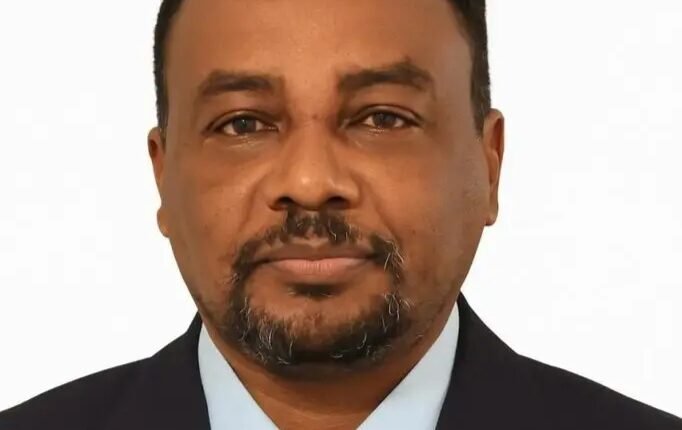
Omar Mohammed Osman
A few days ago, I watched a programme on Al Jazeera Documentary Channel about Vietnam’s bitter yet honourable experience: its existential struggle against French colonialism for eight years, followed by its fierce war against American power, which lasted twenty years, under the leadership of the historic figure Ho Chi Minh—whose name was immortalised when the city of Saigon was renamed Ho Chi Minh City, now the country’s vibrant economic capital.
The programme sparked my curiosity to delve deeper into Vietnam’s figures and indicators, and I was astonished by how a country ravaged by war transformed into one of the fastest-growing economies in the world. It is a paradox that deserves reflection when compared with our reality in Sudan—not as an exercise in self-flagellation, but as an attempt to draw lessons on how to rise from the rubble.
What makes the Vietnamese experience even more inspiring is that it did not stop at the limits of military victory at Dien Bien Phu in 1954, nor even at the unification of the country in 1975 after defeating the American war machine. Rather, Vietnam went on to wage a second war—against poverty and ignorance. While Sudan possesses natural resources and agricultural land potential far exceeding Vietnam’s—by more than threefold (with potential arable land reaching up to 200 million feddans, compared to around 16 million feddans cultivated in Vietnam)—the outcomes are radically different. Vietnam’s GDP today stands at approximately USD 485 billion, compared to about USD 36 billion in Sudan at present (according to 2025 estimates, down from around USD 52 billion before the outbreak of war in 2023).
The secret behind this remarkable transformation lies in stability and political will. Vietnam made education its primary weapon, reducing illiteracy to around 3–4 per cent, whereas in Sudan it exceeds 39 per cent (with the likelihood of further increase under current conditions).
Vietnam also confronted corruption with firmness, launching sweeping anti-corruption campaigns that attracted major global companies such as Samsung and Apple. In Sudan, by contrast, corruption continues to devour resources and repel investment.
Drawing inspiration from the Vietnamese experience in post-war Sudan requires, first and foremost, a comprehensive national reconciliation that excludes only those who continue to bear arms against the state. Secondly, it calls for a revolution in technical and vocational education to transform the energies of young people from fuel for war into a productive force. Sudan also needs a bold programme of economic reform—a Sudanese version of Doi Moi—that opens up to the world with rationality and adopts the principle of being “a friend to all” for the sake of reconstruction.
“Đổi Mới” is a Vietnamese term meaning renewal or reform. It is the name given to the policy launched by Vietnam in 1986 to open its economy to investment, encourage individual initiative, and transform the country from a fully planned economy into a socialist-oriented market economy. This marked the major turning point that paved the way for Vietnam’s contemporary renaissance.
Seeing Ho Chi Minh City today—with its skyscrapers and factories—offers us hope that war, despite its cruelty and prolonged duration, can become a “ground zero” from which our own renaissance may begin, if we possess the will to invest in human beings before bricks and mortar.
Shortlink: https://sudanhorizon.com/?p=9844