

“Sudanhorizon” Opens the File: Between Supporting Victims and Arming the Perpetrators – How European Parliaments Discovered Their Weapons Were Fueling Atrocities in Darfur?
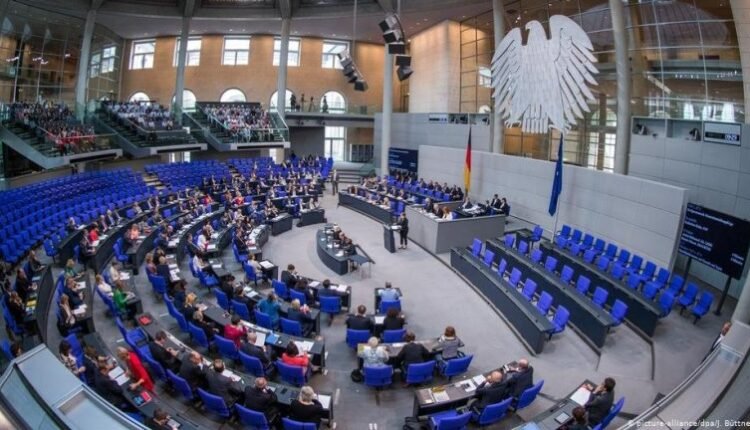
The images of devastation in Sudan—of displacement, hunger, and entire communities wiped out—are no longer just distant scenes stirring sympathy in European capitals. Within a matter of weeks, they have transformed into evidence in a widening indictment across European parliaments. MPs in London, Berlin, and Brussels have begun to uncover a troubling truth: weapons leaving factories in their own countries appear to be making a mysterious journey via the ports of a Gulf ally, only to end up in the hands of the Rapid Support Forces—the militia accused of massacres, war crimes, crimes against humanity, and systematic ethnic cleansing in Darfur.
In this investigation, Sudanhorizon maps the dramatic shift in Europe’s discourse—from the soft language of diplomatic concern to a cross-border parliamentary revolt reopening the question of arms transfers. This wave seeks to convert moral outrage into tangible sanctions and international pressure. We trace this journey through parliamentary hearings, public statements, and policy shifts, revealing how the horrors of Sudan’s war have forced Europe to confront the conduct of its allies—and its own complicity.
By: Talal Mudathir
Inside Westminster: A Scorching Parliamentary Inquiry Exposes the Route of British Weapons to Sudan’s Militias
Something has changed in the corridors of the British Parliament. The conversation on Sudan is no longer the carefully worded, diplomatic expression of “concern” and political sympathy. It has turned into something closer to a public inquest. MPs themselves are now asking uncomfortable questions of their own government: How did weapons manufactured in Britain end up in the hands of the Rapid Support Forces in Darfur?
The scenario emerging is as alarming as it is straightforward: there appears to be a short, opaque, Gulf-based route—passing through a long-standing ally, the United Arab Emirates—through which weapons transit before resurfacing in Sudan’s conflict zones. That route now threatens Britain’s moral standing.
The anger inside the room is palpable.
Look at Monica Harding and Callum Miller of the Liberal Democrats: they are no longer calling for “expressions of concern”; they are demanding an immediate suspension of arms export licences to the UAE. Their message was sharp and uncompromising:
“We cannot sell our morals along with our weapons.”
Then came Ellie Chowns of the Green Party with an even harder line: “A total ban—now.”
For her, the appearance of any British-made weapon in Sudan’s killing fields is a catastrophic failure of the regulatory system Britain prides itself on.
But the moment the debate truly ignited was when a Conservative MP, David Mundell, stepped in from within the governing party itself.
He asked one question—a question that turned the entire session on its head:
“Tell us frankly: is the UAE simply a refuelling stop in this journey, or is it the driver of the arms convoy?”
That single question revealed a new reality: suspicion is no longer confined to the opposition—it has seeped into the ranks of the ruling party.
This dramatic shift did not appear out of thin air. It marks a startling departure from London’s historic approach. Only months ago, the British government warmly received Sudanese civilian leaders—Abdalla Hamdok, Khalid Omer Yousif, and others—expressing support for their political initiatives. But today, with evidence emerging that bombs made in Britain have fallen on the very civilians Britain claimed to support, Westminster has transformed from a champion of Sudan’s political process into an investigator of its own role in arming the war.
The conclusion emerging from these closed Westminster chambers is no longer a secret:
This parliamentary uproar is a message directed straight at the government.
Cut off this “rapid route” of weapon transfers. Confront the regional partner enabling it.
MPs have run out of patience with a policy that leaves Britain’s moral reputation as yet another casualty of the conflict in Sudan.
The question now hanging over Downing Street is as heavy as it is simple:
Will Sunak’s government listen to the cry of its own Parliament,
or will arms sales and relations with the UAE once again speak louder?
Brussels: Condemning Genocide While Concealing the Sponsor’s Name
While British MPs were publicly firing off uncomfortable questions, the scene inside the European Parliament revealed a striking paradox: the rise of unprecedented, historic language condemning the Rapid Support Forces (RSF), and the simultaneous disappearance of their alleged sponsor’s name from the very resolution that condemned them.
In November 2025, MEPs adopted a resolution that no longer described the violence in Sudan as mere clashes or violations. For the first time, the Parliament used unmistakably explicit terms such as “serious and systematic abuses”, and stated that the RSF’s actions “may amount to genocide.”
This was a turning point. The RSF was no longer framed in Europe’s official discourse as merely a militia or a party to the conflict, but as a force accused of some of the gravest international crimes.
The resolution explicitly called for targeted sanctions against RSF leaders. But this moral clarity collided with the hard wall of diplomatic interests. According to investigative reports published by Politico and Semafor, this near-unanimous condemnation was disrupted at the final hour by intense back-channel pressure.
In the critical moments before the vote, Lana Nusseibeh, the UAE Minister of State, arrived in Strasbourg and held confidential meetings with MEPs from the Parliament’s largest bloc—the European People’s Party—as well as elements of the far right. Her mission was clear: prevent any explicit mention of the UAE in a text that condemned the very militia Brussels was now accusing of genocidal acts.
And so the resolution was born with two contradictory souls:
• A hardened European conscience raising the level of accusation against the RSF to unprecedented heights.
• And a hesitant, pragmatic politics refusing to name the ally suspected of supplying the weapons.
The Socialists & Democrats group publicly lamented this contradiction, while the UAE itself welcomed the resolution—one that condemned its alleged proxies while sparing it from being named.
The final product was a stark political transaction:
The strongest possible condemnation of the crime in exchange for a voluntary silence about the enabling sponsor.
Perhaps that was the price Brussels was willing to pay to preserve open channels with a wealthy Gulf ally—even if it meant compromising the completeness of the truth in a historic document.
Berlin: The October Question, the November Shock, and the December Frenzy
In the Bundestag, everything began with a simple document: fifty-two written questions.
On 20 October 2025, the Left Party submitted a parliamentary interrogation to the German government. These were not general inquiries—they struck at the core of Germany’s strategic partnership: How could Germany continue to sell weapons to the UAE when mounting evidence showed that these same weapons were reaching the RSF in Sudan?
The Left demanded an immediate halt to all arms exports. This was the first serious crack in Germany’s diplomatic shield.
Then came the shock of El-Fasher, and the debate shifted entirely.
A few days after the massacre, during an emergency session requested by the Greens on 7 November, outrage exploded. Opposition parties accused the German–UAE partnership of complicity. Government MPs, however, clung to the official line, defending the “Quartet Initiative”—which includes the UAE itself—as the only viable solution.
When the government finally responded to the October inquiry, the answer was a slap in the face: vague, cautious replies avoiding any direct criticism of the UAE. The wall was not moving.
Here, persistent Sudanese diplomatic engagement in Berlin made a difference. The embassy’s intensive briefings and outreach helped challenge the simplistic “humanitarian crisis” framing. Sudan was no longer seen merely as a distant tragedy, but as a political crisis rooted in international arms flows. This contributed to notable shifts within parliamentary blocs that had previously echoed the civilian-political narrative uncritically.
But the moment that broke everything was the Afrodite ship scandal.
An investigative exposé by Taz revealed forged shipping documents showing that heavy Croatian weaponry—brokered through German and Emirati channels—had violated UN Security Council Resolution 1591 and ultimately reached the RSF in 2022.
This revelation forced the public prosecutor in Feldkirch to open a criminal investigation—slow and hesitant though it was. The scandal had become tangible: the issue was no longer merely political, but potentially criminal.
On 4 December, the Bundestag revisited the issue in another heated session requested by the Greens and the Left.
The Left attempted to turn the momentum into institutional action, forwarding its proposals to the committees on Foreign Affairs, Human Rights, and Economic Affairs for deeper scrutiny. The Greens’ harsher motion was rejected. The message was clear: the opposition wanted escalation, but the bureaucracy was working to contain the fallout.
Throughout this saga, individual voices captured the essence of Germany’s moral contradiction:
• Left MP Gansu Özdemir lamented: “It is truly shameful that Germany sells weapons and then complains about refugees.”
• Green MP Thomas Frölich warned: “Sudan’s chaos is only 1,200 kilometres from Europe. It concerns us too.”
Germany emerged from this episode with a bitter sense of paralysis:
a parliament that woke up too late and shouted too loudly,
a government insisting on silence,
and a judiciary moving as if through mud.
Between these three powerless pillars, truth was lost and time was wasted—while Berlin debated export licences, Darfur was burning, perhaps with fuses lit by weapons that passed directly under Europe’s nose.
When Parliamentary Investigations Trigger International Reactions
These parliamentary storms were not isolated European dramas; they were the prelude to a broader international reaction—one that quickly escalated into a new conflict between condemnation and accountability.
Before the European Parliament even voted, the Council of the European Union had already delivered a decisive shock. On 20 October, its official statement shifted sharply from diplomatic concern to the strongest formal language yet:
The actions of the Rapid Support Forces in Darfur may amount to war crimes and crimes against humanity.
But this official European stance collided head-on with a fierce and unexpected Sudanese response.
On 26 October—the very day El-Fasher fell to the RSF amid horrific atrocities—Khartoum denounced the Council’s statement (issued three days earlier) as biased, selective, and hypocritical. It accused the EU of ignoring the ongoing siege and the deliberate use of starvation as a weapon. It went further still: tying the collapse of El-Fasher to the international community’s failure to stop weapons flows—an unmistakable reference to states supporting the RSF.
This sharp Sudanese rebuttal did not echo into a vacuum. It aligned strongly with independent human rights reports.
Human Rights Watch, the UN High Commissioner for Human Rights, and several expert groups not only documented the atrocities but explicitly linked them to external financing and foreign arms supplies, urging an immediate halt and the prosecution of those enabling the flow.
Their findings gave additional moral weight to Sudan’s argument: the crime is not only in Darfur; it is in the networks supplying Darfur with weapons.
From Sudanhorizon:
The international landscape now stands at the edge of a stark contradiction.
European sanctions are beginning to take shape—yet Khartoum rejects any mediation framework that does not start with cutting off the RSF’s weapons pipeline.
The real battle has shifted from the soil of Darfur to the arena of international accountability.
But that arena is riddled with obstacles:
• There is consensus on the nature of the crime.
• There is fierce disagreement on naming the enabling sponsor.
• Sanctions are advancing, but still target local actors more than the regional networks that fund and arm them.
• Moral pressure is rising, but repeatedly crashes into the wall of geopolitical interests.
And so the question remains:
Will these first steps lead to real accountability—
or will they dry up like ink on paper while blood continues to spill on the ground?
Shortlink: https://sudanhorizon.com/?p=9459