

Trump’s dismissal of Somali Americans as ‘garbage’: An Analysis of the Trajectory of Trump’s Racist Rhetoric Against Ilhan Omar and Somalis
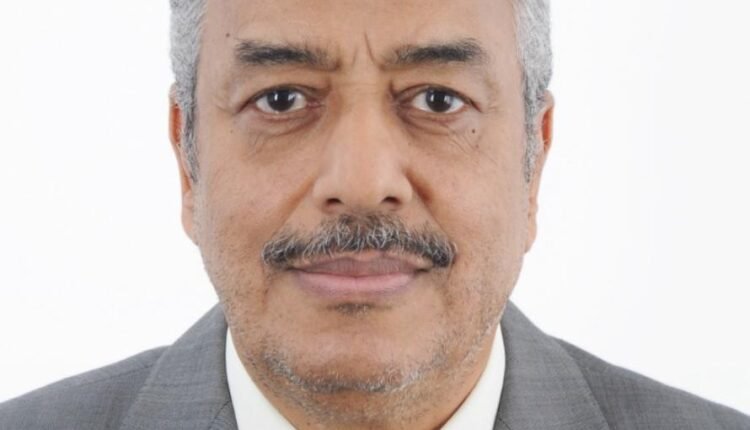
Dr Ismail Sati
The attack launched by U.S. President Donald Trump against Democratic Congresswoman Ilhan Omar was not a passing political quarrel. It formed, through a continuous chain of statements spanning more than six years, a stark model of exclusionary racist discourse targeting overlapping identities: race, religion, gender, and national origin. Tracing this trajectory is not merely documenting a history of insults; it exposes a deliberate mechanism that employs stereotypes and incitement to achieve political gains and deepen societal division.
On 14 July 2019, then-President Donald Trump initiated the first large-scale attack in what would become a sustained political doctrine. That day, he did not single out one congresswoman, but four Democratic representatives collectively known as “The Squad.” He told them they should “go back to the countries they came from.”
These women were: Ilhan Omar (of Somali origin), Alexandria Ocasio-Cortez (of Puerto Rican origin), Rashida Tlaib (of Palestinian origin), and Ayanna Pressley (African-American). Four young, outspoken women from diverse backgrounds representing a new face of pluralistic America.
This attack marked the first test of a clear strategy: transforming any political disagreement with opponents of non-European origin into a battle over identity, belonging, and national legitimacy.
Gradual Escalation: From Insulting “The Squad” to Dehumanising Somalis
Had the matter stopped at two posts on the X platform, it might have been a fleeting incident. But it was, in fact, the founding declaration of an exclusionary rhetoric that did not stop — but escalated:
Phase One (2019): Questioning belonging — “Go back to your country.”
Here, the moral boundary surrounding citizenship for elected American women was shattered.
Phase Two (February 2025): Escalation into accusations of treason.
Trump accused Ilhan Omar of “betraying our country” and attempting to “import Somalia’s failed culture.” The rhetoric shifted from “you do not belong” to “you are a traitor acting against American interests.”
Phase Three — the most dangerous (December 2025): Dehumanisation and direct incitement.
In a meeting with members of his administration, Trump broadened his attack to all Somalis in Minnesota, calling them — including Ilhan Omar — “scum,” adding: “Their country smells, and we don’t want them in ours.”
These terms (“scum,” “smelly country”) are not political sparring; they belong to the lexicon of dehumanisation — classic hate rhetoric once deployed against Jews in Europe, Black people in America and South Africa, and countless other groups marked for persecution.
Why Does This Constitute Institutional Racism?
It is a pattern, not an incident.
The attack was not random but part of an escalating pattern targeting the same identities: immigrants, Muslims, Black people, and women.
The later fixation on Ilhan Omar — a Black, Muslim, immigrant woman — made her the perfect target for this triad of discrimination.
Linking rhetoric to institutional violence.
The news report covering Trump’s December 2025 remarks mentioned, almost in passing, that planned ICE operations would focus on Somalis. This is the real danger: inflammatory rhetoric does not remain mere words; it becomes justification for discriminatory institutional action.
Words create an environment in which persecuting an entire community appears acceptable.
Its impact on democracy.
This rhetoric shifts democratic discourse from a contest over ideas (taxes, healthcare, foreign policy) to a poisonous identity struggle. The question is no longer “What is your policy?” but “Who are you — and do you truly belong here?”
This undermines the core democratic principle of equal citizenship and normalises discrimination.
Beyond Ilhan Omar
The story of Trump’s continued attacks on Ilhan Omar and “The Squad” is a stark warning. It demonstrates how racist rhetoric can be turned into a profitable political strategy by targeting “the Other” and mobilising feelings of fear and superiority.
The danger is not limited to Ilhan Omar or the Somali-American community; it threatens the very idea that societies can be mosaics of diversity forming a harmonious whole. When Trump questions the belonging of citizens because their origins are Somali, Puerto Rican, or Palestinian — or because their skin is Black or their religion is Islam — the entire human fabric is shaken.
Today’s challenge is not merely to condemn the words, but to confront the institutional logic that allows such words to become policy, and to resist the strategy that seeks to turn human diversity into a vulnerability rather than a source of strength.
Silence in the face of such escalation is not an option, for it is silence before the dismantling of the principle of equality upon which humanity stands.
Is this the man we are expected to depend on — the one some hope will intervene in favour of our country?
This is not a question seeking an answer, but a question expressing profound incredulity.
Shortlink: https://sudanhorizon.com/?p=9305