

Livestock Ministry Announces Strategic Plan to Develop Fisheries and Aquaculture Industry
Khartoum – Sudanhorizon
Minister of Animal and Fisheries Resources Ahmed Al-Tijani Al-Mansouri has announced a strategic development and implementation plan, being prepared in consultation with scientists and experts, to serve as a model for wider adoption in livestock production cities. The plan aims to advance the fisheries and aquaculture industry, establish an advanced laboratory centre and a training centre, and set up a unit for manufacturing animal feed and fishing equipment.
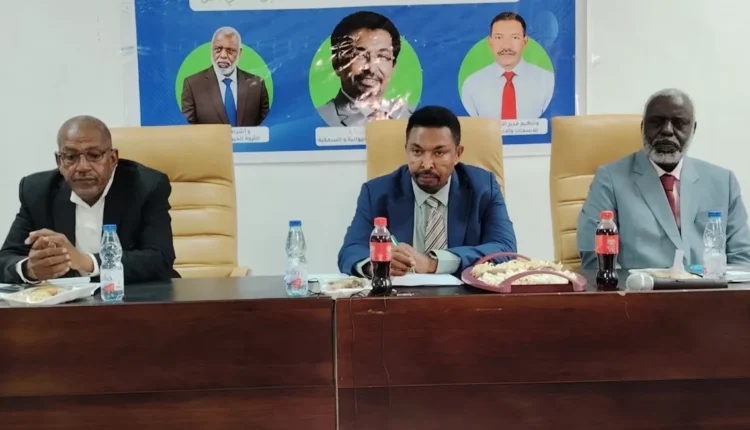
He made the announcement while addressing the ministry’s celebration of World Fisheries and Aquatic Life Day in Khartoum on Sunday, held under the theme: “Sustainable Fisheries for a Secure Food Future”.
Al-Mansouri stressed the importance of involving the private sector in upgrading and developing the country’s fishing industry. He noted that Sudan possesses substantial natural resources, as well as the skills and expertise needed to increase fish production and expand aquaculture, provided these resources are properly utilised.
The minister added that the country’s fisheries production had remained low over the past 70 years since independence, particularly in relation to the scale of available resources. He revealed that current production levels stand at just 10% of the potential in freshwater and 3% in marine waters.
For his part, Undersecretary of the Ministry of Animal Resources Dr Ammar Al-Sheikh Idris stressed the need to establish a domestic fisheries industry by equipping fishermen with modern fishing techniques and strengthening extension services. This, he said, would increase the sector’s contribution to gross domestic product and government revenues. He also highlighted the importance of harnessing Sudan’s considerable resources to multiply production.
Meanwhile, Director-General of the General Directorate of Fisheries and Aquatic Life Dr Fathi Mirghani said fisheries were not a marginal sector but a fundamental pillar of the national economy. He pointed out that Sudan possesses unique aquatic resources and a coastline stretching 750 kilometres.
Mirghani stressed the importance of protecting strategic fish stocks, supporting traditional fishermen and providing them with modern machinery and equipment to develop aquaculture. He also called for establishing a comprehensive database and accurate fisheries statistics to lay the foundations for a sustainable fisheries sector.
Shortlink: https://sudanhorizon.com/?p=20533