

Race to Buy Sorghum Directly from Farms Drives Up Prices, Raising Fears of Artificially Created Scarcity
Report – Hala Hamza
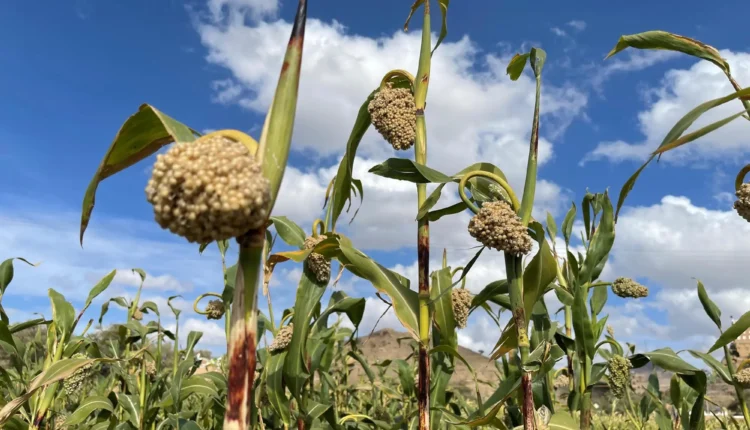
Sudanhorizon monitoring has revealed a growing trend of aggressive purchases of sorghum seed crops directly from farms within the Gezira Scheme before harvest, at unusually high prices. The price of a quarter of a sack of sorghum has surged to SDG 85,000.
Farmers at the scheme who spoke to Sudanhorizon did not rule out the spread of this practice, pointing out that a shortage of rainfall had reduced the areas planted with sorghum, creating scarcity that has affected production sectors heavily dependent on the crop.
For his part, Ali Al-Madani, a farmer at the Gezira Scheme, told Sudanhorizon that he could not rule out reports of frenzied market purchases by certain parties seeking to acquire sorghum at the highest prices, with the aim of draining market supplies and creating scarcity, thereby widening the food gap and potentially triggering famine.
Al-Madani stressed that the continuation of the war, widespread concerns about food shortages in a country that has not harvested crops for more than three years and has no strategic reserves, alongside the prevailing security instability, all point to the possible use of “economic warfare” to fuel such practices.
Meanwhile, Mustafa Al-Turaifi, a farmer at the Gezira Scheme, told Sudanhorizon: “Sorghum germination this year has been severely affected by scarce rainfall and a complete lack of irrigation water. Therefore, it is highly likely that farmers will resort to selling the crop as seed directly from their farms.” He added that such sales are carried out through individuals whose sole concern is making profits, without regard for citizens’ essential need for this crop. He also asserted that the sorghum could be smuggled to neighbouring countries.
Al-Turaifi confirmed that a sack of sorghum was selling for SDG 1.15 million at the market in the town of Matuq on Tuesday. He also revealed strong purchasing activity by residents of Kordofan State, who were buying sorghum, fodder and sugar cane, pushing the price of a feddan to SDG 4 million. He noted that COMESA countries were reporting similar shortages of sorghum and groundnuts.
In the same context, producer Othman Ibrahim told Sudanhorizon that sorghum prices on farms were higher than those in the markets. A kaila of sorghum was selling for SDG 140,000 at the farm, compared with SDG 130,000 in the market. In the Wad Al-Haddad market, the price of the “Wad Ahmed” variety had also reached SDG 140,000 per kaila. He added: “We, the farmers in the southern section, started planting sorghum late, and our crop has not yet ripened.”
For his part, farmer Alaa El-Din Bilawi blamed “crisis profiteers” for buying sorghum directly from farms. He told Sudanhorizon: “There are hidden forces working behind the scenes to widen the food gap and portray the country as facing famine by driving up sorghum prices and causing an almost complete shortage of the crop.”
Ammar Bashir, Director of Food Security at the Ministry of Agriculture, told Sudanhorizon that sorghum was one of the country’s staple food crops, alongside wheat. He said there were reports of declining yields in Gedaref and other production areas, which was affecting market supply and driving prices higher.
He stressed that the absence of strategic sorghum reserves was exacerbating the problem. Such reserves help stabilise prices and serve both producers, by purchasing their crops at remunerative prices, and consumers, by releasing scarce commodities into the market and reducing their cost. Nevertheless, Bashir rejected the classification of this phenomenon as an indication of an impending famine. He also pointed out that low commodity prices relative to production costs posed another challenge for farmers.
Meanwhile, Asaad Al-Daw, an official at the Gedaref Crops Exchange, denied reports that sorghum sales and transportation from Gedaref to other states had been halted. He confirmed that sales were taking place under official permits issued by the security authorities.
He explained that sorghum purchases directly from farms in Gezira were being carried out by known traders rather than smugglers. The crop was then transported for sale in Kassala, Port Sudan and Khartoum, given the high fees imposed on it in Gedaref State amid declining production.
Al-Daw revealed that sorghum prices had fallen from SDG 2.2 million to SDG 2.1 million on Monday, and then from SDG 2.05 million to SDG 2 million on Tuesday.
For his part, risk management expert Dr Abdullah Al-Tayeb told Sudanhorizon that purchasing sorghum directly from farms before it reaches the markets was aimed at creating food shortages and triggering the famine that is widely being promoted despite, he argued, no such famine existing on the ground.
Dr Al-Tayeb stressed that the state had a duty to intervene through security and economic measures to avert the dangers of these suspicious practices. He called for an end to what he described as such manipulation, which is often carried out under the cover of investment, and for the confiscation of acquired stocks and their return to agricultural markets. He also urged the government to purchase larger quantities of the crop than in previous years to strengthen strategic reserves, with any surplus released according to an approved plan.
Shortlink: https://sudanhorizon.com/?p=20330