

From Small Amounts of Money to Financial Security: How Can Poor Households Save in Sudan? (2/3)
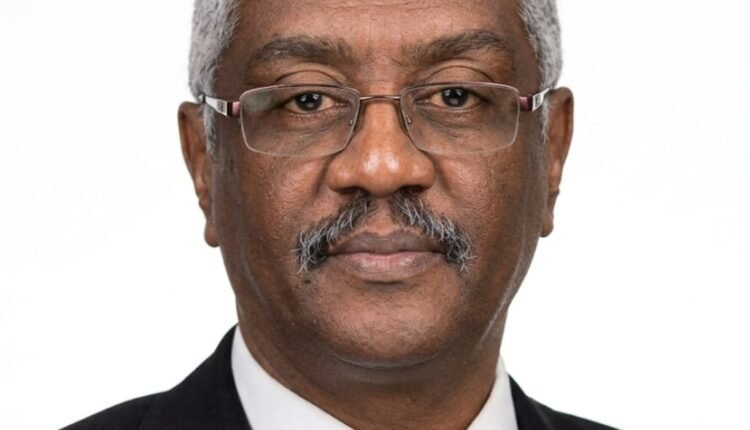
Noaman Yousif
In the first article in this series, we raised a fundamental question: are poor people unable to save because they do not understand its importance, or because economic circumstances have deprived them of the means to do so?
In Sudan, where cost-of-living pressures are mounting and incomes are losing purchasing power, it is not enough to simply diagnose the problem. We must also look for practical solutions to help households cope with unexpected illness, education costs, interruptions to their livelihoods and other crises that may force them into debt or compel them to sell their possessions. It is unrealistic to expect a household that cannot meet its basic needs to save. However, it is possible to help households with a small surplus manage it more effectively, while developing collective and institutional mechanisms to protect the poorest and most vulnerable families. Saving is not a race to accumulate money; it is a way to reduce a household’s vulnerability to crises.
First: Start with What You Can Actually Afford, Not a Fixed Percentage
Sound financial management begins with identifying sources of income, establishing expenditure on food, housing, healthcare, education and transport, and taking stock of existing debts and financial commitments. If income is insufficient to cover basic needs, the priority should be to seek appropriate support and opportunities to increase earnings, rather than setting aside money for savings at the expense of essential requirements. Where there is a surplus, however small, a portion can be allocated to savings according to the household’s means and the regularity of its income.
No one needs to save a fixed percentage of their income. One household may be able to put aside a small amount every week, while another may only manage to save during periods when its earnings improve. The important thing is to avoid having to borrow money to meet basic needs simply because savings have been set aside.
Second: An Emergency Fund – Protection Against Unexpected Crises
Illness, loss of work and urgent educational expenses may force a household to borrow money or sell its possessions. For this reason, the first savings goal for any household that can afford to save should be to build an emergency reserve, even if it starts with a modest amount.
Ideally, this reserve should be kept somewhere safe, be readily accessible when needed, and remain separate from the household’s day-to-day spending money. It can then be increased gradually as circumstances permit.
If a household has to use its reserve when a crisis occurs, this should not be regarded as a failure. The fund was established precisely to deal with such circumstances. Once the crisis has passed, the household can begin rebuilding it according to its available means.
Third: Planning for Healthcare, Education and Seasonal Expenses
Not all expenses are unexpected. Some educational costs, such as school fees, books, uniforms and transport, as well as regular healthcare expenses, can be anticipated in advance.
Where resources permit, a household can break these costs down into small weekly or monthly amounts, reducing the need to borrow when the payments fall due. It can also make use of effective health insurance schemes and available support programmes.
However, household savings should not replace the state’s responsibility to provide affordable education, healthcare, and social protection, particularly for families facing costly illnesses or severe economic hardship.
Fourth: Daily Earners – Flexible Savings to Protect Both the Household and the Business
Street vendors, artisans, casual workers and small business owners face a particular challenge because their earnings fluctuate. Requiring them to make fixed savings contributions may therefore be inappropriate.
A better approach is for business owners to keep their business operating funds separate from household expenditure and from any surplus available for saving. Mixing business capital with household needs can deplete the funds required to keep the business running, eventually forcing the owner to borrow money to resume operations.
A separate operating reserve can be built up to cover periods of declining sales, the purchase of inputs or equipment repairs. In this way, savings serve two purposes: protecting the household and safeguarding its source of income.
Buying and storing goods in anticipation of price increases may be useful, within the limits of essential household requirements, but it is not a complete substitute for cash savings. Such purchases may expose a household to the risk of spoilage or theft, while depriving it of the liquidity needed for healthcare, transport and urgent expenses. What is needed is a balance between holding cash and making carefully considered purchases, rather than tying up most available resources in goods.
Fifth: Savings Groups, Banking Services and Digital Solutions
Sudanese society has long-standing traditions of solidarity and cooperation. These can be strengthened through savings groups that help members meet shared needs. However, their success depends on having written rules, properly recording contributions and expenditure, ensuring transparency in fund management, and keeping group money separate from the personal funds of those responsible for running the group.
It is also important to distinguish between a savings group and a rotating savings association, in which members take turns receiving the pooled contributions. The latter can help a member obtain a relatively large sum at a particular time, but it does not guarantee that every member will have an emergency reserve. Relevant legal and regulatory requirements must also be considered.
Banks and payment service providers, meanwhile, can develop affordable digital accounts and products that let people deposit small amounts while ensuring their money is protected and readily accessible. Fees and conditions should be clearly explained, and data protection and security measures must be observed. Users should never share their confidential verification codes or security credentials with others.
People on limited incomes should not be encouraged to speculate in currencies, gold or other volatile assets using money needed for food, healthcare or emergencies. The purpose of saving is to protect the household, not to expose painstakingly accumulated money to additional risks.
Sixth: When Saving Is Not Enough – Increasing Income Is Essential
However efficiently household expenditure is managed, this cannot compensate for the absence of an adequate income. Increasing earnings is therefore the most important route to expanding the capacity to save sustainably. This can be achieved through self-employment, home-based businesses, crafts, agricultural and livestock activities, and other opportunities suited to a household’s skills and market realities.
The success of such activities, however, depends on training, market research, access to production inputs, reaching customers and effective cost management. Nor is finance an automatic solution to poverty. Financing that is not based on a viable, sustainable business activity and a realistic ability to repay may increase a household’s financial burden rather than improve its circumstances.
This is where microfinance institutions can play an important role by combining training with appropriate financing and follow-up support, while providing savings facilities that enable small business owners to protect their savings and preserve their working capital.
Seventh: Practical Steps to Take Starting Today
A household whose circumstances permit saving can begin by recording its income and expenditure, identifying the actual surplus remaining after essential needs have been met, and then choosing a single savings goal – preferably an emergency reserve. It can then decide on a flexible amount that matches its financial capacity, choose a safe way to keep the money, and review its plan as income, prices, and financial commitments change.
For a household whose income does not cover its basic needs, the priority should be to access available support, improve its income-earning opportunities and obtain social protection, rather than impose additional savings obligations on it.
Conclusion: Small Savings Can Make a Big Difference
Saving in Sudan requires a realistic approach that goes beyond conventional rules. Some households can save small amounts, others can only do so intermittently, while the poorest families need support to protect them from deprivation before they can reasonably be expected to build up financial reserves.
The fundamental principles remain clear: protect essential needs, avoid unnecessary debt, plan for foreseeable expenses, build an emergency reserve whenever possible, choose safe savings methods, and work towards increasing income sustainably.
Institutions, too, have a responsibility to develop appropriate financial services, expand social protection and support productive activities and self-employment. The success of saving should not be measured solely by the amount of money left at the end of the month, but by a household’s ability to cope with emergencies, obtain medical treatment for its members, educate its children and preserve its source of livelihood.
Small savings may not create wealth, but they can make the difference between a temporary setback and a household slipping further into poverty and debt.
However, turning individual initiatives into broad and sustainable impact requires an economic and institutional environment that makes saving possible, protects people’s money and opens up income-generating opportunities for those with limited resources.
This brings us to the question that will guide the third article: how can Sudan move from encouraging individuals to save towards building a national initiative that links financial security with financial inclusion, social protection and productive development?
That will be the subject of the next article: ‘Towards a National Savings and Financial Security Initiative in Sudan’.
Former Banker | Institutional Development Consultant
Shortlink: https://sudanhorizon.com/?p=20318