

Sudan and Lebanon: Do the Principles of Sovereignty and a Unified Army Change with Geography?
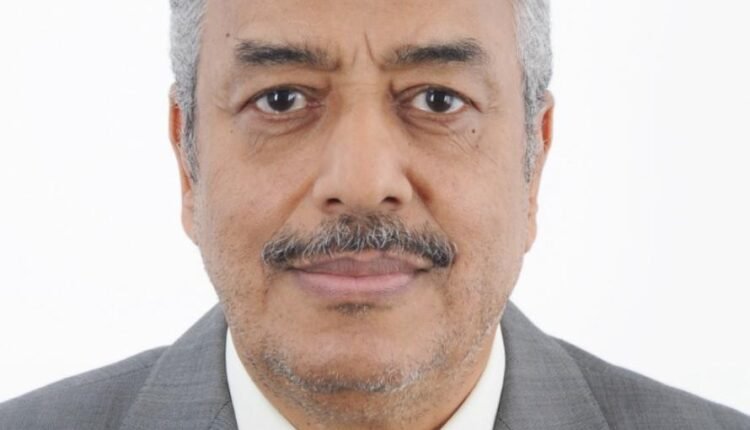
Dr Ismail Sati
In remarks delivered in Beirut on 16 November 2026, US Ambassador to the United Nations Mike Waltz identified one of the most important challenges facing the Lebanese state. He called on Hezbollah to voluntarily surrender its weapons to the Lebanese state, stressing that no country can have two armies and that the full restoration of Lebanese sovereignty must be achieved through the Lebanese Army.
Waltz went further, praising the Lebanese soldiers who are stepping forward to defend their country, restore its sovereignty and protect its people. He considered that Lebanon had a historic opportunity to reclaim its national authority and security institutions.
In my view, these remarks deserve closer consideration in Sudan—not simply as an opportunity to comment on Lebanese affairs, but as a way of testing the consistency of the American position on national sovereignty and the unity of the military institution. What would happen if we made a simple substitution in Waltz’s remarks, replacing the Lebanese Army with the Sudanese Armed Forces, and Hezbollah with the Rapid Support Forces militia? How would the statements then read?
Quite naturally, applying the same logic would make the American message clear: the Rapid Support Forces militia should voluntarily lay down its arms and surrender them to the Sudanese state, since no country can have two armies. The full restoration of Sudanese sovereignty must be achieved through the Sudanese Armed Forces, as the state’s national military institution. Sudanese soldiers who are stepping forward to defend their country and its people deserve recognition and support, and Sudan has a historic opportunity to reclaim its sovereignty and rebuild its national institutions.
This may seem like no more than an intellectual exercise, but it raises fundamental political questions for Washington and all international actors addressing the Sudanese crisis.
The first question is this: if the principle that a state cannot have two armies is fundamental to the American approach to the Lebanese situation, why is the same principle not applied to Sudan? Is the state’s monopoly on the use of arms, and the subordination of all military formations to its authority, not an essential condition for statehood and stability, regardless of the names of armed groups or their political backgrounds?
The second question is this: if Washington believes the Lebanese Army is the institution that should restore Lebanese sovereignty, why should the Sudanese Army not be the institution entrusted with restoring Sudan’s sovereignty and ending the armed rebellion? Why does the position towards Sudan’s military institution appear so much more complicated, as though the legitimacy of the state and its military institution were matters open to renegotiation?
The third question concerns the future of armed militias. If Hezbollah is required to hand over its weapons to the Lebanese state, why should the same demand not be made of the Rapid Support Forces, instead of seeking political or military formulas that would grant it a status parallel to state institutions, or open the door to its reconstitution under new names and arrangements?
Of course, this comparison does not mean that the Lebanese and Sudanese situations are identical in their historical, political or military circumstances. Each has its own particular characteristics and complexities. Hezbollah also occupies a different political and party-political position from that of the Rapid Support Forces militia. However, differences in circumstances do not invalidate the common principle that should guide the international community’s position: a state cannot enjoy full sovereignty while an independent military force operates outside its institutions, and sustainable stability cannot be achieved while multiple centres of military decision-making exist.
The essence of the Sudanese crisis is not simply a dispute between two military forces, nor a struggle over the division of power and influence. It is a conflict that concerns the very survival of the Sudanese state and its right to possess its own national institutions and exercise sovereign decision-making. Consequently, reducing the crisis to calls for a ceasefire, or placing the warring parties on an equal footing in a political settlement without addressing the root of the problem—the existence of an armed force operating alongside the state—cannot guarantee that the underlying causes of the crisis will be resolved.
We are not asking Washington to invent a new policy towards Sudan, nor are we asking it to reproduce the Lebanese experience in every detail. We are simply asking it to remain consistent with the principles it has itself proclaimed. If Lebanon’s sovereignty cannot be complete without a single national army, Sudan’s sovereignty should not be exempt from that rule.
Does what applies to Lebanon not apply to Sudan? Does the principle of one state and one army become an established principle in one country, but merely an opinion open to negotiation in another?
That is the question Washington should be asking itself before calling on the Sudanese to accept any settlement that fails to address the fundamental source of their state’s crisis.
Shortlink: https://sudanhorizon.com/?p=20315