

CBS Governor: Sudan’s Banking Sector Capable of Confronting the Economic War
Khartoum –Sudanhorizon
The Governor of the Central Bank of Sudan CBS, Amna Mirghani, attributed the current rise in the exchange rate to a decline in production and the destruction of infrastructure, among many other factors brought about by the war.
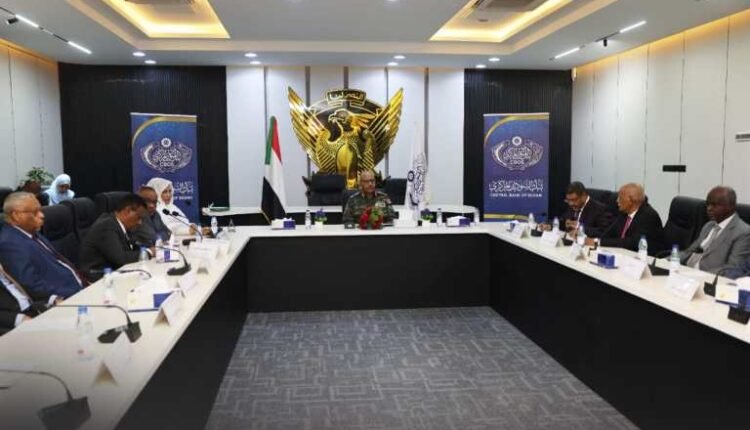
During an extensive meeting held this morning at the Central Bank’s headquarters in Khartoum—attended by Sovereign Council member Lieutenant General Ibrahim Jaber, bank general managers, the head of the Sudanese Banks Association, and the Central Bank’s department directors—the Governor stated that “the Central Bank has made, and continues to make, significant efforts to control the exchange rate.”
She highlighted the immense challenges posed by the ongoing war, emphasizing that just as the Armed Forces are fighting the enemy with arms, the banking sector is working to confront the economic war.
The Governor further noted that the Bank’s plan for 2026 focuses on key strategic pillars, most notably digital transformation, financial inclusion, and the reform of the banking sector. She revealed that banks have managed to remain resilient and uphold established standards.
The meeting addressed internal issues facing the banking sector—primarily governance, reform programs, and anti-money laundering efforts—and noted a strong, positive response from correspondent banks in China, Turkey, Saudi Arabia, and Egypt.
The meeting also reviewed challenges facing the banks, such as the gap in export proceeds, the need to activate banking applications, and the integration of the “Siraj” system. The Governor announced that the clearinghouse system will operate at full capacity starting next Sunday. In the same context, the Chairman of the Sudanese Banks Association confirmed that 90 percent of banks are currently operating within Khartoum State, providing continuous services to the public. He highlighted the significant role that the return of banking operations to the capital plays—first, by contributing to the “battle for dignity and resilience,” and subsequently, by supporting the recovery process.
The meeting also addressed the issue of electronic payments, the development of a digital transformation framework, the expansion of point-of-sale (POS) terminals and mobile payment systems, and the facilitation of public access to banking services.
Sovereign Council member Ibrahim Jaber Ibrahim urged banks to intensify their efforts toward achieving full digital banking to better serve the public, affirming that coordination will continue in order to overcome the obstacles facing the banking sector.
Shortlink: https://sudanhorizon.com/?p=19884