

Sudanese Minister of Foreign Affairs and International Cooperation: We Hope Ethiopia Will Reconsider Its Position
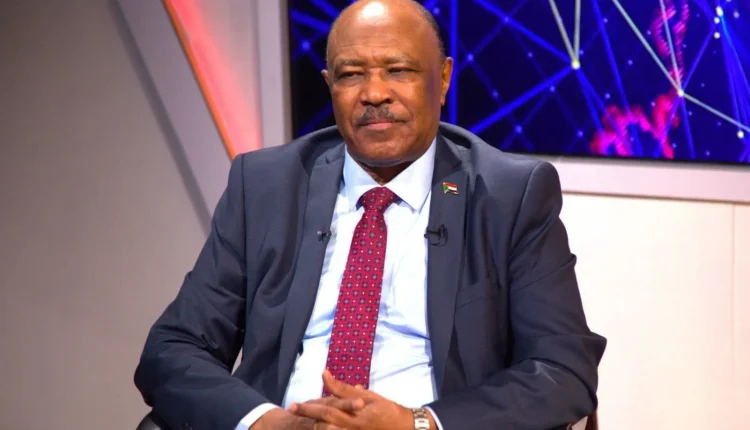
– The closure of the consulate signals an unwillingness to engage peacefully.
– Amidst escalating political and military developments in Sudan, and growing regional and international challenges linked to the crisis, Sudanese diplomatic efforts are intensifying.
– Khartoum is working to strengthen its ties within the Arab and regional sphere and expand its international partnerships, while simultaneously insisting on an entirely Sudanese-led dialogue to end the war—rejecting any solutions imposed from the outside.
– In a comprehensive interview with Sudanhorizon Sudanese Minister of Foreign Affairs and International Cooperation, Ambassador Mohieddin Salem, discusses the latest developments in the country, Khartoum’s stance on the Arab role in the crisis, the significance of the Egyptian-Sudanese quadrilateral meetings on water issues and the Grand Ethiopian Renaissance Dam (GERD), and the future of cooperation between the two nations.
– The minister also addresses the Sudanese government’s position on Ethiopian escalation—including the closure of the Sudanese consulate in Asosa—as well as the move toward strengthening relations with Russia, Khartoum’s view on the “Quad” (4-nation group) and proposed truces, the future of an intra-Sudanese dialogue, and the role expected from Egypt and Saudi Arabia in the coming phase.
– The following the translation of the full text of the interview as conducted in Cairo by: Sabah Mousa
– “We have begun to translate words into action with Egypt, and we consult with them continuously regarding developments concerning the Blue Nile.
– To start off: Following his recent visit to Khartoum, the Secretary-General of the Arab League named Ambassador Zaid Al-Sabban as his Personal Envoy to Sudan. How do you assess this move, and what does it signify regarding the Arab League’s position on the Sudanese crisis?
– It is clear that the Secretary-General of the Arab League, Dr. Nabil Fahmy, brings to this significant position a set of convictions and visions. Through these, he aims to restore the Arab League to its rightful standing and the role it is ought to fulfill. The appointment of Ambassador Zaid Al-Sabban—who has been closely monitoring the Sudanese dossier since at least 2006, including during the Abuja talks on Darfur—reflects the accumulated expertise of an official who has long served, and continues to serve, as the Director of the Horn of Africa and Sudan Department at the Arab League. This serves as a clear indication that the League does not wish to remain merely one party among the “Quintet” group handling this file; rather, it seeks to take a further step toward a member state—a state whose special importance is recognized by the Secretary-General. This importance entails both an official responsibility, as mandated by the Arab League Charter, and a moral obligation, particularly in light of the aggressions Sudan faces—assaults that target the nation’s resources and the basic needs of its people, such as water, food, and other essentials. The Secretary-General’s decision to elevate the Arab League’s level of engagement with the Sudanese dossier carries a message that we in Sudan both understand and welcome, and to which we respond positively. As a government, we welcome this appointment and the new envoy; we look forward to working with him and the League to ensure the security and stability of Sudan and its people. We appreciate Nabil Fahmy’s interest in Sudan’s challenges and welcome his personal envoy.
– To what extent does Sudan rely on the Arab League at this critical juncture in its history?
– We have long relied on the Arab League, and it has never let us down throughout the various stages Sudan has traversed. Sudan is no stranger to crises. To be more specific, in Dr. Nabil Fahmy, we find someone who possesses a deeper understanding of Sudan’s challenges and a closer connection to them. It is worth noting that when Fahmy was appointed Egypt’s Foreign Minister, his very first visit abroad was to Sudan. This profound understanding—viewing Sudan within a broader, pan-Arab national security framework—offers us hope. Such alignment in approaching crises makes it easier for us, and for the Arab League, to move toward solutions that are more realistic, prudent, and sustainable.
– Cairo hosted a quadrilateral meeting involving the foreign and irrigation ministers of both Egypt and Sudan. How do you assess this meeting, and what is its significance at this particular time?
– This meeting is a positive sign that we have begun to translate words into deeds. It follows presidential-level discussions between President Abdel Fattah el-Sisi and Lieutenant General Abdel Fattah al-Burhan, as well as a meeting last February between the two countries’ prime ministers—Dr. Mostafa Madbouly and Professor Kamil Idris. This mechanism is one of the outcomes of that earlier meeting. We have developed plans and conceptual frameworks, and have reviewed several achievements already realized on the ground, ensuring their successful implementation. Furthermore, we have taken a significant step forward by signing a memorandum concerning the Jebel Aulia Dam. This initiative is part of a broader engagement with the Nile Basin countries, involving an agreement on 36 distinct projects. This clear, practical transition toward realizing shared interests with all the basin states carries profound significance. Conversely, attempts to narrow the scope of cooperation within the Nile Basin Initiative—focusing exclusively on the Eastern Nile sub-region through the unilateral approaches adopted by certain partners and neighbors, such as Ethiopia—are limited in nature and lack broad consensus among the basin states. Egypt and Sudan, however, share a unified vision, a common understanding, and a collective set of procedures. Both nations, as downstream states, are equally concerned about the potential negative impacts resulting from any actions taken regarding the Nile’s waters. Consequently, the statement issued following the meeting highlights the economic, social, and environmental damages that could arise from such actions. We are not the only nations in the world that share a river; there are international precedents from which we can learn. Should other parties genuinely wish to cooperate, Sudan and Egypt are prepared to offer clear, science-based perspectives grounded in well-defined legal principles. We remain committed to this path, as it is a matter vital to the survival of our two nations and their peoples—it is not a subject for any form of political maneuvering.
– Have funding sources been secured for the 36 agreed-upon projects, enabling these understandings to move from the conceptual stage to actual implementation on the ground?
– Sometimes people feel apprehensive about the subject of financing, as if it were something daunting; yet, given the possibilities that exist on the ground, financing can actually serve as a key attraction. Investors from all over the world are keen to get involved. In Sudan and Egypt, if we present ourselves and our potential effectively, we will find no shortage of investors or offers. What we have to offer is highly attractive to potential partners from both the East and the West—whether in Asia, Russia, Europe, or the Americas—as there is a genuine global interest in participating in these projects.
– Turning to the situation with Ethiopia: how do you view Addis Ababa’s decision to close the Sudanese consulate in Asosa and give its staff 48 hours to leave? What are the implications of this move, given the escalating tensions between the two countries?
– These developments did not happen suddenly; rather, they are a natural consequence of the attacks—which we have repeatedly pointed out—launched from Ethiopian territory into Sudan using drones. We highlighted these incidents during a press conference held by the Undersecretary of the Ministry of Foreign Affairs for the diplomatic corps, and subsequently filed formal complaints with the African Union Peace and Security Council and the UN Security Council. Furthermore, during my meeting today with the Secretary-General of the Arab League, I presented compelling evidence regarding this matter. In today’s age of technology, such evidence is readily available; drones themselves record their flight paths and destinations. Consequently, we are not the only ones making these claims—satellites, monitoring systems, and international institutions—such as Yale University—have also reported on the camps located in Asosa and these specific incidents. The actions taken by the other party—our neighbor, Ethiopia—signal an unwillingness to uphold the principles of good neighborliness. For our part, we have exercised a great deal of restraint, despite the attacks Sudan has faced originating from Ethiopian territory—including those supported by actors from outside the continent who maintain camps used to launch assaults against Sudan. We believe that the closure of diplomatic and consular offices indicates a lack of desire to engage positively and peacefully with these issues; these offices were originally established to serve as gateways for cooperation. We hope that our neighbor, Ethiopia, will reconsider its position and return to positive engagement, fostering a relationship with Sudan based on good neighborliness.
– Is Khartoum considering reciprocal diplomatic measures in response to the closure of the Sudanese consulate in Asosa?
– International law grants us the full right to assert our sovereignty and to take whatever political measures we deem appropriate. Each situation calls for its own specific response.
– There are reports of Western mediation efforts aimed at containing tensions and preventing further escalation between Sudan and Ethiopia. Have any such contacts or mediation efforts actually taken place?
– As of now, I am not aware of any. However, as I mentioned earlier, we have consistently extended a hand of friendship, seeking to maintain the harmonious, neighborly relations that have existed between our two countries for decades. We in Sudan have never committed aggression against anyone; rather, we desire positive engagement—rooted in good neighborliness—with all our neighbors. This is both our declared policy and the one we actively implement.
– Given Ethiopia’s repeated announcements regarding plans to construct three new dams on the Blue Nile, what is Sudan’s position on these intentions? And how does Khartoum intend to address them, in coordination with Cairo?
– I believe we possess the necessary mechanisms to handle this file. We remain in constant consultation to address every development concerning this river—which binds us together—in accordance with legal principles that safeguard the rights of all parties involved.
– Let us turn to Sudanese-Russian relations. The Russia-Africa Summit featured discussions on major agreements and projects between the two nations. Meanwhile, some have accused Al-Burhan of moving to sell off Sudanese territory in exchange for protection during the war. How do you respond to these accusations? And is Sudan truly shifting toward the Eastern bloc?
– Sudan has been an open country for decades, welcoming companies from a wide range of nations—including China, Russia, France, other European states, and even American firms (despite the U.S. sanctions against us). Our policy is one of openness. In today’s world, the focus is on shared interests; what is so unusual about holding meetings with the Russian side, which offers excellent proposals—proposals untainted by any hidden political agenda? Why should we not embrace such opportunities? Some, however, link the idea of establishing a free zone in Sudan—involving cooperation with Russia—to the possibility that it could serve as a precursor to a Russian military logistics hub or base on the Red Sea.
– How do you respond to these concerns?
– What does a “free zone” actually entail? Free zones, anywhere in the world, are economic free zones. We do not oppose meetings of the “Quintet” [the five-nation group], but we reject “canned” (pre-packaged) solutions.
– But some argue that this could be a gateway to establishing a Russian military base?
– Who said that? Free zones are open areas that house markets; this is economic cooperation accessible to everyone. Sometimes, people form notions in their own minds and insist—quite strangely—on linking every move to those preconceived ideas. The reality, however, is quite different. Even if we, in Sudan, find partners who align with our interests, that should not be a point of contention for anyone—provided it does not compromise Sudan’s sovereignty or infringe upon its rights. President al-Burhan’s remarks, delivered live from the Kremlin, were clear: we are a fully sovereign state, and we do not accept dictates from anyone. We are pursuing this path of our own free will. We will proceed, without hesitation, with whatever serves the interests of our people—and we will do so without waiting for a signal from any party, whether near or far. Our approach toward Washington remains consistent; we did not discuss an arms deal for Addis Ababa with Moscow.
– Could these moves be interpreted as a clear shift by Sudan toward Russia, or a transition toward a specific international bloc?
– Let me state that Sudan’s doors are open to anyone wishing to engage with it, provided that Sudan’s sovereignty, security, and territorial integrity are respected, and with no dictates imposed. We welcome everyone—whether from the East, West, South, or North. This is a clear policy, with nothing hidden; Sudan… We have a long-standing tradition in international relations, with clear policies—enshrined in our laws and the agreements we sign—that are accessible to all. We are not a nation that seeks confrontation, nor do we wish to create crises in our relations—whether internally, with our neighbors, or with any other party globally. Rather, we aim to engage with the world based on the principles of goodwill and mutual benefit, ensuring that any party collaborating with us gains from a mutually advantageous partnership.
– How did Sudan view the arms and aircraft deal concluded between Ethiopia and Russia? Did Sudan reach out to Moscow regarding this agreement?
– No, we have not discussed this matter with Russia. We respect the sovereignty of other nations and reject any foreign interference in our own sovereignty. By that same token, every state has the right to act in a manner it deems serves its own interests; however, should any action infringe upon our sovereignty, that would be a different matter entirely.
– To what extent does Sudan have alternative options for dealing with Ethiopia, should the latter continue its escalation or intensify its incursions into Sudanese territory?
– Under international law, any nation that faces aggression has the right to respond; aggression is met with a corresponding response. The world laments a man-made famine while ignoring the deliberate targeting of power infrastructure.
– Could we anticipate a military response from Sudan against Ethiopia if these acts of aggression persist?
– It is the duty of any army to protect its country’s borders. Should an act of aggression occur by any state, the affected nation has the right to defend its sovereignty and territory—a standard practice for all countries worldwide. Why, then, should it be considered unusual when it concerns Sudan? That said, we currently see no indications pointing toward such a development, and we hope that matters do not escalate to such extreme scenarios.
– Moving on to the path of political settlement—there is talk of a settlement currently being prepared within the framework of the “Quad” (the four-nation group) to resolve the Sudanese crisis. Have you been consulted regarding this settlement? Have its terms or key features been defined?
– We do not engage with speculative statements made in the media. The United States opened up to Sudan following the meeting between His Highness Prince Mohammed bin Salman and President Trump. We have since engaged in an ongoing process—even if there are differences in our respective approaches to Sudanese affairs. Furthermore, Chairman Al-Burhan has sent a letter to President Trump, and the Sudanese Foreign Minister has sent one to the U.S. Secretary of State. In these communications, we affirmed our openness to any initiative that could foster and develop bilateral relations with our partners in the United States—in a manner that supports the political process in Sudan, promotes security and stability, and leads to a solution crafted by the Sudanese people themselves, free from external dictates. This is the foundation upon which we operate. We have also presented an initiative to the UN Security Council, which we introduced in December 2025.
– And what is Sudan’s position regarding the actions of the “Quad” and the ongoing communications between its members?
– The Quartet is another matter we have discussed; we are deeply engaged with three of its members—Egypt, the United States, and Saudi Arabia—and are advancing these proposals, though there have been no new developments thus far. Our position remains clear: we support peace and an intra-Sudanese dialogue that is Sudanese-owned. We have already begun forming a committee to facilitate this internal dialogue and are moving forward along this path. While many meetings are being held abroad—whether within the framework of the Quintet or otherwise—we do not oppose them; we merely ask that they take into account the reality on the ground in Sudan. Sudanese citizens who were displaced or forced to flee have now returned to areas under government control. Anyone, anywhere in the world, who seeks to serve the interests of the Sudanese people must look at where those people are currently living and ask them what they want. What we reject are “canned” solutions that would grant this terrorist militia the opportunity to impose its rule over the Sudanese people—that will not happen. We also reject the actions of certain factions that have broken away from the national consensus and are now traveling the world, seeking to regain power by exploiting the blood of the Sudanese people. The Sudanese public will never accept this. As a government, we prioritize the interests of our people and strive to fulfill their aspirations. Our goal is to set the country on the right path toward free and fair elections, where the people can choose their own leaders. It is a simple equation: the Sudanese people must determine their own destiny. It is the millions currently on the ground who hold the power to decide—not external meetings to which the Sudanese people themselves—the true stakeholders—are not even invited. We reject the return of forces that broke the national consensus at the cost of the blood of the Sudanese people.
– What about the proposal for a three-month truce, which is being discussed as part of efforts to end the war?
– These are all just arrangements. If they align with the aspirations of the Sudanese people, we welcome them. However, if they are designed for specific agendas—such as reinstating this militia or bringing back political factions that have lost their grassroots support—then this cannot come at the expense of the majority of the Sudanese people. The people have already made their own choices; they have returned from their places of exile and displacement, and they are resuming their lives under a government that looks after them all—a government they engage with, alongside their army, which achieves new victories on the ground every day.
– But the targeting of power plants and vital infrastructure with drones—which paralyzes daily life—could threaten the return of citizens to their homes and discourage those considering a return. How is the government addressing this challenge?
– These are all attempts that can be countered, just as our army is doing now.
– But what can the army actually do in the face of such significant losses and the continued paralysis of citizens’ lives?
– Why does the international community not take action to condemn—first and foremost—this terrorist act, which targets civilian infrastructure? There are states that fund these operations, and states that allow these drones to be launched from their territory. We have filed complaints with the UN Security Council and the African Union Peace and Security Council. We want to see a clear stance from a world that otherwise laments the situation and warns of famine. Does the targeting and destruction of these facilities not directly impact the lives of the Sudanese people? Famine itself is being deliberately engineered, as the transformers currently being targeted by bombardment are essential for the irrigation systems being prepared for the winter season in Sudan—a situation involving a large number of countries.
Shortlink: https://sudanhorizon.com/?p=19826