

Political Advisor to Sudan’s PM: Burhan Achieved a Strong Breakthrough in RuCaia
Cairo – Sudanhorizon – Sabah Moussa
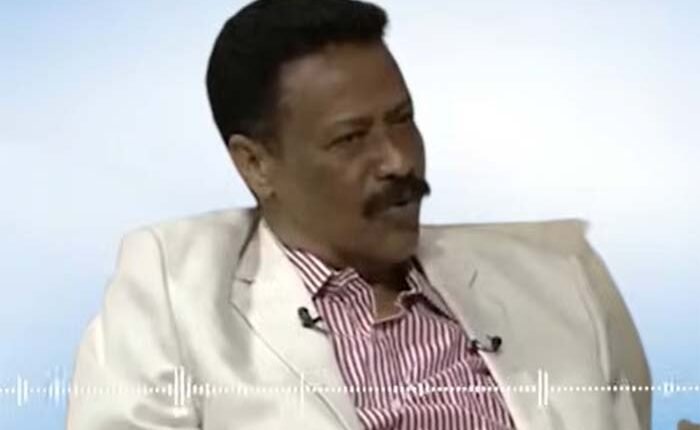
Political advisor to the Prime Minister, Mohamed Mohamed Khair,has affirmed that when evaluating the visit of the Chairman of the Sovereign Council, Lieutenant General Abdel Fattah al-Burhan, to Russia, one should consider the overall context of the visit and compare it with his previous visits to several countries. He pointed out that the visit carried different indicators in terms of the official reception and the opportunities afforded to Burhan to express Sudan’s positions, in addition to the future projects that were presented during it.
In an exclusive statement Khair said that Burhan’s visit to Russia was on the sidelines of a conference and was not a bilateral or pre-scheduled visit. He noted the warm reception Burhan received and the opportunities he was given to speak from the podium. Khair added that the future projects resulting from the visit make it entirely and radically different from previous visits. He explained that this situation is usually met with two interpretations in political circles: the first is a negative interpretation that sees Burhan selling out Sudan and offering up its lands, and the second considers the visit a new glimmer of hope within the context of shifting alliances and repositioning. He emphasized that he views the matter from the perspective of the serious projects proposed and the benefits they can bring to Sudan. He added that any Russian activity in Sudan, whether it concerns a military base, gold mining concessions, investment projects, or a free zone, does not depend solely on the approval of the Sudanese and Russian sides, but also requires, in some aspects, a degree of regional approval, including from Egypt and Saudi Arabia. He explained that the nature of the project, its level of risk, and its impact on the other participating parties determine the position of these countries. He continued, saying that Saudi Arabia has concerns regarding a Houthi presence in the Red Sea, as does Egypt. He noted that if the move towards establishing a Russian military presence in the Red Sea is serious, proceeding with it requires the consent of both Egypt and Saudi Arabia, as this is the political logic that must be considered when dealing with such projects.
Khair pointed out that the remaining activities related to gold mining and investment fall within the framework of normal relations between countries. He noted that military cooperation between Sudan and Russia is not new, but rather dates back to the 1960s. He added that the current Sudanese army has been influenced by the Russian Eastern military school, despite its initial Western structure. He explained that all batches of recruits who joined the Sudanese military since 1969, following the May Revolution, studied Eastern military curricula and used Russian weapons, even in current battles. This makes developing this aspect of military relations an extension of a decades-long trend. He clarified that this trend actually began in 2017 when Russia was determined to build an airport and rearm the Sudanese army. However, these efforts were halted following the change the country witnessed in 2019 and the fall of Bashir regime. Nevertheless, the influence has continued in one form or another through the weapons used by the Sudanese army and the military theories and strategic visions upon which it is based. He considered developing and advancing this cooperation a positive step, but indicated that even if new agreements are not developed, the existing military relationship will The Russian and Eastern schools of thought already exist within the Sudanese army, as they do in other armies in the region. He emphasized that Burhan achieved a significant breakthrough through his visit and received a reception befitting him and Sudan. He also raised a number of issues that garnered approval and sympathy from those who listened to his remarks in Moscow. He added, “I can say that Burhan visited Russia as a general and returned as a doctor.”
Regarding the American stance on Sudan’s rapprochement with Russia, Khair stated that it depends on how the United States understands this move, given the current state of US-Russian relations, which he described as a “spring” phase, against the backdrop of issues larger than the Sudanese crisis. He added, “I don’t believe the agreement addresses one side at the expense of the other because of Sudan.” He argued that portraying the move towards Russia as an indication of a deep rift with the United States does not necessarily reflect reality. He explained that Washington has other perspectives from which it deals with this matter, noting that Russia hopes to establish a presence in the Red Sea in a manner acceptable to all parties involved. He believes this is what delayed the agreement. He said, “If there weren’t an undeclared agreement among the countries affected by this, Russia wouldn’t have received Burhan in this manner.” He emphasized that the nature of the agreement itself, in terms of its strategic implications for the region, should be the focus of the United States’ consideration, not merely Sudan’s move to strengthen its relations with Moscow.
Shortlink: https://sudanhorizon.com/?p=19668