

“Sumoud” and Sudanese Dialogue (1–3): From Rejecting Dialogue to the Absence of a National Alternative
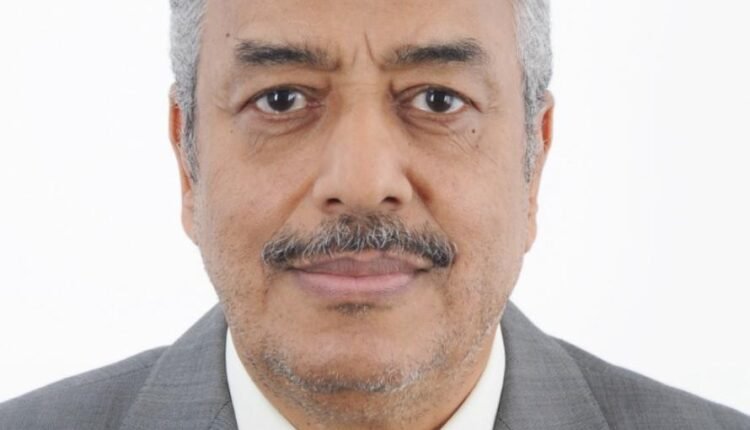
Dr Ismail Satti
The Sumoud alliance’s position on Sudanese–Sudanese dialogue highlights a problem that runs deeper than disagreements over the venue or the organising body. It concerns political forces that reject proposed initiatives but do not necessarily offer a clear foundational vision governed by objective criteria for participation, implementation and accountability.
Before discussing the Sumoud alliance’s position on Sudanese–Sudanese dialogue, I want to clarify that my objection is not limited to this group’s stance. It also extends to the concepts underpinning the current call for dialogue and how the process has been proposed and organised. I previously presented a different vision in a Facebook article published on 29 August 2026, entitled On Sudanese–Sudanese Dialogue, in which I called for using systems thinking to move beyond addressing isolated political issues and tackle the structural imbalances that perpetuate Sudan’s crisis.
In my view, Sudan does not need conventional dialogue in which political forces exchange positions and then negotiate a temporary power-sharing settlement. Rather, it needs foundational negotiations through which Sudanese people can agree on their national constants, the nature of the state they wish to build, the rules governing the resolution of disagreements, and the mechanisms that will ensure the state’s continuity and development without its crises recurring in the same form.
It is important here to distinguish between two things: disagreement with the concepts underpinning the current dialogue initiative, and refusal to participate without offering a clear foundational alternative. My objection to the concepts on which the current call for dialogue is based does not mean that I endorse Sumoud’s position. Equally, rejecting the initiative does not, in itself, confer any political or moral superiority on any party.
Since independence, sections of Sudan’s political forces have become accustomed to rejecting governments and initiatives they disagree with, without necessarily offering a comprehensive, practical vision for overcoming the crisis. This tendency has appeared at various stages of Sudan’s political history, including the May and Salvation eras, and in the disagreements surrounding the National Dialogue held between 2015 and 2016. Today, it is emerging once again in positions taken on Sudanese–Sudanese dialogue.
The problem with this approach is not merely rejecting a particular initiative. It is the transformation of opposition into an end in itself, as though obstructing other people’s projects were sufficient proof of the merits of an alternative, even when that alternative lacks clear definition or practical viability.
The question we should therefore ask is not simply: Why has Sumoud refused to participate in the dialogue? We must also ask: What project does it propose for building Sudan? On what basis does it decide which forces are entitled to shape the country’s future? And what makes its vision a better national alternative to the proposals it rejects?
First: From Political Dialogue to Foundational Negotiations
In its commonly understood sense, dialogue may involve exchanging views or discussing issues on which participants disagree. In contrast, negotiation seeks to secure commitments and agreements between parties with differing interests and positions. Sudan’s crisis, however, is, in my assessment, too deep to be resolved through conventional political dialogue or negotiations confined to distributing power among competing forces.
Sudan is suffering not merely from disagreements between political parties or rivalries among leaders, but from accumulated structural imbalances in the relationship between the components and institutions of the state, in the management of diversity, in the rules governing transfers of power, and in the ability of political, economic and social systems to address crises without allowing them to escalate into destructive conflicts.
Bringing the opposing parties around a single table and then asking them to agree on a transitional government or the allocation of positions does not guarantee that the roots of the crisis will be addressed. Negotiators may reach a temporary agreement while the causes of the breakdown in consensus remain intact, allowing the crisis to return at the first subsequent test.
From a systems-thinking perspective, the task is to move beyond addressing isolated events to understanding the relationships, structures, and rules that generate and perpetuate them. The objective is not merely to halt the current crisis, but to build a national system that can accommodate differences, manage competing interests, correct its own mistakes, and prevent political disagreements from becoming a threat to the state’s very existence.
For this reason, I believe the more appropriate term for the process Sudan needs is “foundational negotiations”. These would concern the foundations on which the state rests: its national constants, the rules governing the exercise of power and recourse to the law, and the mechanisms needed to ensure differences are managed peacefully.
This does not mean that such negotiations will resolve every problem at once. Rather, they would establish a common frame of reference through which other issues could be addressed, instead of each new political phase starting from scratch, as though Sudan had never undergone previous experiences or paid a heavy price for their failures.
Second: What Does Sumoud’s Refusal to Participate Reveal?
Every political force has the right to object to an initiative’s conditions or the mechanisms through which it is organised. That right, however, comes with a political responsibility: to present a clear alternative, explain how it would be implemented and identify the parties that should participate according to objective national criteria.
Several questions arise here that cannot be avoided.
First: Is the objective a national dialogue, or a dialogue whose participants are selected according to a particular alliance’s political outlook?
If the aim is to achieve national consensus, participation must follow publicly declared rules, rather than whether parties agree or disagree with Sumoud’s positions. Sudan belongs to no political alliance, and no organisation has the right to appoint itself as the authority that decides which forces deserve to participate in shaping the state’s future, while excluding others simply because they hold different views.
This question becomes even more important when the proposed dialogue format appears restricted to a limited range of political forces, while excluding political and social groups that hold different positions on the Armed Forces or political Islam.
Can a process that excludes sections of the political spectrum because of their political positions build comprehensive national consensus? Does such exclusion address Sudan’s divisions, or merely reproduce them in a new form?
Participation in foundational negotiations should not be a reward that political forces bestow upon one another. It should instead be a right governed by nationally agreed criteria, while taking into account legal responsibility for crimes and violations and ensuring that political representation does not become a means of evading accountability.
This does not mean that all parties bear equal responsibility or that their positions are equivalent. It means that the criteria for participation and accountability must be clear and must not be left to the discretion of a political alliance that appoints itself judge over everyone else.
Second: Is the disagreement about dialogue, or about the role of state institutions?
One of my principal objections to Sumoud’s positions concerns its approach to the role of the Armed Forces in Sudan’s crisis and what I regard as unfairness toward the national military institution, reflected in some of its positions.
This does not mean that the army’s leadership is above criticism or that its decisions should not be reviewed and scrutinised. A fundamental difference exists between criticising military leadership and holding it accountable for its decisions, on the one hand, and treating the Armed Forces as merely another armed party, no different in nature from any other military formation, on the other.
The Armed Forces are a national institution of the state. Their future should be linked to the country’s unity and sovereignty and to the development of state institutions on professional and legal foundations. Reforming, reorganising, and developing the military institution should be undertaken in accordance with the state’s requirements and the law, through competent national institutions, rather than being managed by a group of political activists according to their partisan outlook.
Furthermore, some leaders who now adopt hard-line positions towards the army’s leadership previously engaged with it in political arrangements, including the agreements that culminated in the Constitutional Document governing the country during the transitional period following 2019.
This precedent does not deprive those leaders of their right to criticise the army. It does, however, raise a question about the consistency of their political standards. If engaging with the army’s leadership was possible at an earlier stage to establish constitutional arrangements, why should engagement with it within the framework of another political initiative now be rejected outright, rather than its conditions, safeguards and substance being debated?
Political positions may change, but citizens are entitled to ask what principles govern such changes and what criteria distinguish acceptable political cooperation from unacceptable cooperation.
Third: Should those who disagree with the army be entitled to participate in foundational negotiations?
In principle, the answer is yes. Support for the army should not be a prerequisite for political participation. Peaceful opposition is a right, and disagreement with state institutions does not automatically deprive citizens or civilian political forces of the right to express their views and help shape the country’s future.
This principle does not, however, mean ignoring the conduct of political leaders or their relationships with external and regional actors. Nor does it mean that all positions have the same impact on the state and its institutions.
If credible evidence, established through fair procedures, shows that political leaders cooperated with entities providing military support to the Rapid Support Forces militia, or participated in efforts to weaken state institutions in favour of an armed party, those facts warrant examination and accountability. Such matters should not be decided on accusations alone, but they should not be ignored simply because those concerned invoke civilian or democratic slogans.
Conversely, a distinction must be drawn between leaders responsible for specific positions or actions and other alliance members, or other forces opposed to the army, who did not participate in those actions. It is unfair to attribute collective responsibility without distinction, just as it is unacceptable to exempt leaders from accountability because of their political standing.
What is required, therefore, is a clear set of national criteria for participation and accountability that apply to everyone, rather than turning dialogue into a means of imposing mutual exclusion.
Third: Does Sumoud’s Position Offer a Comprehensive Alternative for a National Solution?
Sumoud’s proposals centre on ending the war, securing a ceasefire, protecting civilians, opening humanitarian corridors, and then moving toward a political process leading to civilian democratic rule.
These are important objectives in their own right, but they do not, by themselves, constitute a comprehensive project for addressing Sudan’s crisis. The question is not only where we want to end up, but also how we intend to get there and what will prevent the crisis from recurring once we do.
I therefore believe we must distinguish between two separate tracks that should not be conflated.
Track One: Military Negotiations to End the War
The military parties concerned should conduct negotiations on a cessation of hostilities, a truce, ceasefire arrangements, troop withdrawals, the handling of violations, and other military and security details, with the involvement of mediators acceptable to the parties where necessary.
These matters require operational knowledge, direct responsibility for the forces involved, and the capacity to make military decisions, implement them and monitor compliance.
Political and civilian forces, meanwhile, should focus primarily on the state’s future, the rules of governance, the conditions for political transition, institutional reconstruction, justice, the economy, freedoms, and other foundational issues.
Separating the two tracks does not mean denying the relationship between war and politics. Rather, it means allocating responsibilities so the political process does not become an extension of military negotiations, or so calls to end the war are not used to obstruct discussion of the state’s future.
From this perspective, I do not believe that making the end of the war a precondition for foundational political negotiations is the right approach. Instead, the two tracks should proceed within their respective areas of responsibility, without either being given the power to obstruct the other.
A truce or ceasefire is not necessarily neutral in its political and military consequences. In a war in which the balance of power is shifting, a truce may let one party regroup and regain strength rather than bring the conflict to a sustainable end.
Any military agreement should therefore be assessed by its conditions, implementation mechanisms, and guarantees, rather than the slogans under which it is presented. The call to end the war must not become a way to recycle the political landscape that preceded its outbreak in 2023, allowing political forces and leaders to return to power without addressing their responsibility for earlier failures or any serious violations committed during the war that may be established.
Ending the fighting is essential, but it does not automatically resolve the political crisis, nor does it make a return to pre-war arrangements an acceptable option.
Track Two: Foundational Political Negotiations
This is the track political and civilian forces should pursue, separate from competition over managing the military details of the war.
It should begin by identifying the foundational issues that require national consensus, foremost among them:
The fundamental principles of the Sudanese nation, and the country’s unity and sovereignty.
The nature of the state and its constitutional and legal institutions.
The relationship between civilian authorities and military institutions, including the limits of each one’s jurisdiction.
The rules governing the peaceful transfer of power, public freedoms and judicial independence.
The criteria for forming transitional governments, and the limits and duration of their powers.
Justice and accountability for crimes and violations.
The economic and social policies required to rebuild the state and improve citizens’ lives.
Mechanisms to ensure that future disagreements are managed without resorting to violence, coups or political exclusion.
The foundational issues on which agreement is reached should be put to the people in a comprehensive referendum, under clear legal arrangements that guarantee citizens’ participation and freedom of choice.
If Sumoud believes the current initiative does not achieve these objectives, the natural question is: why does it not help develop a clear foundational alternative or submit specific proposals to correct the process, rather than simply rejecting the initiative?
If the objection concerns the venue, arrangements could be made for parties unable to attend in person to participate by video link, or a hybrid format combining in-person and virtual participation could be adopted.
If the objection concerns the organising body, the parties could negotiate the establishment of a different, independent preparatory committee.
If the objection concerns representation, the parties could agree on publicly declared criteria to ensure the participation of different political and social forces.
These are examples of how objections can be turned into constructive political action. Rejecting dialogue outright without presenting a specific alternative does not help resolve the crisis, nor does it automatically confer moral or political superiority on those who reject it.
Sudan has long suffered from positions that place their proponents in the role of judges over others without necessarily offering a practical project for overcoming the crisis.
Conclusion to Part One
The disagreement should not be simply whether to participate in or reject a particular initiative. It should concern the nature of the national project capable of moving Sudan away from recurring struggles for power towards agreement on the foundations of the state.
Criticism of Sumoud’s position is therefore incomplete without proposing an alternative, just as objections to the current initiative are incomplete without identifying what should replace it.
This brings us to the next question: what conditions would make foundational negotiations different from previous political dialogues? And how can we ensure that they do not become a temporary settlement between competing forces, or an open-ended transitional period that reproduces the crisis rather than resolving it?
We shall address these questions in Part Two, God willing.
Shortlink: https://sudanhorizon.com/?p=19218