

Neglecting Our Friends
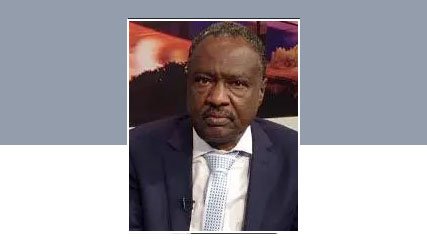
Rashid Abdelrahim
Saudi content creator Khalid Al-Olayan is currently visiting Sudan as part of his travels through several countries.
Al-Olayan has millions of followers and is interested in sport and charitable work.
From Saudi Arabia, another citizen is deeply enamoured with Sudan—so much so that his affection for the country is hard to imagine. His name is Hamoud Walid. Although he has not yet visited Sudan, anyone who follows him might think he is Sudanese through and through, given his extensive and profound knowledge of our country, particularly its music, poetry and literature.
We have no institution that monitors or studies the considerable goodwill Sudan enjoys in Arab and African countries.
Sudanese culture has spread to an extraordinary extent, largely through its own momentum, driven by the authenticity and strength of our music and poetry and by our social way of life. Its impact and influence have endured and continue to do so, despite the current constraints imposed by the political positions of the leaderships of some neighbouring countries and major powers—and despite the neglect of our own government, which seems unable even to invite two young men with such strong influence in a country like Saudi Arabia.
The influence of Sudanese culture can be found in the capitals around us without any particular effort.
During a visit to the Mercato market in Addis Ababa, we heard the voice of the Sudanese singer Osman Hussein. We followed the sound and found a young woman running a shop selling audio recordings. She did not speak Arabic, so we asked her: How can you listen to songs you do not understand?
She replied that she loved Sudanese music and that some of Osman Hussein’s songs brought her to tears and stirred deep emotions, even though she did not understand the lyrics.
We visited Eritrea and stayed with our dear late friend Majid Yousif—may Allah forgive him and grant him the highest level of Paradise. As we travelled in a car, the driver told us that the whole of Eritrea was mourning that day because of an event that had taken place in Sudan: the death of the singer Mahmoud Abdel Aziz.
Dr Riek Machar once told me that in the early days of the war, they invited the great Sudanese singer Mohamed Wardi to perform at an event held at what was then the SPLM’s largest camp, Bilpham, on the Ethiopian border. The camp was used to train new cadres, and the name was later given to the Sudan People’s Liberation Army headquarters in Juba.
Dr Machar told me that he was sitting on the platform next to John Garang. The audience was enormous. He turned to Garang and said: “If Wardi joined the movement, he would become its leader.”
The spread of Sudanese education, literature, culture and the arts—particularly music—extends across many neighbouring countries.
In Nigeria, we could hardly go anywhere in Abuja’s markets without hearing the voice of a Sudanese singer.
In Chad, attending a Sudanese girls’ school is regarded as one of the quickest paths to marriage. A girl graduates having acquired knowledge of her religion and how to run a household. She studies Islamic jurisprudence and the Qur’an, as well as various aspects of domestic management, and, most importantly, learns Arabic.
The spread of Sudanese art is not a recent phenomenon. It goes back decades. Many leading Sudanese artists made numerous well-known trips to neighbouring and distant countries, including Ahmed Al-Mustafa, Mohamed Wardi, Abdel Karim Al-Kabli, Abu Daoud, Osman Hussein, Sayed Khalifa, Sharhabil Ahmed, and Aisha Al-Falatiya.
The reach and impact of Sudanese culture are extremely important. Perhaps the war that has afflicted us should prompt us to pay greater attention to this asset, because the arts can help shape supportive public opinion and exert influence against regimes and governments that participate in the war and aggression against us.
Unfortunately, our government remains far removed from all this. It fails to take advantage of opportunities that require little effort and only modest attention and money.
It is deeply regrettable that the government, and the Minister of Culture, Information, Tourism and Heritage, have not invited content creators such as Khalid Al-Olayan and Hamoud Walid, along with other influential figures. It is equally regrettable that the Sudanese government and our embassies do not organise cultural and artistic activities capable of exerting a meaningful influence on political positions.
Worse than neglecting friends is neglecting countries that either want, or do not object to, establishing relations with us—countries we need at this difficult time, yet from which we turn away while seeking to cultivate relationships with states that watch us closely and work against us.
We seek closer ties with America while overlooking Russia, China and others.
The money allocated to four-wheel-drive vehicles provided to large numbers of ministers and officials, as well as foreign trips—whether holidays in Geneva or official journeys with little tangible return—would be enough to generate meaningful cultural engagement abroad and silence at least some of the guns and hostile voices directed against us.
Shortlink: https://sudanhorizon.com/?p=18407