

Sudan: Stewardship and the Cultivation of the Earth—What If the Root of the Trouble Runs Deeper Than the War?
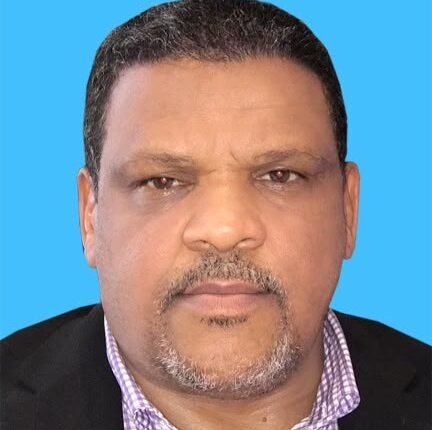
Adel Al-Rifai Abu Al-Hassan
As we live through this war—with all the tragedies, bloodshed, and destruction it has brought and continues to bring—perhaps time has come for us to have a look at the bigger picture. We must move beyond the immediate causes of the conflict to consider the issues that have accumulated over decades and generations.
This is a proposition for reflection and discussion; it explores the relationship between humanity and the land—as well as the resources God has placed at our disposal—and examines the impact of labor, production, development, and civilization-building on the lives and stability of societies.
God Almighty says: “And [mention, O Muhammad], when your Lord said to the angels, ‘Indeed, I will make upon the earth a successive authority [vicegerent]'” (Al-Baqarah: 30).
And He, Glory be to Him, says: “O David, indeed We have made you a successor upon the earth, so judge between the people in truth” (Sad: 26).
Thus, stewardship (khilafah) on earth is a responsibility. It is linked to the gifts God has bestowed upon humanity—intellect, knowledge, will, and the capacity for work and construction—as well as the trust of truth and justice He has placed upon us.
Furthermore, He says: “He has produced you from the earth and settled you therein” (Hud: 61).
The concept of “cultivating the earth” (‘imarat al-ardh) is broad; it encompasses the utilization of land, water, livestock, and mineral resources, as well as the establishment of industry, the development of trade, the cultivation of knowledge, the creation of job opportunities, the improvement of services, and human development. The Almighty says: “And We have certainly established you upon the earth and made for you therein means of livelihood.” (Al-A‘rāf: 10)
Here, empowerment is linked to the means of livelihood; and such means flourish through work, production, and the wise utilization of the bounties God has placed within the earth.
This is where worship connects to human development; acts of worship—such as prayer, zakat (almsgiving), fasting, pilgrimage, and others—instill within the individual qualities of trustworthiness, discipline, responsibility, compassion, and justice. When these values translate into behavior in public life, they manifest as reform, the preservation of rights, and the advancement of the common good.
From this perspective, cultivating the earth in truth and justice becomes a sphere of responsibility, and the investment of resources—transforming them into production and benefits—becomes an integral part of building life itself.
Agricultural land is transformed into food; water into life and production; livestock into food, industry, and trade; minerals into added value; knowledge into expertise and technology; and the human being into a productive, creative force.
Nations are built by valuing what they possess, developing their resources, and transforming their potential into production, value, and sustainable benefits. As the spheres of work and production expand, so too does the dynamism of society: the farmer tends to his land, the worker to his factory, the engineer to his project, the physician to his patients, the teacher to his students, the researcher to his scholarship, and the merchant to his market. A Sudanese proverb comes to mind here: “The idle play the judge.” In a society where avenues for work, production, and development abound, people naturally focus on the future; individual interests become interconnected, and collective energy is channeled into constructive endeavors.
One plus one equals two, regardless of the calculator’s beliefs: he who cultivates the land reaps its harvest; he who invests in people enhances their capabilities; he who builds industry creates value; and he who expands production expands the scope of benefits.
Sudan possesses vast tracts of land, abundant water, livestock, mineral resources, a strategic geographic location, human capital, and immense potential across agriculture, industry, trade, and services.
These assets could transform Sudan into a major hub for food and industrial production, a source of exports, a generator of jobs, and an active partner in ensuring food security and advancing economic interests within its regional and global spheres. Yet, the true value of resources is realized only when they are translated into tangible life, production, and benefits.
This raises the question: what becomes of a society where the cultivation and development of the land stall, resource investment falters, vast potential remains outside the cycle of production and growth, and this state of affairs persists across eras and generations?
The consequences accumulate—affecting the economy, job opportunities, the quality of services, the state’s ability to meet its citizens’ needs, and the very fabric of social relations. As the economic and social void widens, the scope for action and initiative shrinks, and competition for limited resources intensifies.
It is from this perspective that we can view Sudan’s crises through a broader lens. War stems from a multitude of direct, political, economic, and social causes, all rooted in long-standing, accumulated processes. Factors such as underdeveloped infrastructure, limited production, and the failure to utilize resources over generations may well be among the underlying causes that shaped the environment in which these crises festered.
This raises a question for inquiry and reflection: Was the failure to cultivate the land and harness its resources one of the deep-seated roots that—alongside other factors—created the void in which Sudan’s crises expanded, ultimately leading to war?
The equitable distribution of power and wealth, institution-building, and state reform are fundamental issues; yet, they require a solid foundation to sustain them: a society that works, produces, develops, invests its resources, and focuses on its future.
Just as development and cultivation expand the scope of work, production, and shared benefits, they also serve as vital pathways toward building a society that is more conscious, cohesive, integrated, harmonious, and cooperative. As shared interests grow, people’s relationships become intertwined and their roles complementary; differences become a natural part of life—more amenable to dialogue, consensus, and constructive management.
Thus, rebuilding Sudan requires more than merely reconstructing what the war destroyed; it demands the rebuilding of the life cycle itself—encompassing the people, the land, production, resources, services, and institutions.
A final question:
If cultivating the earth is one of the responsibilities of stewardship—as the Almighty said: “He brought you into being from the earth and settled you therein”, then does the failure to cultivate the earth—and the failure to utilize the elements of life and production God has deposited within it—constitute a form of corruption on earth, or a degree thereof?
If this constitutes a failure to uphold the responsibility of stewardship, is it linked to the divine law of replacement?
Could neglecting the duty of stewardship and development over time lead to these opportunities being granted to others?
These are not definitive judgments, but rather questions open to discussion and reflection as we seek the deeper roots of Sudan’s crises.
Ultimately, the most important question remains: What have we done with that over which God has appointed us as stewards?
Sudan possesses great potential; let us, therefore, excel in cultivating and developing what God has entrusted to our care.
Shortlink: https://sudanhorizon.com/?p=18247