

Seven Armed Groups in Ethiopia Form Alliance Against Government
Sudanhorizon – Agencies
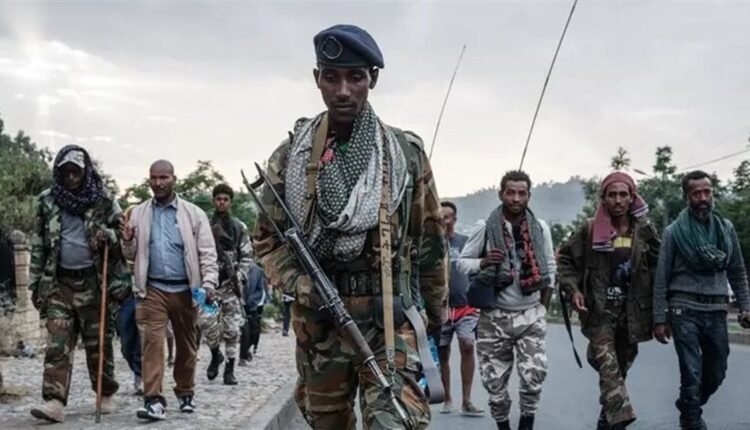
Seven Ethiopian opposition and armed groups announced Sunday the formation of a new coalition to confront the government of Prime Minister Abiy Ahmed, bringing together forces active in different parts of the country under a common framework.
According to Emmanuel Assefa, deputy chairman of the Tigray People’s Liberation Front (TPLF), the coalition aims to “overthrow the government and facilitate the establishment of a transitional government.” It comprises seven armed organizations, including Tigray forces, the Fano ethnic militia in Amhara, and the Oromo Liberation Army, he told Agence France-Presse (AFP).
The announcement came after several armed groups revealed in August and September efforts to coordinate their activities against the federal government, amid continued fighting in Amhara and Oromia and rising tensions in Tigray.
Assefa added that the new alliances seek to change the federal government and pave the way for the formation of a transitional government. In addition to Tigray forces, Fano, and the Oromo Liberation Army, the coalition also includes other armed groups operating in different parts of the country, according to statements cited by AFP.
In August, Fano leader Zemene Kassie announced that factions of the movement had united under a single leadership, saying groups representing several Ethiopian ethnicities and regions had formed an alliance to coordinate their activities against Abiy Ahmed’s government.
The Oromo Liberation Army also confirmed on September 17 that broader cooperation among armed opposition forces was taking shape, but clarified that the cooperation did not constitute a comprehensive political agreement.
The coalition announcement came as fighting continued in western Oromia, where clashes between armed groups and government and regional security forces have intensified in recent weeks.
On September 17, the Oromo Liberation Army said there was a distinction between broader cooperation among armed opposition forces and the groups fighting it in the Wollega area, calling on Amhara factions to clarify their position toward an armed group operating there.
These disagreements are unfolding in an area that has witnessed repeated clashes in recent years between Oromo and Amhara armed groups, alongside operations by government forces.
On September 18, AFP reported that at least 14 people had been killed and 10 others abducted in an attack carried out by an armed group in central Ethiopia. It noted that Fano began its rebellion against the government in April 2023 and that several of its factions had moved in recent months toward forming a more coordinated grouping under unified leadership.
In the north of the country, tensions have risen again between the federal government and the Tigray People’s Liberation Front after both sides deployed forces near the region, raising concerns about a return to fighting that ended with the 2022 Pretoria Agreement.
On September 18, the Ethiopian government announced that around 300 TPLF fighters had surrendered to federal forces, while the army said more than 280 individual and crew-served weapons, along with quantities of ammunition, had been handed over. TPLF Deputy Chairman Emmanuel Assefa did not comment on the matter, telling AFP that he could not comment on such military issues.
AFP had previously reported that the Ethiopian government and the TPLF had deployed forces along the region’s borders in recent months, while the federal army carried out drone strikes in August and September targeting military positions in the area, according to data from ACLED, an organization specializing in conflict monitoring.
The latest developments indicate that contacts among some of these forces have moved beyond limited talks and coordination toward an attempt to establish a broader framework for joint action against the government, despite continuing disagreements among several of its components.
Shortlink: https://sudanhorizon.com/?p=18241