

The Sun Has Set on It—and Burned It
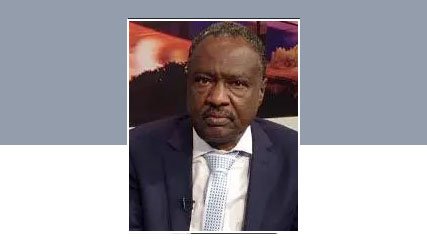
Rashid Abdelrahim
I called my dear friend and renowned surgeon, orthopaedic specialist Dr Mamoun Abu Shaiba, who has repaired and straightened many a crooked knee in Sudan, Britain and other countries. But he has, as they say in England, ‘broken a knee’ himself, having settled in East Anglia. His spacious home has a front garden with plants and a parking area, and another garden at the back where he has planted numerous seasonal and perennial flowers, as well as vegetables such as cucumbers, tomatoes and courgettes, and fruit including apples, pears and strawberries.
Dr Mamoun worries about his plants because the hot weather that has struck England has led to restrictions on water use, affecting gardening and cultivation.
For him and for the people of England, home gardens are spaces for socialising and relaxation, providing an escape from long days and limited visits resulting from weak social ties.
Great Britain is currently following in the footsteps of many countries as it confronts major economic and political crises.
Economically, the great kingdom on which the sun never sets has become afraid of the sun and the heat it brings. The summer just past was one of the harshest seasons England has experienced.
Asphalt melted on the roads, while railway tracks buckled and contracted.
According to the British Environment Agency, water levels fell below 78%, reservoirs and groundwater supplies were depleted, and citizens were prohibited from using garden hoses.
This crisis led to importing seasonal crops after the heat destroyed agricultural produce and caused production to decline.
The effects of the heat were not confined to agriculture, nor to the suspension of trains and the country’s shift from exporter to importer. The heat also spread into politics.
Britain began to face the threat of disintegration, as the constituent nations calling for independence—Northern Ireland, Wales and Scotland—began to mobilise.
If these regions achieve what they are demanding, it would mean their return to the European Union.
This major global change would not be confined to Britain and the European Union; it would also extend to the United Nations Security Council.
The permanent members of the Security Council with veto power would then be reduced, as the country formerly known as Great Britain would have melted away and divided. Would one of the three new countries inherit the veto, as Russia did by succeeding to that right from the Soviet Union? Or would the Council face a new situation that would require amending its membership by adding another major power?
Following the shameful roles Britain has played on the Security Council as penholder, the responsibility for holding the pen would pass to another country. Under the current arrangement, the penholder—the country responsible for drafting reports and resolutions concerning the country in question—is drawn from among three states: the United Kingdom, France and the United States. Who would hold the pen on Sudan’s behalf once the United Kingdom disappears?
What the United Kingdom is going through makes the major changes it may face seem likely to occur at the earliest possible opportunity. Economic conditions will not be limited to their effects on the citizens of the United Kingdom; they will also affect the political situation, weaken the country’s power and paralyse it, leaving it incapable of confronting the danger looming over it.
These developments reveal the depth of the predicament faced by a major power that cannot confront climate change and its impact on its economy, while also failing to address political circumstances that threaten its very existence.
There is profound wisdom in the idea that a country which calls itself great, oppresses peoples, kills their people, enslaves them and exploits their economies to serve its own population will ultimately meet such a disgraceful fate—the end of ‘Great Britain’ and the empire on which the sun never sets, but which is now burning under that sun and under the weight of its oppression of peoples from China to Sudan.
Shortlink: https://sudanhorizon.com/?p=18083