

The Niger Coup and Its Implications for Sudan
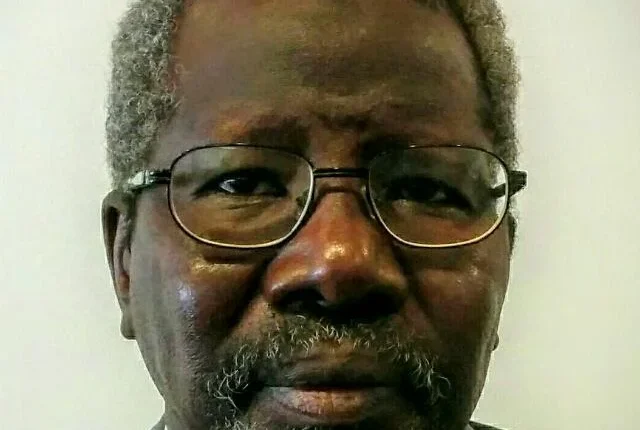
Dr Hassan Issa Al-Talib
The Nigerien government in the capital, Niamey, thwarted a failed coup attempt against General Abdourahamane Tiani on Saturday, 29 August 2026, carried out by an armed group calling itself the “Armed Forces for the Restoration of the Homeland” (FARP). It cannot be viewed in isolation from the developments and repercussions of the War of Dignity. Through this attempt, the international actors supporting the broader scheme and the Rapid Support Forces (RSF) militia seek to maintain and sustain logistical support by imposing a regional blockade on Sudan through its immediate neighbours, particularly Ethiopia, Chad and eastern Libya.
Niger shares borders with both Chad and Libya. Its inclusion in such a blockade would help ensure the continued flow of weapons and mercenaries to the militia, whose ranks have previously included numerous Arab mercenaries from across the region, particularly from Niger. Niger’s deposed president, Mohamed Bazoum, also had close ties with the rebel leaders of the RSF militia, based on ethnic and tribal affiliations as well as joint coordination aimed at establishing a unified political entity previously referred to as the “Juhayna Arab State”.
The coup plot therefore targeted Air Base 101, which specialises in drone operations, Diori Hamani International Airport, the presidential palace and the national television headquarters, before the official authorities regained control and suppressed the rebellion, led by the Republican Guard and special forces, with technical assistance from the Russian Federation’s African Corps. This points to the nature and form of the coming battle for the various parties, particularly after the Sudanese Armed Forces (SAF) thwarted the plan for a ground war and urban warfare, and the militia suffered defeats across all theatres of the War of Dignity.
This ultimately led to the implementation on the ground of the provisions of the Jeddah Agreement of May 2023, through the forceful restoration of the rule of law and the strengthening of constitutional legitimacy. The town of Al-Dabba consequently became the central national gathering point for all those who returned home, repented and came back, sought forgiveness and turned away from tribalism, racism and regional prejudice.
Accordingly, the sponsors of the conflict adopted Plan B, which consists of imposing a regional blockade on Sudan through its immediate neighbours and making intensive use of air power, including drones.
It is, of course, not difficult to decipher this map from the positions advanced by representatives of the sponsoring states, which emerged with striking clarity in their statements during the UN Security Council session on the situation in Sudan on 24 August this year.
Among these countries is France, which previously held exclusive control over Niger’s uranium production through Orano. France regards the Alliance of Sahel States (AES), and the integrationist alliance announced in September 2023 comprising Niger, Burkina Faso and Mali and subsequently opened to neighbouring countries, as an overt strategic challenge to and opposition to its policies on the African continent.
There is also concern that these countries could be influenced by Sudan’s experience of independence and liberation: an experience that broke free from political colonialism and from economic, cultural and legislative domination. Its negative repercussions, however, have continued to obstruct the plans of neo-colonial forces on the African continent, which has remained trapped in persistent developmental decline and prolonged underdevelopment since the 1960s, when Africa achieved nominal political independence.
Africa has made little economic, political or integrationist progress. In most African countries, rulers have remained, since independence, captive to external interests, and to the plans of foreign invaders and former colonial powers. Niger, meanwhile, continues to face repeated attacks by separatist and extremist movements, which have been classified as terrorist organisations by France and most Western countries.
Nor can the “Armed Forces for the Restoration of the Homeland” movement be separated from the former regime, which was an ally of France, or from its alignment with similar movements in neighbouring countries, such as the Chadian African Unity Movement (MUTA), headed by Aseel Manani. The latter declared an armed rebellion in northern and eastern Chad and calls for the unification of the Arabs of Chad and the wider region into a bloc backed by Western countries. It also maintains relations with Khalifa Haftar’s forces, which control eastern Libya and support the militia.
From this, it is possible to envisage the formation of an independent state comprising Arab communities scattered across Niger, Libya, Chad and Sudan, potentially extending as far as Mali, Burkina Faso and even Senegal, thereby controlling the entire area between the Red Sea and the Atlantic Ocean. This is the geographical and demographic Sudan region, representing Africa’s vital strategic space and possessing essential resources that remain outside its own control. It is an area over which fierce competition is taking place between Trump’s America on the one hand, and China and the Russian Federation on the other.
In light of this, the Sovereignty Council should adopt a plan for close engagement with the leaders of these countries, building on the historical ties that bind them to Sudan. The Ministry of Foreign Affairs should also be instructed to engage with the Sahel States and all neighbouring countries that are friendly towards Sudan, in order to activate a mechanism for consultation and coordination aimed at protecting shared national and regional security, containing all disruptive conspiratorial schemes, suppressing uncontrolled armed movements, and strengthening defence and security coordination on the ground.
This is an integral part of the operations of the War of Dignity, and without it, no lasting victory can be expected.
Sudan should also make effective use of its national expertise across all fields, strengthen its institutional and operational knowledge base, and ensure continuity in institutional communication. This means investing in the country’s rich and available human resources, while drawing lessons from international experience, particularly on mobilising veterans and using specialists in critical fields required for the reconstruction and rebuilding phase—fulfilling their duty to the nation and honouring its citizens.
Shortlink: https://sudanhorizon.com/?p=17541